

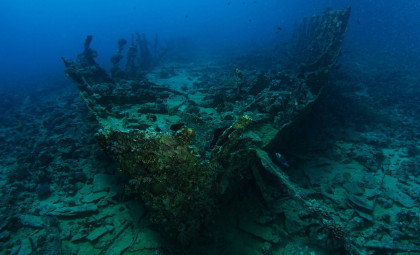
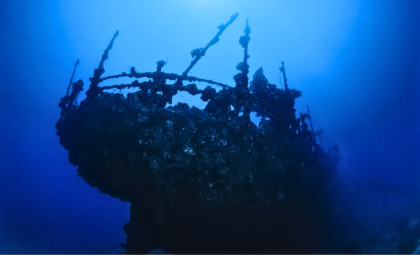
In a remarkable underwater discovery near Dover, England, divers retrieved a bottle of Guinness that had been submerged for over 160 years. Recovered in 2025 and dated back to 1864, this historic stout is now under scientific scrutiny to determine what has endured inside the bottle and to possibly uncover the flavor profile of a beer brewed long ago. Belgian underwater photographer Stefan Panis found the bottle while exploring the shipwreck with his companion Eddie Huzzey.
Concealed amid the wreckage, the bottle’s identity was initially unclear until surfacing and a quick wash revealed the unmistakable Guinness label. According to BBC News, Panis reached out to Guinness to share his extraordinary find. Although only one bottle has been recovered so far, the divers suspect that additional bottles might still lie buried beneath the seabed.
A Remarkable Guinness Artifact from the Deep
Stefan Panis is a seasoned diver with over 40 years of experience exploring underwater sites worldwide. Initially mistaking the bottle for ordinary wreckage, it wasn't until a surface rinse that the iconic Guinness branding was unveiled.

“We lifted the artefact, and then on the surface a quick rinse revealed ‘Guinness’,” Panis said.

Research has dated the bottle to 1864, making the stout preserved inside over 162 years old. The bottle likely belongs to a larger cargo lost during the shipwreck. As Panis explained, the nearby crate seems consistent with a collection of 24 bottles.
“Seeing the size of the case, I think it is definitely a case of 24 bottles,” he said. “But there might be more cases.”
So far, only a single bottle has been salvaged, but Panis hopes to resume the search for others once conditions improve.
Unlocking the Secrets of a Century-Old Brew
The ancient Guinness has attracted attention from researchers interested in historical brewing techniques. After Panis’ discovery, his associate Pawel Truszynski connected with a beer microbiologist at KU Leuven University in Belgium, who is analyzing samples from the stout. Scientists aim to identify which components have survived more than a century underwater. BBC News reports that these analyses could reveal how Guinness was crafted during the 1860s.
“There is always a chance that we can recover the complete DNA, and then we can do a small re-brew of the exact beer that was found in the 1860s,” Panis explained.

Beyond flavor, the bottle offers a unique window into past brewing processes. Scientists hope to use the surviving contents to recreate the original 1864 beer.
Is the Centuries-Old Guinness Still Drinkable?
The discovery has prompted questions about whether anyone would dare to taste a stout submerged for 160 years. Panis suggests it might be possible, depending largely on whether the cork kept seawater from contaminating the bottle.
“There is a possibility that it’s still drinkable,” he explained. “The question is if the sea water has come into the bottles through the corks.”
If perfectly sealed, the beer could still be safe for tasting after expert evaluation. Although Panis admitted he isn’t a heavy Guinness drinker, he’s open to trying it once deemed safe. The find has sparked curiosity in Belfast as well, where some locals expressed enthusiasm about sampling the historic stout.
However, not everyone shares the same excitement. Margaret Barr, a committed Guinness fan, prefers a fresh pint on tap. The brand’s owner, Diageo, has also taken interest, collaborating with the divers to learn more about the bottle’s contents and condition.
- Categories:
- Science







0 comments
Sign in to Comment