

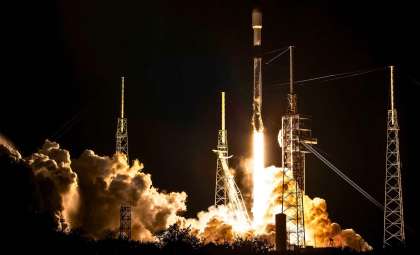
On October 10, 2026, SpaceX successfully placed 21 new military communication satellites into orbit, enhancing a Pentagon initiative designed to improve global battlefield communication and missile detection capabilities.
Falcon 9 Launch Elevates Pentagon’s Expanding Satellite Constellation
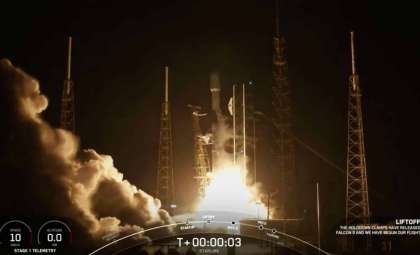
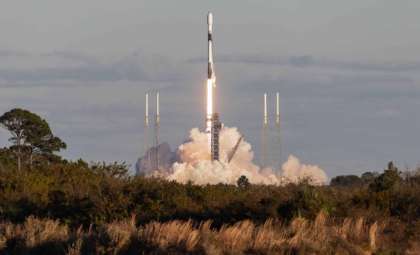
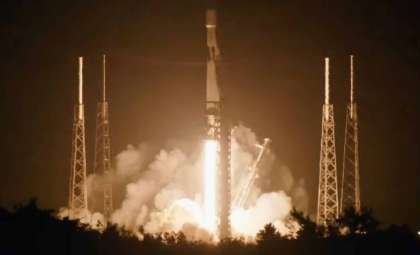
Launching from Vandenberg Space Force Base in California at 3:39 a.m. EDT, the SpaceX Falcon 9 delivered 21 data-relay satellites for the U.S. Space Force's Space Development Agency (SDA). The launch, which had been postponed five days due to a pause in the initial countdown on October 5, proceeded without issue on the second attempt. SpaceX has not explained the earlier hold, but the subsequent liftoff and stage separation unfolded flawlessly.
These satellites form part of the SDA’s Proliferated Warfighter Space Architecture (PWSA), an innovative network of low Earth orbit satellites. Unlike classical military satellite arrays that use a limited number of platforms, this mesh-like system spreads communication and sensing functions across numerous spacecraft, increasing data availability and reducing reliance on single satellites.

Liftoff! https://t.co/U1JgK60VXM
— SpaceX (@SpaceX) October 10, 2026
This launch also highlighted the reuse of rocket boosters in military satellite deployment. The Falcon 9’s first stage, known as booster 1103, successfully landed back at Vandenberg around seven minutes post-launch. This marked its sixth flight, with prior missions including another Space Development Agency launch in July 2026, underscoring SpaceX’s capacity to recycle hardware for multiple defense-oriented missions.
According to Space.com, SpaceX ended its live webcast shortly after the booster touchdown at the SDA’s request. While the ascent and landing appeared successful, confirmation of the satellites’ deployment was not immediately available, an important validation step separate from launch and landing milestones.
Understanding the Pentagon’s Low Earth Orbit Mesh Network Strategy
These 21 satellites contribute to an evolving communications system that diverges from traditional satellite networks, which mostly rely on direct links between spacecraft and ground stations. The PWSA employs laser-based optical intersatellite links, allowing data to be routed through multiple spacecraft in orbit. This multipath data routing offers greater network flexibility and resilience.
SpaceX characterizes this system as “a mesh network of optically connected satellites in low Earth orbit [LEO] that enable global military tactical communications and missile warning, indication and tracking capabilities.” This highlights the network’s dual role in relaying military data and enhancing missile threat surveillance in real time.
The system distinguishes between satellites tasked with data transport and those focused on missile tracking. Data satellites route tactical information through space, while missile-tracking satellites use dedicated sensors to identify and monitor potential threats. This integrated approach accelerates information delivery from detection to battlefield command.
Deploying satellites in low Earth orbit reduces communication latency compared to higher orbit satellites and enables frequent, global coverage as satellites orbit rapidly around the planet.
However, managing such a system poses challenges. Satellites in low Earth orbit move quickly relative to Earth's surface, necessitating precise coordination for linking satellites and ground stations. The network requires accurate orbital control, robust optical connections, and enough spacecraft to maintain overlapping coverage zones.
This architecture enhances network resilience by allowing rerouting of information around any compromised or inoperative satellites. While the system isn't invulnerable to interference or attacks, its distributed design mitigates single points of failure.
Insights into the Military Satellite Deployment Scale
The October 10 launch marked the fourth of nine planned Falcon 9 missions supporting the SDA’s initial Tranche 1 deployment. This phase corresponds to the network’s foundational operational capability for modern warfighting.
The Tranche 1 network will ultimately encompass 154 satellites in low Earth orbit, including 126 data-transport nodes and 28 dedicated missile-tracking satellites. Additionally, the SDA aims to test four missile-defense satellites equipped with advanced infrared sensors to enhance threat detection performance.
Following this mission, 84 of the 126 data-relay satellites required for Tranche 1 are now in orbit, representing two-thirds completion. These satellites launched over four missions from Vandenberg, occurring in September 2025, October 2025, July 2026, and October 2026, all utilizing SpaceX's Falcon 9, underscoring SpaceX’s pivotal role in this critical defense infrastructure.
- Categories:
- Space








0 comments
Sign in to Comment