

NASA has initiated a fresh competition inviting private enterprises to design and operate commercial space stations that might replace the International Space Station as soon as 2030. This initiative, unveiled on October 9, seeks to maintain the United States’ uninterrupted human presence in low-Earth orbit, while encouraging a shift towards privately owned orbital platforms. However, a critical hurdle remains: establishing dependable transportation for astronauts and cargo to these new stations.
Transitioning Beyond the International Space Station: NASA’s Vision
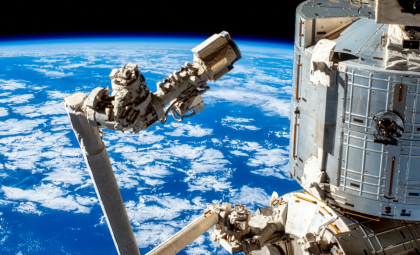
This recent announcement marks a pivotal move in NASA’s plan to phase out the aging ISS and foster commercially run orbiting facilities. The ISS has provided over 20 years as a space laboratory and research hub about 250 miles from Earth. Its impending decommissioning sets a firm deadline for NASA and industry partners aiming to create the next generation of orbital habitats.
On October 9, NASA released a comprehensive 360-page request for proposals (RFP) detailing its specifications for upcoming American space stations. The document offers companies clarity on the technical standards, operational guidelines, and services expected from future commercial orbital destinations. Proposals must be submitted by December 8, 2026, with NASA planning to announce initial awards by April 2027.

According to nasa.gov, the goal is to sustain a continuous human presence in low-Earth orbit while facilitating scientific discovery and paving the way for exploration beyond Earth’s orbit. NASA plans to select a minimum of two contractors in this first phase, each guaranteed at least $100 million in funding.
The competition unfolds over three stages: starting with identifying viable commercial station providers, advancing to supporting station development and certification from 2027 onward, and culminating in NASA purchasing operational services on private stations, including a minimum of four crewed missions.
This strategy signals a shift in NASA's role—from owning and operating stations like the ISS to becoming a client of commercial operators. These companies will develop facilities serving NASA along with government, research institutions, and private-sector clients.
.@NASA is advancing American leadership in space by taking the next step toward a future where commercial space stations lead the way in low Earth orbit. On Friday, the agency released its final Request for Proposals inviting industry to submit plans for the next generation of commercial space stations.
Learn more: https://t.co/wunW060B06
— NASA Space Operations (@NASASpaceOps) October 9, 2026
NASA’s Assurance to Keep America Active in Low-Earth Orbit
NASA is balancing its focus between sustaining low-Earth orbit operations and advancing human exploration toward the Moon and Mars. Private space stations are expected to uphold orbital research capacity while freeing NASA to dedicate greater resources to deep-space missions.
NASA Administrator Jared Isaacman stressed that decommissioning the ISS does not signify the end of American ambitions in orbit.
“We’ve made it clear that NASA will never give up its presence in low Earth orbit,” NASA Administrator Jared Isaacman said.
that accompanied the release of the new documents. “We will continue to need a place to conduct research, develop technologies, train crews, and prepare for missions to the Moon and Mars. Commercial space stations may provide that capability while creating new opportunities for American industry and allowing NASA to concentrate more of our resources on the near-impossible missions ahead.”
This statement underlines the essential role orbital platforms play in scientific and operational advancement post-ISS. Microgravity research contributes to understanding human biology, material science, fluid dynamics, and technology validation for long-duration missions. Astronauts also utilize orbit to test hardware and procedures that can’t be fully replicated on Earth.
Privately run stations could maintain these research functions while opening new frontiers in pharmaceuticals, technology innovation, and commercial astronautics. NASA’s approach relies on the hope that a diverse clientele could financially sustain space habitats without depending solely on government investment.
However, this business model lacks proven scalability for permanently inhabited platforms. Operators will need to demonstrate capabilities in crew sustainability, life support, emergency management, and research facilitation over long periods, plus attract sufficient paying customers to maintain profitability.
NASA’s plan to encourage multiple providers acknowledges the market’s uncertainty. Supporting more than one facility can reduce reliance on a single company, though the number of fully operational stations will depend on technological advances, funding availability, and market demand.
Costs of Space Travel Could Pose a Challenge to NASA’s Program
A crucial aspect highlighted in the new request involves how astronauts will be transported to forthcoming commercial stations. Creating the station is only part of the challenge; secure, reliable spacecraft must ferry crews between Earth and these new stations.
NASA’s estimates reveal the high cost of access: a four-crew seat mission to orbit in 2030 is projected at roughly $325 million, while cargo delivery missions are expected to cost approximately $300 million. These figures emphasize that operational expenses for transportation add significantly to station operators’ financial burdens.
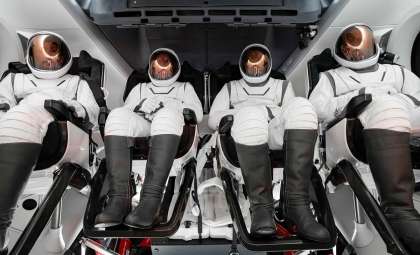
This transportation question is complicated by uncertainty surrounding the future of SpaceX’s Crew Dragon spacecraft. Currently, it is the sole American vehicle actively ferrying astronauts to orbit. SpaceX has suggested Crew Dragon will be retired when no longer needed, possibly concurrent with the ISS’s deorbit around 2030 or 2032.
Should Crew Dragon be phased out, commercial station operators might face limited options for crew transport. SpaceX has yet to announce plans to offer Crew Dragon seats to private station operators, leaving an open question about how crews would access new orbital platforms.
NASA is mitigating this risk by funding Boeing’s Starliner program, which is undergoing final crew certification steps. In late September, NASA awarded Boeing an additional $359 million to support Starliner’s completion. Despite technical challenges, Starliner’s future role depends on meeting these certification milestones.
The new RFP also relaxes requirements for bidders, who are not obligated to provide signed transportation agreements or letters of intent from spacecraft providers. Moreover, NASA will coordinate transportation for the first four agency service missions to commercial stations.
This eases a major barrier for bidders, allowing NASA to facilitate crew transport arrangements initially, rather than requiring early agreements from station developers.
Leading Private Companies Gear Up for NASA’s Competitive Phase
Several U.S.-based companies have been advancing plans for commercial orbital stations over recent years. NASA’s solicitation clarifies the path toward government partnerships that could turn these designs into operational realities.
Top contenders include Voyager Space, Axiom Space, and Vast, each pursuing distinctive technical concepts and business models for future orbital habitats.
Voyager is developing Starlab, a commercial hub aimed at supporting scientific work, astronaut missions, and business activities. The company envisions Starlab as a natural successor to the ISS, focusing on comprehensive research infrastructure for government and private clients.
Marshall Smith, Voyager’s Starlab CEO, expressed optimism about NASA’s release of requirements.
“The release of the RFP is an important milestone,” Marshall Smith, the chief executive of Voyager’s Starlab space station, said. “We appreciate that NASA has incorporated both industry and government feedback. We believe Starlab has the strongest business plan and technical solution to be America’s next space station and we look forward to competing.”
Axiom Space is taking a different approach. With experience running private astronaut missions aboard the ISS, the company is developing its own orbital modules designed to evolve into a commercial station. Axiom leverages its operational insights to guide its development process.

A representative from Axiom confirmed the company is actively evaluating NASA’s RFP to prepare its response.
“Our team is actively reviewing the RFP now and is energized for the next steps in the process,” an Axiom Space spokesperson said. “With years of experience executing human space flight missions and developing orbital hardware, we are confident the proposal we provide NASA will demonstrate that Axiom Space is the clear choice to meet NASA’s objectives in low-Earth orbit.”
Vast adopts a modular strategy centered on its Haven station concept. The initial project, Haven-1, is a smaller-scale orbital facility designed to build operational experience prior to expanding into a multi-module complex.
Vast has confirmed its intention to participate in NASA’s commercial station awards.
“Vast looks forward to competing for the opportunity to build the commercial successor to the ISS,” a company spokesperson said. “We’re in final integration with Haven-1 and ready to keep building towards a multi-module station capable of supporting a continuous human presence.”
Blue Origin might also take part, following prior involvement in NASA’s commercial station efforts, though its current level of engagement remains unclear. SpaceX is generally not anticipated to compete in this phase.

Despite shared goals, the competitors vary widely in timelines, technical designs, and business models. NASA’s evaluation will focus on their ability to deliver safe, functional orbital stations within the agency’s transition timeframe.
- Categories:
- Nasa



0 comments
Sign in to Comment