

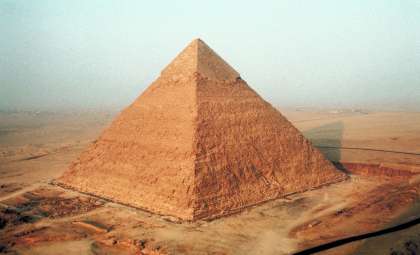
Constructed at a cost of $5.7 billion, an extensive military installation in the North Dakota plains was briefly operational in 1975 before its mission became obsolete. The Stanley R. Mickelsen Safeguard Complex stands as a remarkable Cold War relic—a massive concrete pyramid erected to shield against nuclear missile attacks, yet it only fulfilled its designed purpose for a single day.
Situated near Nekoma, North Dakota, this facility was developed amid heightened tensions between the United States and the Soviet Union. Its primary objective was to guard the Minuteman missile silos located at the Grand Forks Air Force Base from potential ballistic missile threats.
A significant investment in national missile defense, the complex was equipped with cutting-edge radar technologies and fortified structures, mirroring the intense strategic rivalry of the nuclear era. However, evolving defense strategies quickly rendered the site redundant.

The Military Pyramid Designed for Cold War Defense
The Safeguard Complex was greenlit by Congress in 1969 and constructed from 1970 to 1974. It was tasked with safeguarding vital missile command infrastructure from Soviet attack scenarios.
This installation featured two critical radar components: the Perimeter Acquisition Radar (PAR) which scanned the northern horizon for incoming threats, and the Missile Site Radar (MSR), housed within the pyramid-shaped command center.

The radar array controlled a defense system armed with 30 Spartan long-range interceptor missiles alongside 16 Sprint high-speed interceptors. The pyramid itself was a heavily shielded military installation, with thick concrete walls built to withstand nuclear strikes.
According to data from the Center for Land Use Interpretation, the construction required roughly 714,000 cubic feet of concrete, 27,500 tons of reinforced steel, and over 2,200 miles of wiring. More than 3,200 workers contributed to the project.
The pyramid’s price tag was close to $140 million at the time, making it one of the costliest features of the site. Its unique design served a practical purpose—supporting the advanced radar infrastructure inside.
How Diplomacy Rendered the Complex Obsolete
The operational duration of the Stanley R. Mickelsen Safeguard Complex was extremely brief. It officially began service on October 1, 1975, but just a day later, the U.S. House of Representatives voted to terminate the program. This move was influenced by the SALT treaties between the U.S. and the USSR, which restricted the number of anti-ballistic missile sites each country could maintain, limiting the need for an extensive American missile defense network.
As reported by the Grand Forks Herald, the Safeguard program initially planned for multiple sites nationwide, but the Nekoma facility ended up being the sole completed installation after others were canceled.

Although the shutdown decision came swiftly, limited operations persisted until final closure in 1976. This concluded a project that took years to complete yet had an incredibly short active military role.
Revival of a Cold War Relic
After closing, the pyramid lay dormant for decades. Military gear was removed, sensitive installations dismantled, and the site required environmental remediation. Ownership later shifted, with the Cavalier County Job Development Authority acquiring parts of the property, including the pyramid, in 2017.
Plans emerged to repurpose the Cold War edifice: a developer focused on cryptocurrency and eco-friendly computing proposed converting the site into a secure high-performance data center.

The redevelopment includes a greenhouse designed to capture and reuse heat generated by server operations. This adaptive reuse transforms the former missile defense site from a nuclear safeguard into a hub for digital technology.
- Categories:
- Science









0 comments
Sign in to Comment