

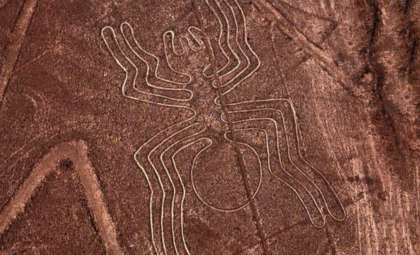
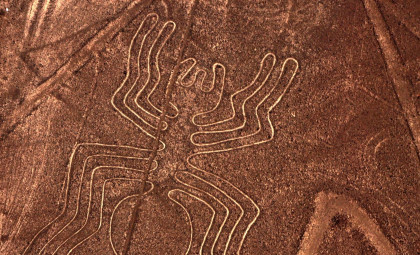
Among the most elusive Nazca figures are the smaller relief-style geoglyphs, typically measuring around 9 meters in size, making them challenging to identify from aerial photos compared to the expansive line-based designs that extend across the desert.
Scientists exploring the Nazca Pampa in Peru employed artificial intelligence to reduce tens of thousands of potential sites down to a manageable list for on-site verification. This AI system scanned high-resolution aerial imagery covering 629 square kilometers, highlighting candidate spots for archaeologists to investigate directly.
This methodology led to the discovery and confirmation of 303 previously unknown figurative geoglyphs in a six-month field campaign, almost doubling the count of known relief-style figurative designs. The findings were detailed in the Proceedings of the National Academy of Sciences on September 23, 2024.

Before this effort, researchers had cataloged 430 figurative Nazca geoglyphs: 380 were relief-style, and 50 were considerably larger line-based figures. The newly found geoglyphs brought the total scrutinized in the study to 733 figurative geoglyphs, including 683 relief-type ones.
AI Streamlines the Search for Ancient Artifacts
The challenge was not merely spotting a familiar figure from aerial imagery. Since only a few hundred relief-style geoglyphs were documented to train the model, the team used an AI model initially trained on natural images, which they then adapted specifically for archaeological detection.
This approach generated 47,410 candidate segments that might contain geoglyphs. Researchers manually reviewed these and prioritized 1,309 as promising targets.
Ground teams used this curated list to guide investigations. Between September 2022 and February 2023, 341 sites were visited with authorization from Peru’s Ministry of Culture.
Evaluating AI-identified locations took roughly 1,200 hours of expert review, followed by 1,440 hours dedicated to field verification.

Out of the 303 confirmed geoglyphs, 178 were directly pinpointed by the AI. An additional 66 were discovered within groups where at least one target had been AI-identified. The final 59 appeared through visual screening or during field exploration without AI direction.
The survey additionally recorded 42 fresh geometric geoglyphs.
Distinct Themes in the Smaller Geoglyphs
With many more examples to analyze, researchers compared the small relief-style figures to the larger line-based geoglyphs.
Within the relief-type category, 81.6% represent humans or human-modified subjects. Specifically, humanoid figures make up 33.8%, decapitated heads 32.9%, and domesticated camelids 14.9%, while wild animals account for 6.9%.

In contrast, the 50 known line-type figurative geoglyphs predominantly feature wildlife, with 64% illustrating wild animals, as noted by the researchers.
The newly identified relief-type images include humanoids, human heads, camelids, orcas, birds, and felines. Scenes also portray interactions between humans and animals.
Masato Sakai, a distinguished research professor at Yamagata University and co-author of the study, lists the publication on his ResearchGate profile. The project involved partnerships with organizations including IBM Research.
Relief-Style Geoglyphs Centered Near Ancient Pathways
Expanding the catalog offered new clues about the spatial patterns of the two geoglyph types across Nazca Pampa.
Clusters of relief-style geoglyphs appeared on average 43 meters from the closest ancient trail. Lone figures outside clusters were visible from these trails, while some grouped designs became apparent only when visitors approached neighboring geoglyphs.
Researchers propose these smaller figures were likely crafted and observed by individuals or small collectives, possibly conveying messages related to the human activities they portray. However, the study does not claim this as the sole explanation.
The larger, line-based figurative geoglyphs display a different spatial relationship, averaging 34 meters from the nearest formal geometric line or trapezoid. Researchers suggest these were designed and utilized at the community level for ceremonial purposes.
Beyond size differences, the two categories diverge in subject matter, spatial placement, and their association with ancient routes.
- Categories:
- Science







0 comments
Sign in to Comment