

Close to 400 fossils from approximately 470 million years ago have been discovered in southern France, some remarkably retaining traces of soft tissues. This assemblage, known as the Cabrières Biota, depicts a thriving marine ecosystem that once thrived near the South Pole, including trilobites, sponges, and other primordial sea creatures.
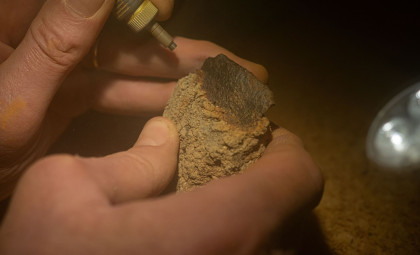
The fossils were located in the Montagne Noire area of France’s Hérault region by amateur paleontologists Eric Monceret and Sylvie Monceret-Goujon. Having spent years fossil hunting, this find stood out due to the presence of specimens preserving intricate details such as digestive organs and cuticle layers alongside shells and other hardened remains.
Following their discovery, researchers from the University of Lausanne (UNIL), CNRS, and international collaborators examined the collection. Their work, featured in Nature Ecology & Evolution, highlights the Cabrières site as one of the most diverse and abundant Lower Ordovician fossil deposits, dating back nearly 470 million years.

Soft Tissue Preservation From 470 Million Years Ago
While fossilized shells are frequent in paleontology, preservation of soft-bodied parts is far less common. The Cabrières site is exceptional for maintaining these delicate tissues. Scientists identified various arthropods—relatives of today’s shrimp and millipedes—and cnidarians, the group that includes corals and jellyfish. Alongside these were numerous algae and sponges, illustrating a rich ecosystem of diverse lifeforms inhabiting these ancient seas.
The recent publication outlines a wide range of organisms including arthropods, cnidarians, brachiopods, gastropods, algae, and sponges. Notable specimens include a trilobite from the genus Ampyx, gastropods with attached tubular structures likely belonging to Sphenothallus, and a hyolith specimen showing possible internal anatomy. Researchers also found articulated brachiopods attached to what may be a leptomitid sponge.

The fossilized fauna overlaps partially with that of the well-studied Ordovician Fezouata Formation.
“Alongside archaic arthropods such as trilobites, brachiopods, cnidarians and gastropod mollusks, all of which are also found in the Fezouata geological formation, the Cabrières Biota stands out for its abundance of large sponges and branching algae,” said Christophe Dupichaud, a doctoral researcher at LGL-TPE who took part in the site’s latest field study in October 2023, in a statement.
Life Near the Ancient South Pole
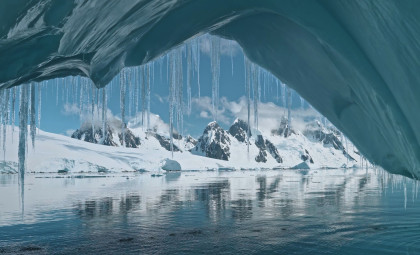
The site’s geological history offers a fascinating perspective. During the time these organisms thrived, the region now known as southern France was located in close proximity to the South Pole. The fossils thus provide valuable insights into one of the southernmost ecological niches from the Ordovician period.
Scientists suggest the area’s impressive biodiversity might be linked to the climatic conditions of that era. These cold, polar waters may have served as a sanctuary for species escaping extreme heat closer to the equator.
“At this time of intense global warming, animals were indeed living in high latitude refugia, escaping extreme equatorial temperatures,” explained Farid Saleh, a researcher at the University of Lausanne and first author of the study.

Jonathan Antcliffe, a co-author of the study, reflected on the broader significance, stating, “Looking to the distant past offers glimpses into what our near future might hold.”
The Passionate Fossil Hunters Behind the Find
The remarkable find was made by two dedicated fossil enthusiasts, Eric Monceret and Sylvie Monceret-Goujon, who have devoted decades to fossil hunting.
“We’ve been prospecting and searching for fossils since the age of twenty,” Monceret shared. Discovering the Cabrières Biota was far from ordinary. “When we encountered this extraordinary biota, we immediately recognized its significance and moved from awe to excitement,” Monceret-Goujon recalled.

Future efforts will involve extensive excavations and thorough analyses aimed at unraveling the internal and external anatomy of these ancient creatures, their ecological connections, and their overall lifestyle.
- Categories:
- Science





0 comments
Sign in to Comment