

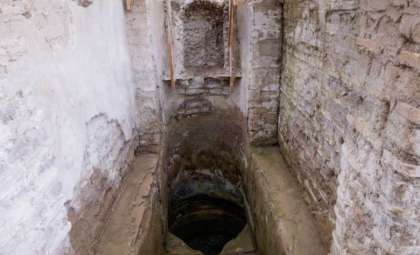
Archaeologists working near Bologna have uncovered a remarkable 2,500-year-old ceremonial well filled with bronze figurines, a unique bronze plate, and two human skeletons. This significant find at the historic Etruscan city of Kainua offers fresh perspectives on a female-focused religious cult devoted to the goddess Uni. Experts propose that the well was ritually opened with offerings and later sealed with human remains.
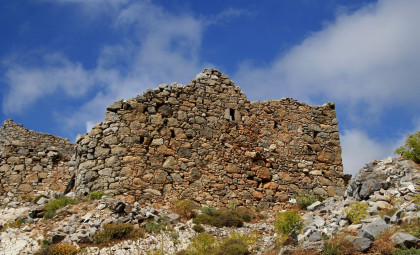
Situated on the edge of today’s Bologna, Kainua was established by the Etruscans in the early fifth century B.C. The well lies near a sanctuary honoring Uni, the mother goddess linked to women, marriage, childbirth, and development—later revered as Juno in Roman mythology. As reported by Live Science, the site’s significance arises not only from its antiquity but also from its alignment with previously known aspects of this particular Etruscan cult.
One of the most remarkable aspects of this discovery is the exceptional preservation state. The well’s contents remained submerged in a low-oxygen environment, which kept the bronze items’ original luster intact—an extraordinary condition for artifacts of this era.

A Ritual Honoring the Goddess
At the bottom of the well, two broken bronze figurines were found, representing women or girls in intricately adorned attire—likely symbolizing either deities or high-ranking individuals. Elisabetta Govi, the lead archaeologist from the University of Bologna, shared with Live Science that while comparable statuettes have been uncovered at other Etruscan water-related sites, none had previously been found inside wells.

It’s believed that young women deposited these figurines at Uni’s sanctuary as votive offerings; the deliberate fragmentation of the statuettes matches common ritual practices of that time.
Additionally, the archaeological team found a bronze plate that Govi described as a one-of-a-kind artifact. Its design closely resembles typical Etruscan ceramic forms, yet no other bronze counterpart has come to light. Together, these items date back to the late sixth or early fifth century B.C.
Bronze Artifacts Highlight Water’s Spiritual Importance

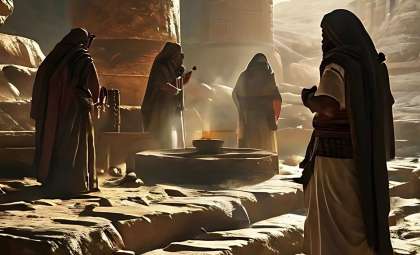
Among the Etruscans, bronze was more than a valuable material—it was imbued with profound symbolism. Govi explained that the alloying process of copper and tin was viewed as a regenerative act, symbolizing life and closely connected to birth and growth, domains overseen by Uni. This symbolic meaning, combined with the well’s location next to the goddess’s sanctuary, suggests the structure was intended for ceremonial activities beyond simple water retrieval.
The Etruscans practiced water-related cults extensively, often performing rituals when constructing wells. But this particular well’s proximity to the sacred precinct hints at a special public or religious function. As Govi noted:
“That is, it had a special function, not just for the collection of water, but evidently for the collection of water in relation to ceremonies, rites, to religious life that took place nearby in the sanctuary of the goddess Uni.”
Two Ancient Skeletons Present a New Mystery

Perhaps the most compelling aspect of this discovery is the presence of two human skeletons, one male and one female, located inside the well. Specialists speculate that while the bronze objects signal an initial opening ritual, the human remains may signify a formal closing ceremony for the well.
Early assessments suggest the individuals were not sacrificed, according to Govi. Details about their identities, how they died, and their connection to the site remain uncertain. A comprehensive investigation involving DNA testing and radiocarbon dating will commence in September, aiming to provide further insight into these individuals and refine the timeline of the well.
- Categories:
- Science

0 comments
Sign in to Comment