

Long before trees carpeted the land, a colossal organism ruled Earth’s early terrains, but it might not have been a fungus as previously believed. Recent findings propose that Prototaxites represents a wholly extinct branch of complex organisms, overturning a debate lasting over 165 years.
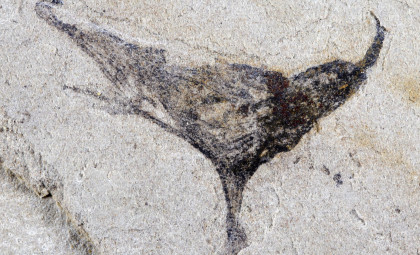
Dating back to the Late Silurian and Devonian eras, roughly 420 to 370 million years ago, fossil evidence indicates some Prototaxites specimens grew as large as 8 meters (26 feet), making it the largest known terrestrial organism from that ancient time.
Its remarkable scale and structure have made Prototaxites one of the most heavily discussed fossils in paleontological circles. For generations, researchers have debated whether it was a gigantic fungus or something entirely different.

A Colossal Creature Shaping Early Terrestrial Ecosystems
Prototaxites was among the pioneering large life forms that colonized land before forests and trees dominated the planet. Its column-like fossils appear in primordial environments where it likely played a vital ecological role as life spread across landmasses.
Scientists from the University of Edinburgh and National Museums Scotland highlighted that this organism widely inhabited early terrestrial settings and was consumed by arthropods, indicating it actively interacted with other ancient species during the Silurian and Devonian. A recent study published in Science Advances focused on Prototaxites taiti, a specimen exquisitely preserved in the 407-million-year-old Rhynie chert of Aberdeenshire, Scotland. In a press release, the lead author Corentin Loron commented:
“The Rhynie chert is incredible. It is one of the world’s oldest fossilised terrestrial ecosystems and because of the quality of preservation and the diversity of its organisms, we can pioneer novel approaches such as machine learning on fossil molecular data,” adding that, “there is a lot of other material from the Rhynie chert already in museum collections for comparative studies, which can add important context to scientific results.”

The exceptional state of preservation in the Rhynie chert enabled researchers to employ advanced techniques unavailable to earlier scientists. Their approach combined in-depth anatomical analysis with chemical profiling to uncover insights into the organism’s actual nature.
Groundbreaking Evidence Challenges the Fungus Hypothesis
The team examined a fresh Prototaxites taiti specimen, currently the largest known from the Rhynie chert site. Microscopic study revealed an internal composition inconsistent with any known fungal structures. The fossil contains three distinct types of tubular formations.
Included among these are thick-walled tubes featuring ring-like bands and compact spherical regions termed medullary spots. These spots contain intricate 3D networks of interconnected tubes. The researchers noted that such branching patterns have no parallels in fungal biology, making it impossible to classify Prototaxites within any existing fungal family.

By contrasting these structures to fossil fungi from the same deposit, the scientists observed significant differences in internal tissue arrangement, further supporting the view that Prototaxites followed a separate evolutionary path.
“It’s really exciting to make a major step forward in the debate over Prototaxites, which has been going on for around 165 years,” said Dr. Sandy Hetherington, senior author of the study.
Chemical Data Supports a Distinct Extinct Lineage
In addition to anatomy, the research incorporated infrared spectroscopy and machine learning-based methods to analyze the molecular signature of Prototaxites. They compared it with fossil fungi, arthropods, plants, and bacteria from the Rhynie chert. Their results showed that chemical markers associated with chitin-rich cell walls present in fossil fungi were absent in Prototaxites.
The team also tested for the presence of perylene, a biomarker linked to pigment compounds found in certain fungi. While other Rhynie chert fossils contained perylene, none was detected in Prototaxites samples.
“Our study, combining analyzing the chemistry and anatomy of this fossil, demonstrates that Prototaxites cannot be placed within the fungal group,” said Laura Cooper, a co-author of the research.

The researchers concluded that Prototaxites represents a distinct and now entirely extinct branch of complex life. This ancient being illustrates a unique evolutionary experiment in developing massive land organisms, known only through rare fossil records from Earth's distant past.
- Categories:
- Science





0 comments
Sign in to Comment