

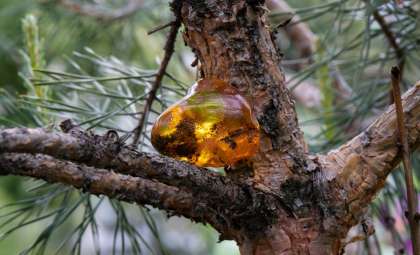
A tiny piece of amber originally thought to encase plant matter has astonished researchers by harboring the tail of a juvenile feathered dinosaur dating back nearly 99 million years. This extraordinary find from Myanmar offers an unprecedented glimpse into the dinosaur’s feathers, bones, skin, and soft tissue.
The journey began in 2015 when paleontologist Lida Xing spotted a polished amber fragment at a Myanmar market. Though it was sold as a decorative item, Xing recognized something unusual inside and advocated for scientific study instead of sale.
Subsequent investigation identified the inclusion as the tail of a young coelurosaur, a group of theropods closely linked to today’s birds. This discovery allowed researchers to analyze a three-dimensional dinosaur fossil preserved in exquisite detail, something rare compared to typical flattened fossil specimens. Originating from Kachin State, Myanmar, the amber’s provenance was established by tracking the miner responsible for extraction. Scientists employed advanced imaging and microscopic techniques to explore the fossil concealed within the solid resin.

Unveiling a Dinosaur Tail Within a Mysterious Amber Piece
Using CT scans alongside microscopy, the fossil was examined nondestructively. Research published in 2016 in Current Biology revealed the presence of eight vertebrae from a juvenile dinosaur, encircled by perfectly preserved feathers. Bone structure analysis confirmed this fossil did not belong to any modern bird species.
“We can be sure of the source because the vertebrae are not fused into a rod or pygostyle as in modern birds and their closest relatives. Instead, the tail is long and flexible, with keels of feathers running down each side,” Ryan McKellar, a co-author of the study, said.

According to an EurekAlert report, McKellar noted the preserved features clearly indicate a dinosaur tail rather than bird plumage. The unique spine and feather arrangement helped scientists classify the animal as a non-avian coelurosaur.
This marked the first verified instance of dinosaur remains encased in amber. It provided paleontologists with an exceptional view of a small feathered Cretaceous dinosaur, retaining aspects typically lost during fossilization.
Insights Into Dinosaur Feathers From Ancient Amber
The feathers enclosed in the amber shed light on the outward look of early feathered dinosaurs. Studies suggest they showcased a chestnut-brown color on top with paler undersides, conveying clues to the dinosaur’s appearance.
The fossil indicated these feathers lacked a fully formed central shaft. Researchers inferred that detailed feather branching elements, such as barbs and barbules, preceded development of the rigid feather shafts characterizing many present-day birds. Examination near the tail vertebrae also detected traces of soft tissues.

Tests found ferrous iron presence, a key element linked to hemoglobin residues in blood. Unlike many dinosaur fossils consisting solely of mineralized bones, this amber showcased parts of original biological materials, including feathers, skin, and soft tissues.
A Juvenile Dinosaur Immortalized in Resin Millions of Years Ago
Researchers propose the dinosaur’s tail became trapped in sticky tree resin while the creature was still alive. The animal likely perished as the resin enveloped its tail and gradually fossilized into amber through millions of years. Professor Mike Benton explained to BBC News that this specimen enables scientists to envision the dinosaur’s final moments as its tail was trapped in resin before fossilizing.
“Amber pieces preserve tiny snapshots of ancient ecosystems, but they record microscopic details, three-dimensional arrangements, and labile tissues that are difficult to study in other settings,” McKellar explained. “This is a new source of information that is worth researching with intensity and protecting as a fossil resource.”

The find also highlights how easily important fossils can be mistaken for other materials. In 2020, another amber piece initially identified as containing a tiny dinosaur skull was subsequently reclassified as belonging to a new species of lizard following further analysis.
- Categories:
- Science


0 comments
Sign in to Comment