

For hundreds of years, tales from Scandinavian mariners spoke of a massive sea creature capable of dragging ships into the depths. Known as the kraken, this mythic beast transitioned from folklore to inclusion in historic travel narratives and even appeared on old nautical charts as a caution to sailors.
Bishop Erik Pontoppidan gave extensive attention to this creature in his 1755 work, Natural History of Norway, portraying it as a legitimate resident of northern waters. Yet, over time, scientific consensus dismissed such accounts as exaggerated myths born of fear and distance.
Recently uncovered fossilized remains don’t resurrect the legend directly but do reveal an ancient marine predator that could well have inspired such stories.

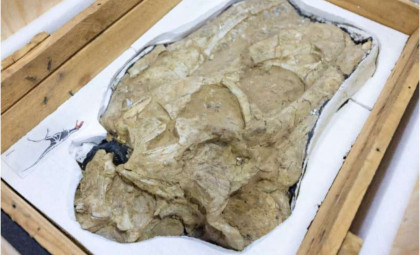
An article published on April 23 in Science, led by Yasuhiro Iba from Hokkaido University, analyzed fossilized jaws unearthed from sedimentary rock formations in Japan and Vancouver Island. These fossils unveiled the behaviors of octopuses that lived between 100 and 72 million years ago. Unlike the small, reef-bound species seen today, these early Cretaceous octopuses were enormous hunters dominating the food chain alongside large marine reptiles.
Due to their soft bodies, octopus fossils are exceedingly rare because they seldom fossilize.
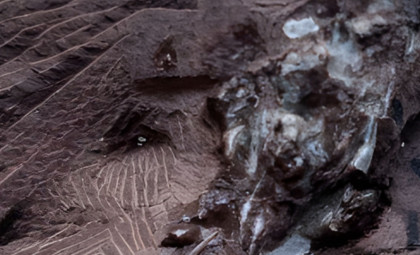
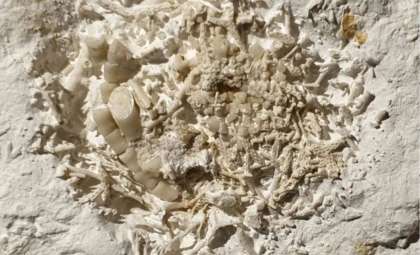
Jaws made of tough, mineralized material endure much longer, often preserving surface details after tens of millions of years in stable seafloor deposits. To detect them, Iba's team employed high-resolution grinding tomography paired with a novel AI model trained for zero-shot learning. This technology allowed them to spot previously invisible jaws embedded within rock concretions, complete with distinct wear marks.
Evidence of Bite Marks Reveals Crushing Power Surpassing Modern Octopus
The fossilized jaws belonged to Cirrata, an extinct lineage of finned octopuses. Earlier research published in the Journal of Paleontology had identified sizable jaws from octobrachiate coleoids at the same locations, confirming the presence of large octopuses in the Late Cretaceous of the North Pacific.
The current Science study broadens the temporal range by about 15 million years and uncovers the functional use of these jaws by analyzing wear patterns in detail.

The extent of wear was striking. "Specimens showed that up to 10% of the jaw tip was worn away relative to the total jaw length—more extensive than in modern cephalopods that prey on hard-shelled creatures," said Iba. "This suggests repetitive, forceful biting behavior, indicating an unexpectedly fierce hunting technique."
Researchers observed chipping, scratches, cracks, and polished surfaces across the fossil jaws, pointing to a lifestyle of tackling tough prey over many years. Size reconstructions estimate these octopuses could reach nearly 20 meters in length, potentially out-sizing contemporary marine reptiles.
A length close to 20 meters.
Another intriguing finding was asymmetrical wear—one side of the biting surface showed more pronounced damage, implying a preference for using one side of the jaw more than the other.
This lateralization, commonly observed in modern animals and linked to complex brain function, hints that these ancient octopuses might have possessed advanced cognitive abilities, though this remains an open question. Nonetheless, the wear pattern suggests sophisticated feeding behavior consistent with later octopus traits.
The Kraken Myth Has Tangible Biological Roots, But Not From This Era or Species
The kraken myth was likely inspired by living creatures that were much less extreme. Giant squids (Architeuthis) and colossal squids (Mesonychoteuthis) are authentic deep-sea cephalopods with large size, beaks, and tentacles reminiscent of the stories. Occasional sightings of injured or stranded specimens, especially from a distance, may have inflated their perceived size.
Other natural phenomena can create illusions of monstrous forms at sea. Decomposing bodies can contort in water; whales surfacing near vessels can present deceptive silhouettes. There is no evidence of any living cephalopod capable of attacking or sinking ships as the legend suggests, and known squids fall far short of those extraordinary size claims.

The Cretaceous creatures studied by Iba lived around 100 million years before humans and had no impact on kraken folklore.
Still, they represent the largest predator-like octopuses recovered from the fossil record to date.
These Ancient Octopuses Defied a 400-Million-Year Pattern of Oceanic Food Chains
This research challenges the long-held notion that vertebrates alone have dominated the ocean’s apex predator roles for most of evolutionary history, relegating invertebrates to minor positions. These octopuses exemplify a rare exception.
"Our discoveries indicate that some of the earliest octopuses were enormous predators occupying top positions in the Cretaceous marine ecosystem," Iba explained.
Key adaptations shared with large marine vertebrates, according to Iba, include strong jaws and the absence of an external skeleton. "These traits, common to octopuses and marine vertebrates, were critical for their evolution into massive, intelligent ocean predators," he noted.
Furthermore, these fossils extend known octopus lineage timelines by 15 million years for finned types and 5 million years for octopuses overall, with confirmed specimens dating back about 100 million years.
Researchers anticipate that combining grinding tomography with AI-driven fossil detection will reveal more hidden fossils in existing collections. The consistent jaw lateralization patterns found across specimens also offer a promising avenue for future studies.
- Categories:
- Science



0 comments
Sign in to Comment