

Prior to the expansion of the A8 Albaufstieg near Drackenstein in Baden-Württemberg, archaeologists have revealed around 90 meters of a Roman-era road traversing the future highway route nearly at a right angle. This path was part of the Alblimes Road that linked Rottweil and Heidenheim an der Brenz across the Swabian Alb plateau.
Starting in August 2025, excavation efforts have uncovered the roadway as well as graves, structural remains, coins, and artifacts spanning multiple historical periods by summer 2026.
René Wollenweber from the State Office for Monument Preservation in Baden-Württemberg commented on the find: “These discoveries provide valuable insights into the origin, importance, and utilization of one of the earliest roads in this region.”

Roman Construction Created a Five-Meter-Wide Road Across the Swabian Alb
The exposed segment of the road measures about five meters in width. While the top layer is missing, its stone foundation remains clearly visible. Roman engineers used white Jurassic limestone extracted from the weathered terrain of the Swabian Alb as a base material.
It is believed the road was built during Emperor Vespasian’s first-century A.D. rule. This roadway connected Roman military camps and settlements throughout the plateau, forming a key part of the transportation network within the Roman province of Germania Superior.

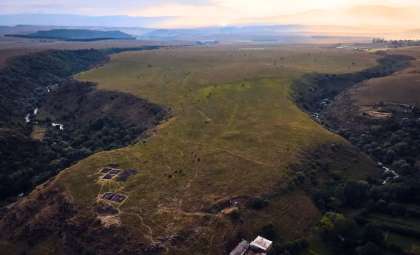
The route was influenced by the natural geography of the Swabian Alb, a corridor approximately 200 kilometers long and 45 kilometers wide stretching from the Rhine Falls near Schaffhausen to the Nördlinger Ries basin. Roman frontier outposts such as Urspring and Donnstetten were integrated within this road network.
For over 100 years, the Alblimes route served as a borderland pathway between Roman territory and unconquered Germanic lands, facilitating troop movements and economic trade across the region.
The State Office for Monument Preservation in Baden-Württemberg describes the Alblimes Road as one of the earliest known roads in the state. Earlier investigations in the 19th and 20th centuries uncovered parts of the broader network of Roman forts and roads, with this latest study revealing another significant section.
Bronze Age Graves Found Beneath Roman Infrastructure
Human presence at the site predates the Roman road.
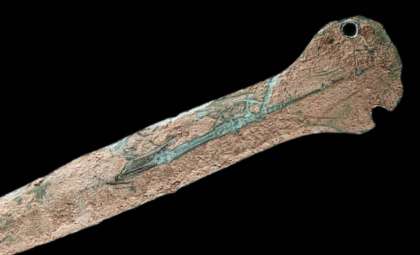
Located partially underneath the road, archaeologists unearthed a Late Bronze Age burial urn along with a bronze roll-headed pin from the same era, likely displaced during Roman construction activities.
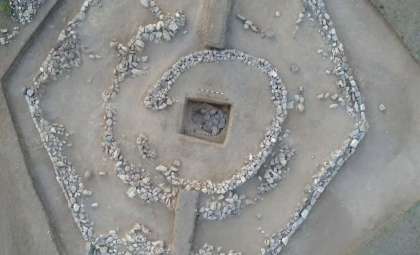
Additional graves, dwelling remains, and artifacts primarily from the Bronze and Iron Ages confirm Celtic habitation in the Drackenstein area before Roman times.
The juxtaposition illustrates how Roman engineers constructed their road over an already long-inhabited landscape.

Speaking to SWR, Wollenweber highlighted the site’s long-standing agricultural use: “The people living in the Swabian Alb deserve to know their rich cultural heritage.”
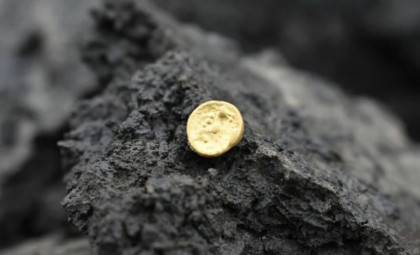
Roman-era objects found alongside older materials include a bronze dupondius—a half-sestertius coin bearing an emperor’s faint image, likely Domitian—and iron hobnails used in Roman footwear.
Archaeological teams such as ArchaeoBW and fodilus are conducting the dig under the direction of the state preservation office. The excavation was commissioned by Autobahn GmbH’s Southwest division prior to construction work in this area.
Discovery Hints at Possible Roman Road Station
To date, about 4.6 hectares of land, roughly two-thirds of the intended dig site, have been explored by archaeologists.
The remaining section may contain a Roman road station along the route. These stations functioned as rest stops offering services such as horse changes and vehicle repairs for travelers on ancient Roman roads. This feature remains unconfirmed as of the latest reports from SWR.

Fieldwork near Drackenstein is expected to proceed through end of 2026, with construction on the Drackenstein tunnel—part of the new A8 Albaufstieg—planned to start in spring 2027.
- Categories:
- News



0 comments
Sign in to Comment