

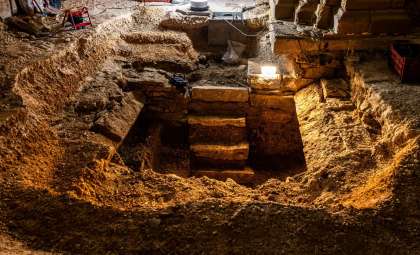
Excavations at Red Lodge in Suffolk have brought to light a remarkable archaeological site with a history spanning over three millennia. What began as a Bronze Age burial mound evolved into an expansive Roman religious sanctuary, and in a later twist, may have served as a medieval execution ground.
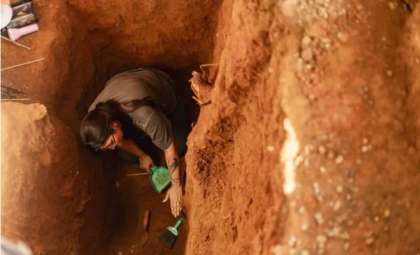
The dig, conducted by Archaeology South-East from University College London in 2016, was part of a survey before new housing development on an 9-hectare area. Initial expectations gave way to major discoveries as the team uncovered layers dating from the Neolithic to medieval eras, with the Roman installations proving particularly intricate and extensive.
While many prehistoric monuments were reused by subsequent generations, Red Lodge stands out for the extraordinary length and complexity of its continued use, culminating in the establishment of a sophisticated sanctuary by late Roman times.

Evolution From Earliest Burial Mound to Sacred Roman Grounds
The site's origin lies in the Early Bronze Age, marked by a substantial circular mound. Though agricultural activity has erased the mound itself, its encompassing ditch remains visible and measures up to 45 meters across.
Radiometric dating using optically stimulated luminescence indicates the ditch’s formation occurred between 2200 and 1600 BCE. In some sections, the ditch spans 6.20 meters wide and 1.80 meters deep, filled with compacted chalk and silty sand indicative of slow natural infilling rather than deliberate backfilling.

The ditch itself didn’t yield any burials, likely lost to farming practices over time, but notably, the area surrounding the mound was deliberately kept clear of contemporary structures, preserving the mound’s visual prominence in the landscape.
The Hidden Rituals of the Roman Sanctuary
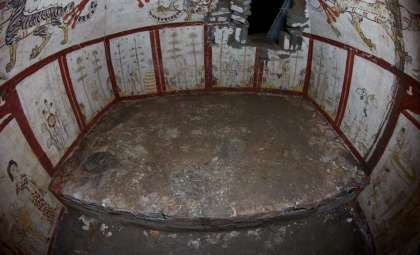
Transformation intensified in the 2nd century AD when the Romans enclosed the ancient mound within a large rectangular sacred area, or temenos, measuring approximately 200 by 160 meters, covering about 3.2 hectares. By the latter half of the 3rd century, a small cult building had been constructed just east of the mound: a timber-framed, wattle-and-daub structure roughly 5 by 4.5 meters, with a tiled roof. Inside, archaeologists uncovered nearly 48 kilograms of painted plaster decorated in white, red, pink, green, and purple hues, featuring leaf designs and fragments that comprised a purple decorative roll.
Ritual deposits extended beyond this cult building, including six pig "head and foot" deposits. In these, pig skulls were paired with articulated limbs arranged eastward facing the sanctuary, some with coins laid atop the skulls. Radiocarbon dating places these offerings between AD 84 and 400.

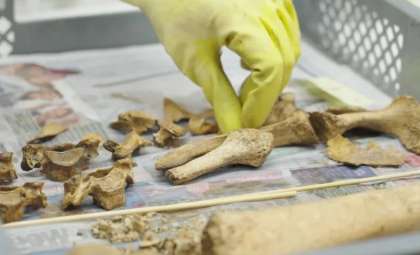
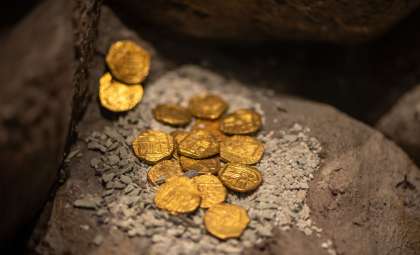
Besides the pigs, archaeologists discovered the skeleton of a young cow showing no cut marks, a dog interred with a horse scapula, and an almost complete rooster skeleton. Over fifty coins, various jewelry items, and two Neolithic flint axes — already ancient by Roman times — were found, thought to have had symbolic or amulet-like significance to the worshippers.
Medieval Enigma Hidden Among Roman Ruins
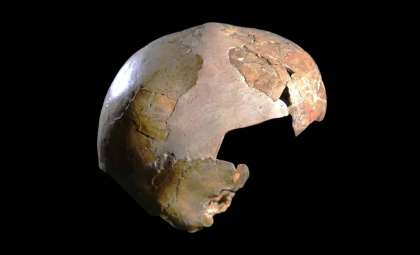
By the mid-4th century, the sanctuary had fallen out of use through gradual abandonment rather than violent destruction, evidenced by scattered debris from demolished buildings. However, the site held another surprise: a male skeleton between 25 and 35 years old, buried face-down within the upper fill of the temenos ditch and dated to the 12th or 13th century by radiocarbon analysis.
This unusual burial position, along with a documented 1238 land agreement involving the Bishop of Rochester and the Abbot of St Edmunds that mentions a structure near the Freckenham-Herringswell boundary, leads experts to propose the site may once have hosted a gallows.

The detailed report, appearing in the journal Britannia, explains how this burial was initially thought to be a casual Roman insertion but was reattributed to the medieval period after radiocarbon dating, changing the narrative of this layered site much like the mound’s own history over thousands of years.
- Categories:
- News

0 comments
Sign in to Comment