

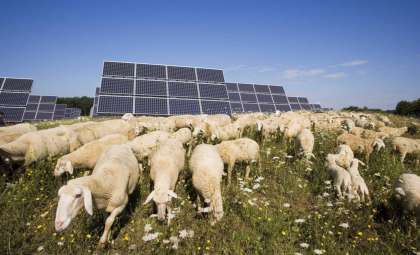
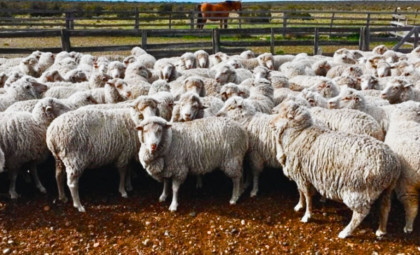
Approximately 100 Greater Poland sheep began grazing among more than 31,000 solar panels at Volkswagen Poznań’s facility in Września, western Poland, in late April 2026. Their role is to maintain grass and other plants in areas that are difficult for conventional mowing equipment to access.
These sheep will stay until autumn, supervised by dedicated caretakers. Simultaneously, researchers from the Poznań University of Life Sciences are monitoring the flock’s adaptation to living within a large solar farm, assessing their behavior, health, pasture conditions, soil quality, and other local environmental factors.
This initiative showcases agrivoltaics, the combined use of land for both solar energy production and agriculture. The Września solar farm spans roughly 27 hectares (67 acres) and has an installed capacity of 18.3 megawatts. On sunny days, the facility can fully power the factory’s electricity needs, with annual energy production accounting for about 25% of the plant’s total consumption.

Sheep Access Areas Beyond the Reach of Machinery
Vegetation control at solar power installations is more complex than mowing open fields. The presence of panel supports, wiring, and narrow alleys restricts machinery access, whereas sheep can easily navigate beneath the panels and graze close to the ground.

In Września, these animals efficiently maintain vegetation while uninterrupted power generation continues. The U.S. Department of Energy’s guide for farmers highlights sheep as ideal for solar farms since they can comfortably graze beneath panels, provided fencing, water resources, protected cables, and safe pathways for maintenance are properly arranged.
Volkswagen Poznań promotes this project as a harmonious integration of industrial energy generation, farming, and scientific research. Plant director Marzena Pillich-Grońska described the solar farm as a platform supporting “biodiversity, local agriculture, and the advancement of scientific knowledge,” according to the Poznań University of Life Sciences. While the enhanced biodiversity remains an anticipated benefit, ecological data collection is ongoing.
Scientific Team Evaluates Animal Well-being and Environmental Factors
The multidisciplinary research team includes experts in animal behavior, veterinary medicine, environmental, and mechanical engineering. Their investigations focus on animal welfare, grazing patterns, pasture health, soil properties, ammonia emission levels, and variations in temperature and humidity across the farm.
These localized environmental variations create a microclimate. Shaded zones under solar panels modify temperature, moisture, wind exposure, and sunlight availability for plants. The Polish study contrasts these shaded regions with fully exposed areas to understand their effects on sheep and the ecosystem they inhabit.
Joanna Składanowska-Baryza from Poznań University of Life Sciences labeled it one of Poland’s initial comprehensive studies on grazing within large photovoltaic farms. The approach examines the interplay between livestock, vegetation, and the surrounding environment, not merely replacing mechanical mowing.
Initial insights from flock manager Justyna Nowak-Gajek reveal the sheep naturally divide into smaller groups and graze tranquilly throughout the area. She noted the animals had “adjusted very well to the new surroundings,” adding that threatened sheep tend to cluster tightly. These observations will be integrated with direct data on well-being, pasture status, soil, and emissions.
Longer Grazing Periods Observed in California Sunsheds
A 2023 peer-reviewed study at the Gold Tree Solar Farm in San Luis Obispo, California, monitored 80 sheep grazing either under solar panels or on adjacent native rangeland. Researchers used data loggers to identify grazing periods, marked by the animals standing or slowly moving with lowered heads.
The sheep beneath solar panels grazed longer than those on open rangeland. Additionally, the forage under panels exhibited higher protein content and better digestibility during the study, although vegetation overall was dormant and nutritionally poor at both sites.

Grazing management also influenced sheep behavior. Those moved to fresh pasture every four days grazed longer than sheep relocated daily. The study suggested that solar panels provided shelter from weather extremes, improving the grazing environment.
While differing in breed, environment, and solar configuration, the Września project similarly collects local pasture quality, behavioral, soil, and microclimate data throughout the grazing season rather than importing findings directly from California.
Preserving a Native Breed Within a Modern Energy Site
The sheep belong to the Greater Poland breed, developed in the Wielkopolska region under professor Zdzisław Śliwa’s guidance. Once widely bred in Poland, the breed is now part of the national genetic conservation program.

These conservation programs aim to safeguard breeds with limited populations or unique genetics. At Września, the breed is actively used for grazing on operational solar grounds rather than solely for preservation or breeding displays.
The U.S. Department of Energy’s agrivoltaics summary outlines various models for combining agriculture and solar energy, including crops, livestock, and pollinator habitats positioned beneath or between panels. Each method depends on panel design, agricultural needs, and maintenance access.
- Categories:
- News




0 comments
Sign in to Comment