

Researchers have witnessed a unique transformation in the distant reaches of our solar system. The icy entity 450P/LONEOS, previously labeled as a dormant centaur, has started to manifest a growing envelope of gas and dust as it advances nearer to the Sun.
Centaurs are small celestial bodies orbiting between Jupiter and Neptune, believed to have migrated inward from the Kuiper Belt beyond Pluto. Due to their orbits intersecting those of one or more giant planets, their trajectories can be unstable over spans of millions of years.
Scientists have long theorized that some centaurs drifting closer to the inner solar system eventually evolve into Jupiter-family comets — characterized by orbital periods of under 20 years and influenced gravitationally by Jupiter. The object 450P is currently offering concrete evidence supporting this hypothesis.

Emergence of a Coma Marks 450P’s Change
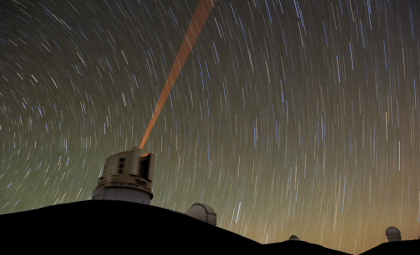
During continuous observation of 450P, University of Central Florida planetary scientist Charles Schambeau and his team identified one of the most definitive indicators of comet-like activity. Utilizing the Gemini North telescope in Hawaii, they spotted a distinct coma forming around 450P’s solid core, with gases and dust expanding outward as it became active. From 2019 to 2024, the coma’s brightness increased as the object approached perihelion, the orbit’s nearest point to the Sun, last reached in August 2024.

With the capabilities of the James Webb Space Telescope, scientists further analyzed the coma’s composition. As outlined in a recent publication on the arXiv preprint archive, JWST identified carbon dioxide gas alongside crystalline water-ice grains intertwined with dust, yet found no signs of water vapor. These findings suggest that carbon dioxide sublimation, rather than typical water ice evaporation, is primarily responsible for 450P’s current activity.
“At 450P’s distance from the sun, the nucleus is too cold for normal water-ice sublimation to be the main activity source, so detecting carbon dioxide gives us an important clue about what is powering the coma,” Schambeau said in a statement.
Saturn’s Close Encounter Modified Its Orbit
Looking back at 450P’s path prior to its discovery, astronomers identified a significant orbital event. In 1992, the object passed within 2.9 million miles of Saturn, close enough for the planet’s gravity to drastically alter its orbit. This encounter shifted 450P’s perihelion to 5.4 astronomical units (around 506 million miles) from the Sun, positioning it just beyond Jupiter’s average orbit at about 5.2 astronomical units.
This closer orbit results in enhanced solar heating during 450P’s approaches, impacting surface and subsurface layers and releasing volatile substances that were previously locked away.
“That increased solar heating can warm the surface and the subsurface layers of the nucleus,” Schambeau explained. “As those layers heat up, volatile ices or trapped gases can be released, which can drag dust away from the surface and produce a coma.”

The emergence of the coma is not a sudden occurrence but is linked to the orbital change decades ago. Saturn’s gravitational influence brought 450P into a zone where intensified solar radiation can now affect its surface composition significantly.
JWST Observes Ice Transformations
Despite the absence of water vapor, JWST detected signs of crystalline water ice within the coma. This form of ice offers insights into how 450P’s structure responds to increasing solar warmth.
In pristine cometary bodies and Kuiper Belt objects, water ice commonly exists in an amorphous state—molecules are disordered and form a porous matrix that traps gases. As 450P moves closer to the Sun and heats up, this amorphous ice can transition into a crystalline state, releasing trapped gases that carry dust and ice particles away.
“The possible crystalline water-ice is also interesting because it suggests that some of the ice in the coma has experienced heating or physical processing, rather than remaining completely unchanged since formation,” Schambeau said.

Since only a minority of centaurs have shown signs of activity, 450P offers a rare glimpse into the early phase of transformation to comet-like behavior. The object’s material may hold clues to the solar system’s origins dating back about 4.5 billion years.
“Centaurs are scientifically important because they are thought to be transitional objects that originated further out in the solar system and are slowly evolving toward becoming Jupiter-family comets.” Adding that, ” they give us a way to study relatively primitive material from the outer solar system while it is beginning to respond to stronger solar heating.”
- Categories:
- Astronomy




0 comments
Sign in to Comment