

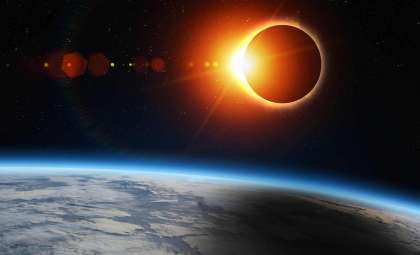
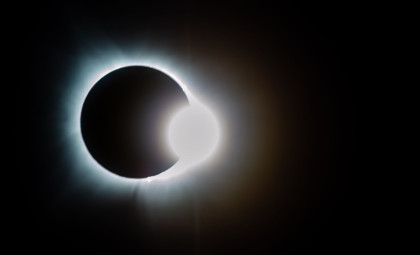
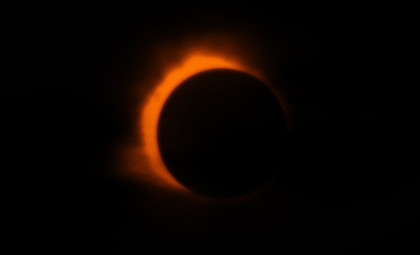
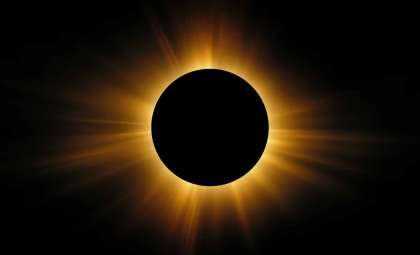
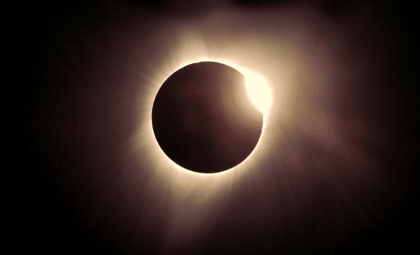
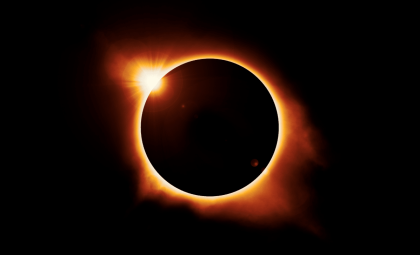
On August 12, a total solar eclipse will glide over regions of Spain, Iceland, and Greenland, briefly dimming daylight as the Moon perfectly aligns between Earth and the Sun. This rare event coincides with a remarkable alignment of six planets and the peak of the Perseid meteor shower.
Spain’s mainland will witness a total solar eclipse for the first time in over a century, marking a significant astronomical event for local enthusiasts and eclipse followers.
The lunar shadow will cover approximately 5,130 miles (8,260 kilometers), starting near the Arctic Circle and sweeping southward across the Atlantic Ocean. The phase of totality will last up to two minutes and 18 seconds, with the maximum duration visible near Iceland’s western shores before the eclipse continues toward Europe.

Although the path of complete darkness is narrow, millions in surrounding areas will observe a partial eclipse. Scientists and space organizations are preparing to utilize this opportunity to study both the Sun’s outer atmosphere and the impacts of sudden darkness on Earth’s environment.
A Unique Eclipse Trajectory Reaches Spain
The eclipse will initiate in the Arctic zone, where the Moon’s shadow begins its descent over the Atlantic Ocean. While most of the trajectory covers open waters, it will eventually cross European territories, including Portugal and Spain.
The longest totality will be seen near Iceland, lasting up to two minutes and 18 seconds. As the Moon’s shadow moves over mainland Spain, the total eclipse phase will shorten to roughly one minute. According to the latest eclipse data, a partial eclipse will be visible across vast areas including Canada, northern parts of the United States, large swaths of Europe, West Africa, Alaska, and Siberia.

The extent of solar coverage varies by location. For instance, Dublin will witness approximately 94% coverage of the Sun, while Oslo will experience about 83%. Moving farther west, partial coverage diminishes to near 18% in Montreal, 9% in New York, and just 2% in Norfolk, Virginia.
Anyone viewing the partial eclipse phases must wear certified solar eclipse glasses to protect their vision from potential harm caused by the Sun’s rays.
Researchers Gear Up to Study the Sun’s Outer Layers
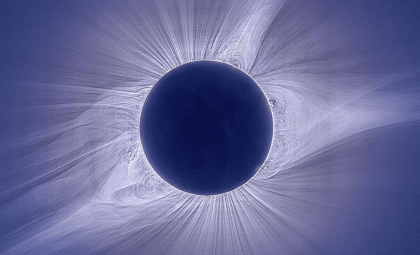
Beyond the spectacle, scientists aim to leverage the brief darkness to analyze the solar corona—the Sun’s outer atmosphere—and examine how Earth’s atmosphere responds during the event.
The European Space Agency (ESA) plans to broadcast live from Spain’s Astrophysical Observatory of Javalambre and hold public activities in Leon. ESA’s science director, Carole Mundell, emphasizes the unique connection eclipses foster between humanity and the cosmos.
“For me, it’s not just a scientific moment. It’s not just an incredible alignment of heavenly bodies. It’s also a very human moment,” Mundell said. “It’s a real human connection between us with our feet planted on the Earth and the cosmos.”
ESA will also observe the eclipse via space-based telescopes. Their Proba-3 mission, consisting of twin spacecraft designed to simulate eclipses, won’t be positioned to replicate totality from Earth’s perspective but will gather valuable data before and after the eclipse.

Research groups from U.S. institutions will launch over 60 high-altitude balloons from Spain and Iceland to monitor atmospheric changes. The abrupt reduction in sunlight during the eclipse can briefly influence temperature and other atmospheric variables.
The Southwest Research Institute team will conduct studies aboard a NASA high-altitude aircraft. Led by Amir Caspi, the mission will employ four cameras capturing nine wavelengths of the corona. Flying at speeds close to 460 mph (740 kph), this approach extends the observation period to almost three minutes.
Astounding Celestial Events to Accompany the Eclipse
The eclipse aligns with a busy celestial calendar. Before dawn on August 12, six planets will line up across the sky in an arc. After sunset, the nearby Perseid meteor shower reaches its height, benefitting from the darkness of a new Moon. This rare combination should mesmerize observers with bright meteors, visible planets, and stars enhancing the eclipse experience.
Astronomer and eclipse mapper Michael Zeiler aims to capture an additional extraordinary display: the aurora borealis. Planning to view the eclipse from a cruise ship within a Greenland fjord, he hopes to film the northern skies during totality, motivated by his passion for witnessing unique natural moments.
“What gets me excited is viewing rare phenomena,” he said.
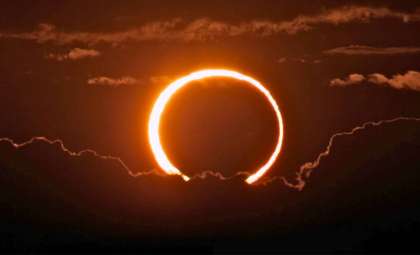
This August eclipse marks the start of an exciting period for Spanish eclipse viewers. On August 2, 2027, another total solar eclipse will cross southern Spain, with totality lasting an impressive six minutes and 23 seconds, then continuing over North Africa and the Middle East. Following that, on January 26, 2028, Spain will witness a ring-of-fire eclipse, offering an exceptional sequence of solar events for the nation.
- Categories:
- News

0 comments
Sign in to Comment