

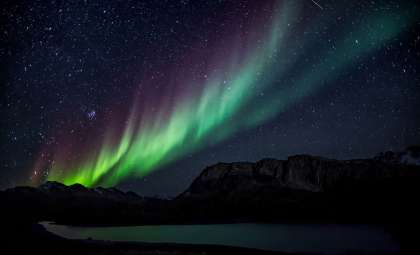
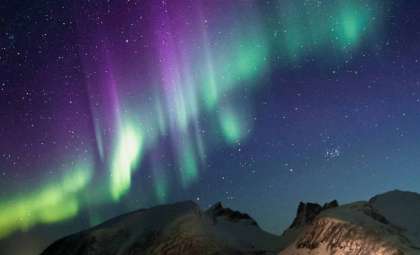
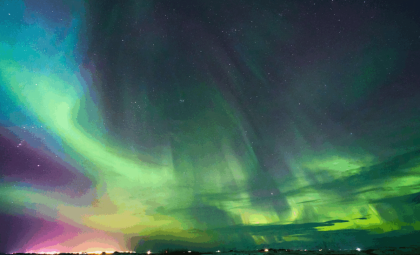
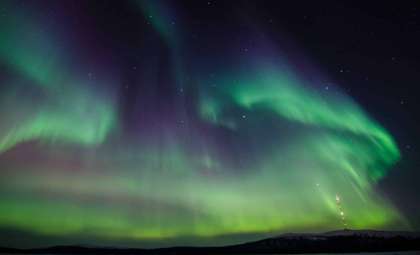
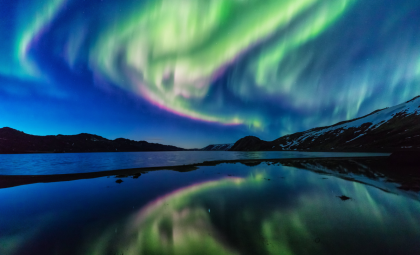
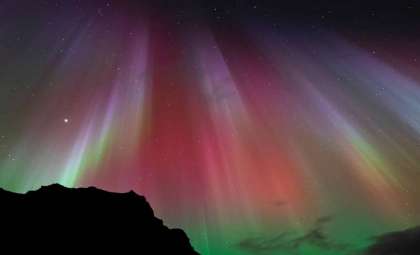
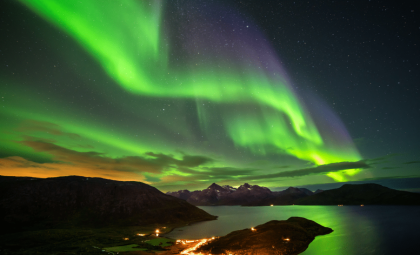
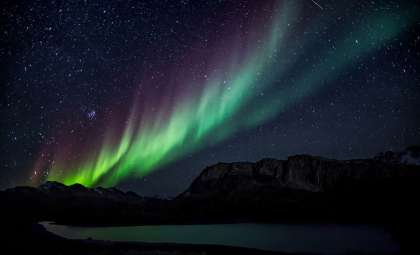
An unusual summer aurora could soon be visible across parts of the northern U.S. as NOAA reports two solar bursts are headed Earth’s way. There is an estimated risk of a G1-class geomagnetic storm that might spark northern lights near the U.S.-Canada border.
This forecast follows coronal mass ejections (CMEs) emitted by the Sun on July 26 and 27. These magnetized plasma clouds are expected to graze Earth’s magnetic field, offering a chance of auroras rather than a full-impact event.
Solar Bursts Propel Magnetic Clouds Toward Earth
The upcoming aurora activity stems from two coronal mass ejections released by the Sun that are currently moving through the solar system toward Earth. CMEs transport vast amounts of magnetized plasma whose interaction with Earth’s magnetic field triggers colorful glows in the atmosphere.

The intensity of any auroras depends on factors such as solar wind velocity and the direction of the interplanetary magnetic field. When the magnetic field is oriented southward, solar particles couple more efficiently with Earth's magnetosphere, enhancing aurora visibility.
This event is predicted to be relatively mild compared to major geomagnetic storms that can push the northern lights farther south in the U.S. The focus remains on northern areas nearer the border.
Additionally, the late-summer timing means shorter and later nights in northern states, limiting the window to view any auroral displays.
NOAA Predicts Aurora Activity Over Several Northern States
According to NOAA’s Space Weather Prediction Center, there’s a 25 to 30 percent likelihood of a G1-class geomagnetic storm as solar material interacts with Earth. Their most recent map shows the aurora oval dipping into northern portions of the continental U.S.
The highest probability exists in Alaska, where auroras frequently occur during solar activity spikes. In the contiguous U.S., northern states bordering Canada have the strongest chance.
States such as Washington, Montana, North Dakota, Minnesota, Michigan, and Maine are expected to offer the best viewing prospects. Additional northern areas in Idaho, Wisconsin, South Dakota, Wyoming, New York, Vermont, and New Hampshire could also see auroras if geomagnetic conditions intensify.
While the main auroral activity remains centered over Canada, NOAA’s forecast shows the oval’s southern edge reaching into the northern U.S. If solar wind conditions improve beyond predictions, the aurora zone may extend further south.

Visibility May Be Affected by Moonlight and Weather
Several factors could influence how clearly the northern lights are seen during this event. The bright full moon will brighten the night sky, potentially masking fainter auroral colors.
Longer daylight hours and shorter nighttime in summer will also reduce viewing time in northern states.
Weather remains a critical factor; even strong auroras won’t be visible behind clouds, while clear skies offer the best chance to catch the spectacle.
This surge in auroral activity coincides with other notable skywatching events. Noctilucent clouds have been appearing across the northern hemisphere, a brightening comet is visible, and two meteor showers approach their peaks.
The solar storm event also precedes a significant total solar eclipse, making this an exciting period for astronomy enthusiasts.
- Categories:
- News

0 comments
Sign in to Comment