

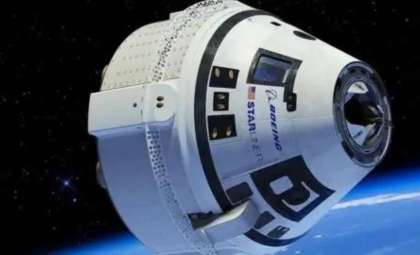
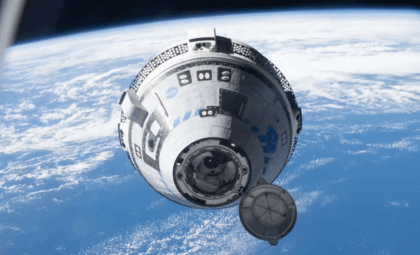
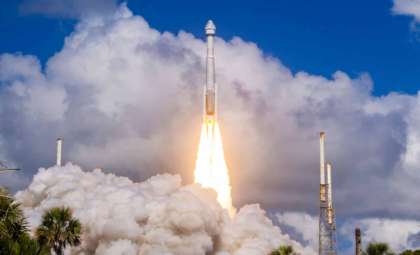
Boeing’s Starliner spacecraft is targeting a possible return to orbit later this year, following extensive redesign efforts to resolve earlier mission setbacks, reports Ars Technica. This commercial crew capsule, created to ferry astronauts for NASA, is advancing toward a new launch window after thorough engineering assessments and fixes.
Advancing the Next Phase of the Starliner Initiative
Progress is becoming more evident in Boeing’s Starliner project as engineers implement crucial adjustments to address challenges encountered during previous test flights. Developed as part of NASA’s Commercial Crew Program alongside SpaceX’s Crew Dragon, the spacecraft aims to expand astronaut transportation capabilities to the International Space Station.
Prior flights exposed significant hurdles for Boeing, including propulsion malfunctions, software glitches, and rigorous technical scrutiny, necessitating reevaluation and redesign of critical systems. The upcoming mission hinges on completing these modifications and securing NASA’s safety certifications.

As noted by Ars Technica, Boeing’s leadership feels optimistic about the current redesign phase, which may allow for a flight later this year. However, no official launch date has been set as discussions between NASA and Boeing on mission readiness continue.
This renewed push marks an important development for Starliner, which has experienced multiple delays while striving to meet the rigorous criteria for human spaceflight.
Starliner is closer to flight than you probably think.https://t.co/04EDw341SM
— Eric Berger (@SciGuySpace) July 29, 2026
Boeing Confirms Advances in Spacecraft Enhancements
Company officials report that efforts to fix previous flaws in the spacecraft are advancing positively. The focus remains on resolving technical issues to ensure improved reliability in upcoming flights.
Boeing’s CEO, Kelly Ortberg, remarked recently that the redesign progress feels promising.
“The redesign of the Starliner deficiencies is going quite well, and we’re feeling pretty good about that,” Ortberg said.
This statement indicates Boeing’s growing confidence in the engineering teams' ability to address the spacecraft’s previously identified problems. Through detailed reviews of hardware, software, and operations, Boeing prepares Starliner for another validation flight.
The mission will draw close attention from NASA and the broader space community. A successful launch could restore faith in Boeing as the provider of a second U.S. crew transport vehicle for missions to low Earth orbit.
Continuing to develop multiple crewed spacecraft aligns with NASA’s strategy to diversify options, reducing reliance on a single vehicle for astronaut transport.
Collaboration with NASA Remains Crucial Before Flight
While Boeing is optimistic about the redesign, the upcoming launch depends heavily on NASA’s thorough evaluation and approval of the updated spacecraft and mission plans.
Ortberg emphasized ongoing discussions with NASA to coordinate mission timelines: “We’ve got to work with NASA to align on the launches,” he said. “I don’t at this time anticipate that’s going to create a cost problem for us, but we do have some uncertainty here that we’ve got to work with NASA to get that put to bed, and we are working with them right now.”
Since its inception, the Boeing-NASA partnership has been fundamental for Starliner, involving comprehensive safety checks, performance assessments, and mission readiness reviews before crewed flights can proceed.
The upcoming launch would be a key milestone for Boeing in proving the spacecraft’s reliability following prior setbacks.

Starliner’s Return Flight Could Redefine Boeing’s Role in Space Exploration
A successful flight would represent more than just a mission; it would validate years of Boeing’s efforts to cement its role as a consistent partner for NASA’s astronaut transport.
Originally planned for earlier regular service, technical complications extended the timeline and led to heightened oversight. Each future flight will assess both the spacecraft’s reliability and Boeing’s capability to manage complex human spaceflight programs.
The potential launch in 2026 presents Boeing with the opportunity to move past prior difficulties and showcase advancements. Achieving success would bolster Boeing’s standing in the competitive commercial space arena and offer NASA an additional crew launch option.
Ultimately, the mission timing relies on final engineering validations, NASA’s go-ahead, and ongoing preparation by Boeing’s team. The next chapter for Starliner hinges on executing years of improvements in a flight that restores momentum.
This prospective flight is shaping up to be one of the most anticipated events in human spaceflight this year, as Boeing strives to prove that Starliner is ready to overcome its earlier challenges and join regular space missions.
- Categories:
- News






0 comments
Sign in to Comment