

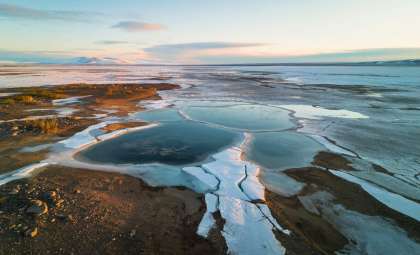
For the very first time, scientists have recorded an Arctic bobtail squid navigating the depths of Northeast Greenland National Park, showcasing the elusive creature clutching an egg sac.
This groundbreaking finding emerged during the Polar BLAST Expedition, where experts deployed a remotely operated vehicle (ROV) to survey the ocean floor. Despite being the Earth’s largest national park, the marine environments within Northeast Greenland remain vastly unidentified, making each new species observation particularly significant.
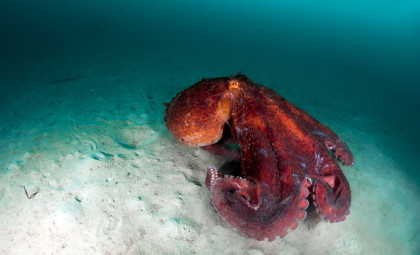
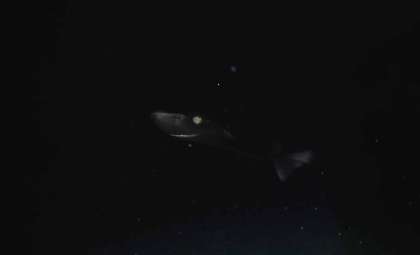
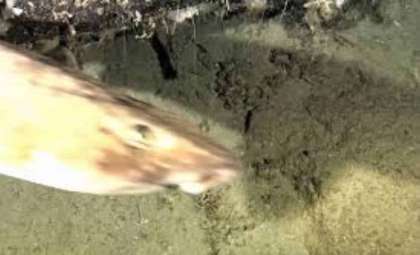
The research, featured in Polar Biology, marks the first verified encounter with the Arctic bobtail squid (Rossia moelleri) in this locale. The video also documented the rare sight of the squid transporting eggs, a behavior seldom witnessed in situ.

Unprecedented Sighting in Northeast Greenland
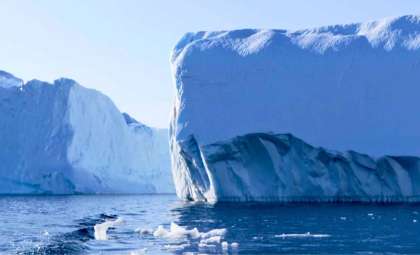
The squid was discovered approximately 50 meters deep beneath the surface in waters hovering around −1.6 °C. Utilizing laser measurements from the ROV, the team gauged its length to be close to 10 centimeters.
Dr. Paige Maroni, a postdoctoral researcher at the University of Western Australia, commented in an official news announcement that:
“Northeast Greenland National Park is the largest national park on Earth but one of the least biologically documented marine regions in the Arctic.”

This encounter was made possible aboard the Secret Atlas Micro Cruise Expedition vessel, granting access to rarely studied Arctic waters.
A Rare Glimpse into Reproduction
The finding became even more remarkable when researchers noticed the squid was bearing an egg sac. The ROV also documented three separate egg clusters resting on the sandy ocean bed.
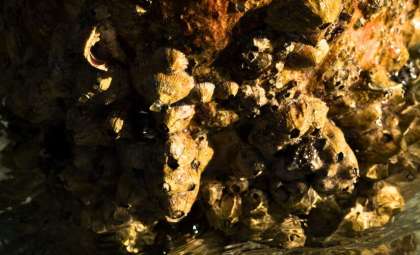
As detailed in Polar Biology, the sacs contained roughly 50, 33, and 22 eggs respectively. The pale, lustrous egg masses were firmly attached to the seabed.

The Arctic bobtail squid, the largest among its three Arctic counterparts, is superbly adapted to frigid waters. Known for its prominent eyes and sturdy body, it plays a vital role in the Arctic ecosystem by preying on species inhabiting both open waters and the seabed.
Scientists highlight that this species undergoes a brief life cycle, rendering it especially vulnerable to environmental shifts.
The Significance of This Single Encounter
Conducting marine research in remote Arctic locations remains a challenging task, underscoring the value of observations like this one. The expedition utilized the ROV to assess the seafloor delicately, minimizing ecological disturbance.
“Establishing knowledge of the biodiversity in this region is crucial for understanding ecosystem function and resilience under accelerating climate change,” Dr. Maroni stated. “This study provides a valuable new baseline for tracking ecological change in the rapidly warming Arctic.”
Dr. Maroni noted that this method is essential for closing biodiversity knowledge gaps in isolated polar zones. She added:
“In poorly studied polar ecosystems, even one verified observation can provide important insight into species distributions, reproduction and resilience under climate change.”
- Categories:
- Science


0 comments
Sign in to Comment