

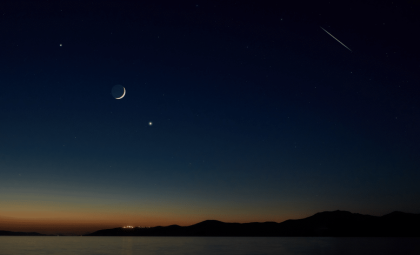
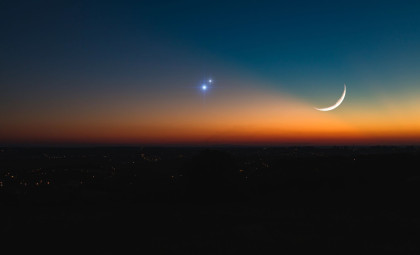
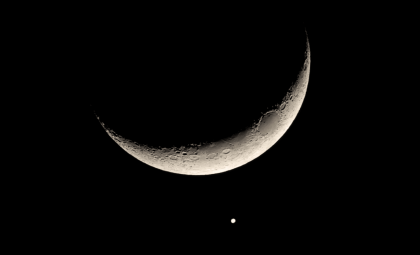
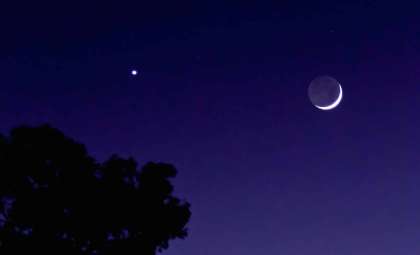
Before dawn on August 9, stargazers can witness a stunning close encounter between a slender crescent moon and Mars, as reported by Space.com. This rare conjunction will take place against the backdrop of the Taurus constellation, offering an easy-to-see display without the need for advanced instruments.
During the early morning hours, the moon, illuminated at 17%, will rise well before sunrise. In cities like New York, expect to see the crescent moon appear above the horizon soon after 2 a.m., roughly four hours prior to the sun’s arrival.
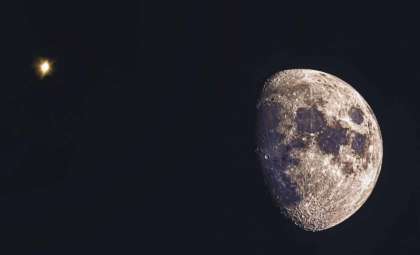
Mars will be positioned less than 5 degrees to the lower right of the moon, presenting as a steady red dot. This close proximity makes it possible to view both bodies simultaneously with 10×50 binoculars, enabling viewers to compare the moon’s glowing surface and the distant red planet side by side.

This event offers a straightforward but captivating skywatching moment. Unlike many astronomical occurrences which require telescopes or cameras, this pairing is easily visible to anyone with a clear eastern vantage point and good weather.
Mars and the Moon’s Dance Before Daybreak
Space.com describes the celestial duo’s journey across the predawn sky, where Mars appears to gradually edge ahead as morning light approaches.
This apparent motion stems from Earth’s rotation, causing stars, planets, and the moon to shift positions throughout the night. Observers can enjoy watching this gradual movement over several hours.
The scene will be further enhanced by nearby constellations: Orion will glow to the right, while Taurus and Gemini will frame the display from above and below.
For those passionate about astronomy, the arrangement provides a glimpse of the winter sky, previewing constellations that become prominent during colder months. This August event is an early chance to spot stars that will dominate the night later in the year.
Earthshine Illuminates Lunar Features
During the close encounter with Mars, the thin crescent moon will also exhibit a faint but beautiful glow called earthshine. This dim illumination occurs when sunlight reflected from Earth gently lights up the moon’s dark side.
With binoculars, observers might detect this ghostly glow outlining lunar regions typically cloaked in shadow, revealing the dark lunar plains faintly illuminated.
Earth acts as a vast reflector, bouncing sunlight from its clouds, oceans, and land back onto the moon, providing enough light to showcase features unseen in direct sunlight.
The blend of the crescent shape, earthshine, and Mars’ reddish hue will make for a multi-layered and visually striking cosmic tableau.
The Lunar-Mars Show Precedes a Total Solar Eclipse
This moon and Mars conjunction occurs just days before the moon reaches its new moon phase on August 12, when it will pass directly between Earth and the sun, causing a total solar eclipse visible in parts of Greenland, Iceland, and Spain.
This sequence offers a unique perspective for skywatchers: first a crescent moon near Mars, then the moon aligning with the sun during the eclipse.
Those planning to observe the eclipse must use approved solar filters to prevent serious eye damage, as looking directly at the sun without protection is hazardous.
On August 9, the crescent moon will provide a last glimpse of its illuminated face before it transitions into the eclipse phase.

Tips for Viewing Mars and the Crescent Moon
To get the best view, find a spot with an unobstructed view of the eastern horizon. Urban light pollution may hinder visibility, so darker locations are preferable for spotting the stars around the moon and Mars.
No telescope is necessary to enjoy this event. The moon will be bright enough to find easily, and Mars will appear as a small reddish dot nearby. Using binoculars can enhance details on the moon’s surface.
Start watching well before sunrise, as increasing daylight will cause fainter stars to fade. Mars and the moon will remain visible into dawn, offering a dynamic and evolving sky spectacle.
This event is a wonderful reminder of how lunar phases and planetary motions continually create accessible and captivating astronomical phenomena for casual skywatchers.
- Categories:
- News


0 comments
Sign in to Comment