

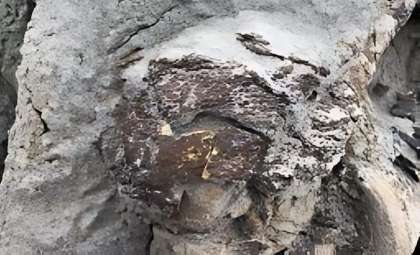
Unearthed in China, a remarkably preserved 125-million-year-old fossil has challenged existing knowledge of dinosaur skin structures. The young herbivorous dinosaur, named Haolong dongi, featured hollow, spine-like projections emerging directly from its skin, a characteristic previously undocumented in any dinosaur species. Impressively, the fossil’s skin retains visible individual cells despite its ancient age.
This discovery pertains to the Iguanodontia clade, a group of beaked, sturdy herbivores studied for over two centuries. Yet, this newly identified species adds an unprecedented and fascinating dimension to our understanding of this dinosaur group.
What makes this specimen especially extraordinary is its preservation of soft tissues. Such delicate biological material rarely survives fossilization at a microscopic scale, making it a significant find beyond the mere addition of a new species to science.

Exceptional Cellular-Level Fossil Preservation
Scientists from CNRS and affiliated institutions employed X-ray tomography along with high-resolution histology to analyze the fossil’s fine tissue structure by slicing it into ultra-thin layers under microscopic examination.
This methodology confirmed the survival of skin cells within the fossilized remains after roughly 125 million years, indicating a preservation quality unmatched by most fossils.

The detailed cellular data allowed researchers to reconstruct the internal structure of the unusual cutaneous spikes blanketing much of the dinosaur’s body. These features are cutaneous, originating from the skin rather than the bones, distinguishing them from bony horns or plates derived from the skeleton.
“These spikes differ structurally from known protofeathers in non-avian dinosaurs and scaly spines in extant squamates, suggesting a distinct evolutionary origin,” stated the authors.
Potential Functions: Defense, Temperature Control, or Sensory Role
The presence of hollow spines on a herbivorous dinosaur sparks several theories. The primary hypothesis is protection. Living in the Early Cretaceous alongside small meat-eaters, Haolong dongi might have used its porcupine-like spikes to deter predators.

Additional proposed functions were highlighted in the Nature Ecology & Evolution study published on February 6, 2026. The spikes might have also functioned in thermoregulation, helping the dinosaur manage body heat by increasing surface area. Alternatively, they could have provided a sensory advantage, detecting environmental stimuli akin to an early tactile warning system.
Naming Honors, Juvenile Specimens, and Open Questions
The new dinosaur has been named Haolong dongi paying tribute to Dong Zhiming, a prominent Chinese paleontologist celebrated for decades of research uncovering China’s rich fossil heritage. This designation is especially fitting since the discovery occurred in the same region where Dong conducted much of his influential work.
One important nuance remains: the fossil is a juvenile. As a result, scientists don’t yet know if adult Haolong dongi retained these remarkable hollow spines or whether the feature vanished during growth. Further fossil evidence will be necessary to understand these structures’ development throughout the dinosaur’s life cycle.

- Categories:
- Science





0 comments
Sign in to Comment