

NASA’s Curiosity rover has surpassed an incredible milestone, logging 5000 sols of exploration on the surface of Mars. This achievement highlights a mission that has profoundly expanded our knowledge of the planet’s ancient environments. The milestone was detailed in a mission report authored by William Farrand, Senior Research Scientist at the Space Science Institute, summarizing the rover’s recent actions and the scientific insights gained from its extensive journey. Since touching down in Gale Crater back in 2012, Curiosity has investigated the geology, soil, landscapes, and atmosphere, all while seeking signs of Mars’s past habitability. The rover’s long operational life has provided researchers with one of the most comprehensive datasets ever collected from another world.
How This Mission Revolutionized Mars Exploration
Upon its arrival in Gale Crater on August 6, 2012, NASA’s Curiosity rover started its quest to determine if Mars had once hosted conditions supporting microbial life. Across thousands of Martian days, the rover traversed varied terrains, examining ancient lakebeds, rock layers, and geological structures that hold clues about the planet’s watery past.
Equipped with advanced scientific tools, Curiosity analyzed soil, rocks, and atmospheric parameters, helping scientists piece together how water, climate shifts, and geological activity have shaped Mars over time. The mission has far exceeded its original scope, building an invaluable long-term archive of Martian observations.

Celebrating 5000 sols mirrors years of dedicated scientific effort and engineering expertise. Each new finding enriches the evolving narrative of Mars’s geological and environmental history spanning billions of years.

Tracking Curiosity’s Milestone Days on Mars
The milestone report, penned by William Farrand, Senior Research Scientist, Space Science Institute, covered the rover's operations between sols 4995 and 5001, emphasizing the continued importance of Mars exploration.
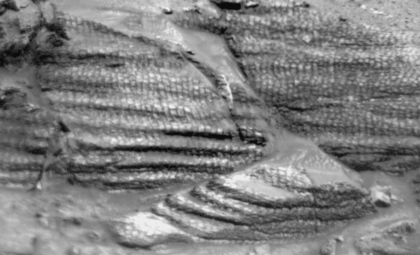
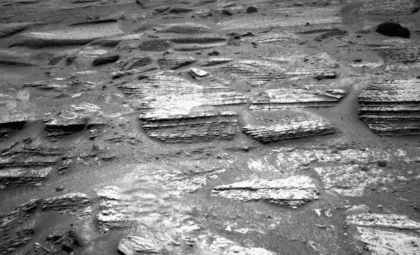
During this interval, Curiosity surveyed the terrain near its position, took photographs, analyzed rock formations, and gathered data from its instruments. These activities deepen our understanding of Mars's geological past and environmental dynamics.
Updates like this highlight the complex work entailed in remotely guiding a rover millions of miles away. The ongoing collection of data is crucial to decode Mars’s geological story and pinpoint promising sites for future investigation.
Insights Into Mars’s Ancient Water Worlds
Curiosity has uncovered compelling evidence that Gale Crater once harbored environments with persistent water presence. Geological markers discovered by the rover point to ancient lakes and conditions where life-supporting chemicals were likely present.
The study of Mount Sharp, the central mound within Gale Crater, has enabled scientists to explore different chapters of Martian history. The stratified layers in this mountain preserve a detailed record of changing environmental conditions over vast time scales.
The continuous data from Curiosity also aids in examining modern-day Mars, including seasonal shifts and atmospheric patterns, linking the planet’s contemporary climate with its ancient geological archives.
An Ongoing Expedition Unveiling Mars’s Secrets
After 5000 sols, Curiosity remains an active and vital explorer on Mars, persistently collecting critical data that supports planetary science and helps prepare for upcoming missions.
The knowledge gained guides future robotic explorers and enhances how we design spacecraft for extreme extraterrestrial environments. The rover’s enduring mission showcases the immense value of prolonged planetary exploration.
As it continues its traverse across Gale Crater, Curiosity relentlessly hunts for new evidence that will further illuminate Mars’s complex history. Passing the 5000-sol mark represents a significant chapter in a mission that has forever changed our comprehension of the Red Planet.
- Categories:
- News



0 comments
Sign in to Comment