

Recent research suggests that long-held measurements of Venus’s spin might have been based on its atmospheric dynamics rather than the planet’s solid body rotation. This revelation calls for a reassessment of how planetary rotations are deduced, especially for worlds far beyond our Solar System.
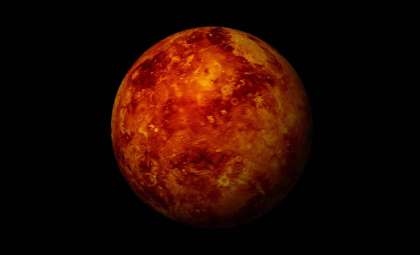
Unlike many planets, Venus completes one rotation on its axis in about 243 Earth days, making it an extremely slow spinner. However, its thick cloud cover rapidly circles the planet in nearly four days, highlighting a stark contrast between the motion of its atmosphere and the underlying surface.
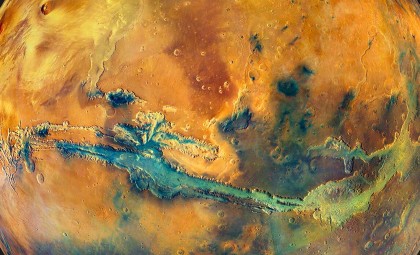
Observing Venus’s rocky surface is challenging because it is perpetually concealed beneath dense clouds, preventing direct visual studies like those conducted on planets such as Mars. Historically, scientists have relied on tracking cloud patterns, though these are indicative of atmospheric winds rather than the actual planetary rotation.

Stephen Kane and his team at the University of California, Riverside, explored this dilemma, proposing that rotation rates derived solely from atmospheric features might not precisely reflect a planet’s true spin. This issue is critical when examining exoplanets, where data is often limited to atmospheric signatures.
Venus’s Shrouded Surface Conceals a Hidden Rotation
Venus exemplifies how markedly a planet’s atmosphere can differ from its solid surface beneath. Despite the planet’s nearly eight-month-long rotation period, its upper atmosphere spins swiftly in what scientists call super rotation. This rapid atmospheric motion can mislead observers into overestimating Venus’s rotational speed if cloud movements are mistaken for the planet’s actual spin.
Understanding this difference is crucial because the rate of a planet’s rotation plays a major role in shaping its environment, influencing heat distribution, wind circulation, and climate systems.

Kane’s study highlights that mistaking atmospheric wind speeds for planetary rotation can lead to inaccuracies in planetary modeling. A single measurement taken from cloud-top levels might only describe weather dynamics, not the true length of a Venus day.
Techniques to Detect the True Planetary Spin
The researchers recommend utilizing observations across varied wavelengths of light to probe different atmospheric layers. Infrared data, in particular, can provide insights into lower atmospheric strata that move slower than the clouds above.
For Venus, comparing observations from distinct atmospheric depths enables the isolation of wind effects from the planet’s actual rotation.
The study, released by the University of California, Riverside (UCR), suggests that such approaches can improve our understanding of planets that cannot be observed directly. Many exoplanets are identified through atmospheric characteristics or starlight variations, making it difficult to pin down their true rotation rates when atmospheric circulation might dominate the signal.
PLATO’s Potential to Unveil Venus-like Worlds
The upcoming PLATO mission by the European Space Agency (ESA), set to launch in March 2027, offers promising prospects to address this challenge. It aims to discover hundreds of planets with sizes and characteristics similar to Venus.
Until now, Venus has remained unique for combining an Earth-like size with extreme atmospheric and rotation conditions. A wider sample of comparable planets would aid scientists in determining if slow rotational periods correlate with harsh planetary environments. Doctoral candidate Emma Miles and her collaborators hope that these findings will shed light on how rotation shapes planetary evolution.
“Venus is a giant mystery,” Kane said. “To understand it, we need to see Venuses in other systems and see how they changed through time. Rotation is a huge piece of that puzzle, and we need to be careful that what we think we’re measuring is really the rotation of the planet.”

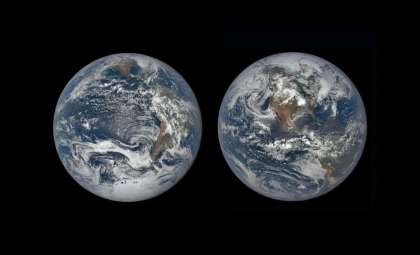
On Earth, a complete rotation every 24 hours drives the flow of heat via atmospheric and ocean currents, demonstrating how integral spin is to planetary climate.
- Categories:
- Space



0 comments
Sign in to Comment