

Volcanic glass samples from the Kermadec Arc, located north of New Zealand, reveal gold levels far exceeding those found in typical mid-ocean ridge magmas. Chemical analyses suggest this enrichment originates when water-bearing mantle rocks undergo multiple melting events beneath submarine volcanoes.
This investigation highlights how gold accumulation initiates deep within Earth’s interior, prior to magma's ascent to the seafloor and before hot fluids redistribute metals through volcanic formations. Water presence enhances mantle melting, while intense melting decomposes sulfur-rich minerals that typically trap gold.
The research, featured in Communications Earth & Environment, tracks these processes through the chemistry preserved in volcanic glass. Evidence shows the mantle beneath the volcanic arc experienced an initial melting event followed by a secondary melting, allowing heightened gold incorporation into emerging magma.

Volcanic Glass Encodes Magma’s Deep Chemistry
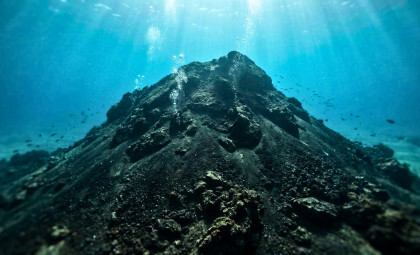
The study utilized 66 volcanic glass specimens collected from the Kermadec island arc and the adjacent Havre Trough in the South Pacific. Both sites are situated near a subduction zone where the Pacific Plate descends beneath the Australian Plate, fueling volcanic activity above.
Seafloor lava cools extremely rapidly underwater, transforming into glass before crystals can form. This rapid cooling preserves the magma’s original chemical signature, providing scientists with a window into subsurface conditions. The most insightful samples were primitive glasses, which retained much of their original chemical composition after leaving the mantle.
Analyses measured gold alongside silver, copper, selenium, and platinum — elements categorized as chalcophile since they tend to bond with sulfur. Their relative abundances helped researchers monitor transformations in sulfur-bearing minerals during mantle melting.
Gold concentrations reached up to six nanograms per gram of rock. While this quantity appears minuscule, it is unusually elevated for mantle-derived magma. Additionally, gold-to-copper ratios surpassed those found in fertile mantle sources and basal magmas from mid-ocean ridges, as noted in the GEOMAR overview.
Water Promotes Extensive Mantle Melting
At subduction zones, water-rich minerals are transported into the Earth as one tectonic plate dives beneath another. Water released from this slab infiltrates the overlying mantle, lowering its melting temperature—a process termed hydrous mantle melting.
The researchers first questioned whether water directly influences gold concentrations in magma. Instead, their data indicate water mainly increases the volume of mantle melting, allowing a greater fraction of rock to liquefy and some mantle regions to experience multiple melting episodes.

During limited melting phases, much of the gold remains trapped within sulfide minerals—compounds where sulfur bonds with metals. These sulfide minerals can endure partial melting without releasing their gold into molten magma.
According to marine geologist Christian Timm in the official GEOMAR release, “At high degrees of melting, these minerals break down, releasing their gold completely into the melt.”
Gold Liberated by Multiple Melting Events
Findings indicate melting exceeded the sulfide liquidus temperature, where residual sulfide minerals become fully molten and lose their ability to hold onto gold, silver, and other metals.
Patterns also demonstrate that the mantle source had undergone a prior melting event before remelting occurred. This sequential melting transfers gold from solid mantle minerals incrementally into magma, as opposed to a single melting phase.
The mantle beneath the Kermadec Arc is both rich in water and oxidized. These conditions combined with intense melting diminish sulfide minerals’ gold-retaining capacity, facilitating gold's assimilation into ascending silicate melt.
Consequently, glass from this region shows higher gold levels than typical magmas formed at mid-ocean ridges, linked to repeated melting in mantle domains already modified by earlier melt extraction.
Gold Enrichment Precedes Seafloor Arrival
The study’s identified mechanism occurs below oceanic island arcs, volcanic chains above subduction zones. Magma generated here can concentrate gold before it ascends into shallower volcanic systems.
Subsequent geological activity can alter initial metal concentrations. As magma cools, water-rich fluids may separate and migrate through fractures, dissolving and redepositing metals within the crust under fluctuating temperature and chemical conditions.
Such processes lead to hydrothermal sulfide deposits on the ocean floor, where mineral-rich waters interact with volcanic rock, releasing dissolved metals. However, the mantle melting outlined in this research sets the foundational gold content in magma feeding these systems.
These volcanic glasses do not present economically viable gold concentrations, remaining far below thresholds for mining. Instead, they illuminate Earth's deep geochemical pathways transporting gold from mantle minerals into magma beneath the Kermadec volcanic region.
- Categories:
- Science



0 comments
Sign in to Comment