

Researchers investigating the depths off the coast of Argentina have identified 57 previously unknown species and five new genera in the Mar del Plata Canyon. These discoveries include a variety of organisms from microscopic copepods to sea cucumbers, corals, and sea pens, highlighting the rich biodiversity still unexplored in the South Atlantic's deep waters.
The discoveries stem from the Underwater Oases of the Mar del Plata Canyon expedition, conducted during July and August 2025 aboard the research ship Falkor (too). The expedition concentrated on the Brazil-Malvinas Confluence, a unique marine region where warm subtropical waters collide with cold, nutrient-laden currents flowing northward.
After the expedition, the investigation intensified. In July 2026, a group of 20 taxonomists and emerging scientists from Latin America and Europe assembled for a Species Discovery Workshop to analyze specimens collected during the expedition and from earlier samples gathered during Argentina’s Talud Continental I-III expeditions in 2012 and 2013.

Striking Discovery of 57 Unique Species
The newly cataloged species span multiple taxonomic groups. Experts documented 20 new copepods, 22 new echinoderms including sea cucumbers and crinoids, 14 new cnidarians such as various octocorals, sea pens, and stony corals, along with one scaphopod mollusc.
Among these, five novel genera were also identified, representing corals, crustaceans, and sea cucumbers. A particularly distinctive discovery was a sea cucumber nicknamed “Loki the Sea Cucumber” (Peniagone sp.), remarkable for its horn-like protrusions. This species was one of up to 10 new holothurians distinguished during the workshop.

Another significant discovery was a Pseudotachidius copepod found at depths ranging from 1,909 to 2,625 meters. Of the copepod specimens analyzed, only about 10% were examined, yet all identified belonged to species new to science, accounting for 20 newfound species and one novel genus.
Exploring a Canyon That Plunges Over 3,500 Meters
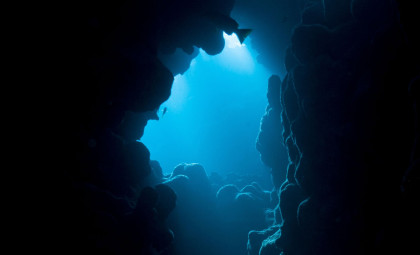
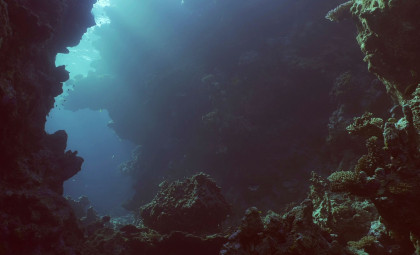
The research team explored a submarine canyon plunging beyond 3,500 meters, nearly twice as deep as the Grand Canyon. To reach these extreme depths, they relied on the remotely operated vehicle ROV SuBastian.
SuBastian transmitted real-time video footage from the ocean floor, captivating an audience of more than four million viewers. The live streams revealed spectacular deep-sea coral reefs, mushroom coral formations, and an astonishing range of marine life.

Among the most memorable sightings was a bright orange sea star reminiscent of SpongeBob SquarePants’ Patrick Star. Although not confirmed as a novel species, it quickly became a standout image of the expedition.
The dives also uncovered a vivid red-orange Orstomisis octocoral at 1,954 meters depth and a Pseudumbellula sea pen collected via SuBastian’s robotic arm. This sea pen is among the 14 new cnidarian species recognized during the identification workshop.
Accelerated Taxonomic Identification of Marine Life
The 2026 workshop was hosted by the Nippon Foundation-Nekton Ocean Census alongside the Schmidt Ocean Institute. Utilizing various taxonomic techniques, the team contributed their data directly to Ocean Census NOVA, an accessible platform dedicated to new marine species documentation.
“International cooperation in taxonomy is critical, especially in groups with few active specialists,” said expedition principal investigator Daniel Lauretta. He said the workshop helped speed up species identification and gave early-career researchers more hands-on experience with deep-sea fauna.
The collected specimens will remain housed in Argentine scientific institutions, including the Museo Argentino de Ciencias Naturales “Bernardino Rivadavia” located in Buenos Aires.
“Discovering 57 new species and five genera in just two weeks demonstrates the speed and power of collaborative taxonomy,” said Michelle Taylor, head of science at Ocean Census.
Research efforts are planned to continue with an upcoming Schmidt Ocean Institute expedition set for February and March 2027, targeting another submarine canyon believed to harbor many unique, endemic species.
- Categories:
- Science



0 comments
Sign in to Comment