

Mauritius, a volcanic island in the Indian Ocean, emerged around 9 million years ago, showcasing striking black lava formations, lush green hills, and pristine white beaches.
Yet, its sandy shores hold surprisingly ancient grains of sand containing zircon crystals that date from 660 million to over 2 billion years old.
Some zircon crystals found near Mauritius are nearly two billion years in age.

Scientists combined this mineral data with gravity measurements and tectonic reconstructions to reveal that fragments of a long-lost continental landmass lie hidden beneath the ocean floor.
These fragments are collectively known as Mauritia.
These ancient continental remnants were left behind when Madagascar and India began drifting apart millions of years ago and subsequently became buried under volcanic rocks formed during the Indian Ocean’s expansion.

Some have drawn parallels between this discovery and the legendary “Lost Continent” of Lemuria, an area once thought to have vanished beneath the Indian Ocean.
However, this comparison extends beyond scientific results. Scientists have identified ancient continental crust beneath the ocean but have not found any evidence of lost civilizations or cities associated with the myths of Lemuria.
Significance of Ancient Zircon Crystals on a Young Island
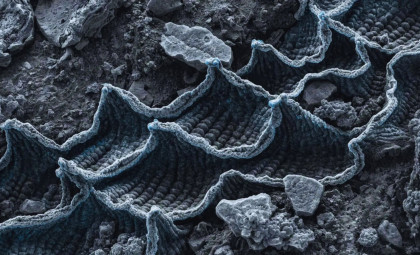
Zircons are invaluable to geologists due to their durability and reliable uranium-lead radioactive decay dating method.
Finding zircon crystals billions of years old in the relatively young volcanic sands around Mauritius posed a major geological puzzle.
Why would crystals originating in rocks nearly two billion years old be found on an island formed from volcanic activity just a few million years ago?
Insights Gained from Zircon Analysis
A 2013 study published in Nature Geoscience suggested that as magma formed Mauritius’s volcanoes, it passed through buried ancient continental crust, picking up zircon crystals along the way.

Uranium-lead dating showed some zircons to be over 1.97 billion years old, while others ranged between 660 and 840 million years.
These results imply the presence of ancient continental lithosphere buried beneath Mauritius.
The zircon evidence was complemented by additional data.
Investigating Submarine Continental Structures
Gravity surveys provided insight into the thickness and composition of the Earth's crust beneath Mauritius and the nearby Mascarene Plateau.
The results indicated unusually thick crust extending toward the Seychelles, inconsistent with typical oceanic crust thickness, suggesting continental origins.
The Fragmentation of Mauritia
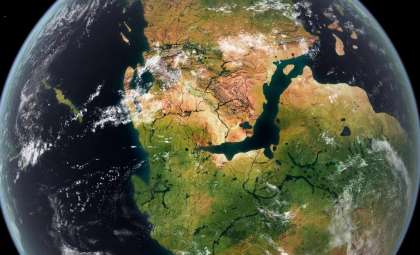
Plate tectonic reconstructions propose that Mauritia is a Precambrian microcontinent that separated from Madagascar between 83.5 and 61 million years ago during seafloor spreading.
Most of its surface was later submerged and covered by volcanic activity.

The Réunion mantle plume is believed to have fueled volcanic eruptions that blanketed these buried continental sections, enabling ancient zircon crystals to be transported to young volcanic island surfaces.
Addressing Alternative Hypotheses
Despite strong evidence, early findings faced skepticism since the ancient zircons were collected from beach sand, raising questions about possible contamination from human sources like ship ballast or construction materials.
Jérôme Dyment from the Paris Institute of Earth Physics suggested such alternatives in a National Geographic article.
However, subsequent research has provided stronger proof for the continental origin of these zircons.
Zircon Findings from Volcanic Rock Confirm Ancient Origins
A 2017 study in Nature Communications recovered zircon grains between 2.5 and 3 billion years old directly from 5.7-million-year-old volcanic trachyte rock, not just loose beach sand.
This discovery confirmed that ancient continental crust truly exists beneath Mauritius.

The zircon ages matched those of rocks from central-eastern Madagascar about 700 km west of Mauritius.
This correlation reinforces models that Mauritia fragments are remnants of old geological cores linked to Madagascar and southern India.
Distinguishing Geological Reality from Myth
Although the discovery of ancient continental fragments beneath the Indian Ocean echoes aspects of the Lemuria myth, the connection is primarily geographic rather than historical or cultural.
Plate tectonics explains how continental crust can fragment, stretch, sink, and become buried under younger volcanic materials.
Mauritia fits neatly into this framework as a microcontinent hidden beneath the ocean.
Scientists remain unable to confirm or deny any legendary claims about Lemuria or lost civilizations in this region.
While evidence supports Mauritia's presence, boundaries and the full extent of these submerged continental fragments remain uncertain.
The recent research authors emphasize significant unknowns persist, signaling more exploration and investigation is needed.
Despite the gaps, these discoveries broaden our understanding of Earth’s submerged ancient geologies beneath young volcanic islands like Mauritius.
- Categories:
- Science

0 comments
Sign in to Comment