

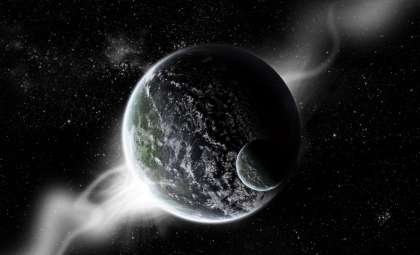
Though Earth and Mars originated within the same youthful solar system approximately 4.5 billion years ago, recent research suggests their formation unfolded by distinct mechanisms. A cutting-edge study published in Nature Astronomy analyzes the chemical signatures embedded deep within these planetary bodies, revealing that even neighboring rocky planets can develop through differing assembly processes.
Contrasting Origins for Two Adjacent Worlds
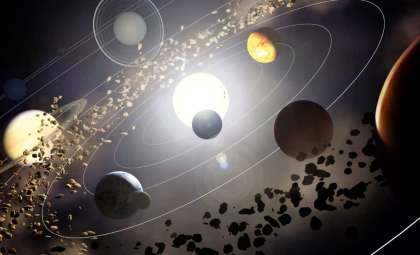
The early solar nebula was a chaotic mix of gas, dust, and solids encircling the nascent Sun. Within this environment, minute particles gradually aggregated into larger objects, eventually culminating in the planets we observe today. Planetary formation theories typically highlight two primary growth mechanisms for rocky planets: one driven by collisions among sizable planetesimals, and the other by pebble accretion, where growing bodies swiftly attract small drifting particles. Both may contribute simultaneously, but scientists have debated which was more influential for planets like Earth and Mars.
Scientists at the University of Copenhagen present evidence that these two terrestrial neighbors followed largely separate developmental routes. By tracing their chemical compositions, they propose that Earth’s mass mainly accumulated via pebble-fed protoplanets merging together, while Mars acquired most of its material directly from planetesimals.


“The most surprising result was that Earth and Mars appear to have formed in different ways. You might have expected that two planets formed side by side in the same solar system would share a more similar formation history,” says professor Anders Johansen, who studies planet formation at the Globe Institute, University of Copenhagen. He co-led the new study with assistant professor Haiyang Wang.
This distinction is significant because Earth and Mars are typically regarded as comparable examples of terrestrial planet formation. Both are rocky planets originating from the inner solar system's circumstellar disk, yet this research reveals that proximity did not dictate a uniform formation process. Instead, factors like local material availability, developmental timing, and solid dynamics within the disk may have driven these neighboring planets to grow through markedly different paths.
Earth’s Growth Dominated by Pebble-Driven Protoplanets
The findings favor a hybrid scenario where neither pebble accretion nor planetesimal collisions alone account for planetary growth; rather, it is the relative importance of each process that varies. Earth’s formation appears largely influenced by protoplanets that grew rapidly by capturing pebbles before merging, while Mars maintains a stronger chemical signature indicating predominant direct assembly from planetesimals.
“At least 75% of Earth’s mass appears to originate from two young planets, known as protoplanets, that grew large by accreting pebbles, while planetesimals contributed up to 25%. In contrast, roughly three-quarters of Mars’ mass appears to come from planetesimals, with the remaining quarter originating from pebble accretion,” says Wang.
This interpretation gives Earth a complex formative lineage. Instead of forming solely by countless planetesimal collisions, much of its mass likely condensed within two earlier protoplanets that had efficiently collected pebble material before merging into the Earth we know today. Mars, conversely, appears to have been built primarily by the direct accumulation of planetesimals, supplemented by a smaller amount of pebble accretion.

Ancient Elemental Signatures Illuminate Planetary Origins
The team’s conclusions stem from examining the chemical makeup of Earth’s and Mars’ outer rocky layers — their mantles and crusts — which preserve clues about the source materials and conditions present during early formation. The study, accessible in Nature Astronomy, focuses on the abundance of volatile elements such as sodium, zinc, and potassium.
Volatile elements are highly sensitive to evaporation at elevated temperatures, making their quantities valuable indicators of thermal processes, material loss, or prior depletion during planetary assembly. By analyzing these chemical fingerprints and integrating numerical models, the researchers traced backward from present-day planets to decode the ancient growth mechanisms.
“It is a major detective job to figure out what happened back then when most of the evidence disappeared long ago. But even after 4.5 billion years, the compositions of Earth’s and Mars’ mantles remain the same. You can think of them as an imprint of the formation process,” says Johansen.
This chemical approach provides a key advantage given the inability to observe early planet formation directly. Geological processes over billions of years have erased or altered most physical evidence from their infancy. The preserved mantle chemistry acts as an enduring record, allowing scientists to identify combinations of source materials and growth modes consistent with current elemental abundances.
Hybrid Formation Model Holds, Despite Some Uncertainties
Reconstructing events from the first few million years of the solar system’s evolution inherently involves assumptions. The researchers acknowledge limitations, particularly regarding the initial compositions of the primordial building blocks from which Earth and Mars formed. These are inferred from meteorites, planetary data, and solar nebula models but cannot be sampled directly.
Adjustments to these assumptions may shift exact proportions of pebble accretion versus planetesimal growth. However, across numerous tested scenarios, the overarching conclusion remains steady: Earth sustained a stronger pebble-driven growth, while planetesimals contributed a greater share to Mars’ mass.
“The exact percentages may vary somewhat, but our analyses consistently indicate that Earth and Mars formed in two different ways. Our method provides a more precise and direct way of understanding planet formation than the more widely used isotope-based approach, which can often be interpreted in multiple ways,” says Wang.

For decades, isotope analyses have been instrumental in unraveling planetary formation histories by tracing the sources and interactions of materials. While the new chemical modeling does not replace isotopic studies, it offers an independent approach to evaluate different formation theories. Cross-validation among methods will enhance confidence, while discrepancies may highlight areas needing further investigation.
Ultimately, this research challenges the notion of a single universal recipe for rocky planet formation. Even within a single planetary system, worlds may grow through varying proportions of pebble accretion, planetesimal assembly, and embryo collisions. Recognizing this diversity adds complexity to models striving to explain how terrestrial planets develop from the same primordial disk.
- Categories:
- Astronomy







0 comments
Sign in to Comment