

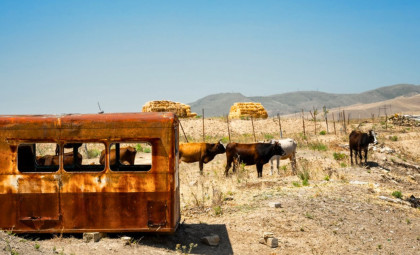
In 1871, a small group of five cattle was introduced to Amsterdam Island, creating a genetically limited population on this isolated landmass. Despite such a narrow foundation, the herd flourished, eventually reaching an estimated size of around 2,000 individuals.
The population endured for nearly one and a half centuries until the final cattle were eradicated in 2010. Luckily, genetic samples from 18 individuals had been collected and preserved, allowing scientists to later investigate how this population persisted despite its limited genetic diversity.
Unexpectedly, a 2024 Molecular Biology and Evolution study uncovered that the herd's DNA contained a blend of European taurine and Indian Ocean zebu cattle ancestry. This hybridization provided more genetic variability within the founding group than had been presumed and also calls into question earlier explanations for their notably small stature.

Survival of Mixed Genetic Heritage Through a Dramatic Bottleneck
The team analyzed genetic data extracted from 18 Amsterdam Island cattle samples, with 12 collected in 1992 and six in 2006. Of these, eight samples yielded enough DNA for comprehensive whole-genome sequencing.
The genomic patterns revealed a mixed ancestry: about 75% of the genetic makeup linked to European taurine cattle, with the remainder tracing back to Indian Ocean zebu breeds. Among European breeds, Jersey cattle emerged as close genetic relatives.
This admixture likely existed prior to their arrival on the island. The mitochondrial DNA analysis showed the presence of haplogroups typical of African cattle, including African zebus, hinting that the founders may have already bred with local breeds before being transported from La Réunion.

The initial bottleneck was stark, consistent with the documented founders in 1871, but was quickly followed by rapid population growth.
Historical accounts noted approximately 2,000 cattle present in both 1952 and 1988.
Despite many generations isolated on the island with limited gene flow, the population maintained moderate genetic diversity. The researchers detected no clear signs of purging of harmful genetic mutations typical in small, inbred populations.
Genome sequencing enables scientists to examine extensive genetic variation across an organism’s entire DNA sequence, surpassing the scope of tests focused on individual genes.
Smaller Size Not Due to Island Dwarfism
The Amsterdam Island cattle were notably smaller than typical domestic breeds, and previous research proposed rapid size reduction after isolation as the cause.
A 2017 Scientific Reports study, which included measurements of 90 adult cattle, categorized this population as an example of fast insular dwarfism.
New genomic evidence offers a different interpretation.
The 2024 study connected the Amsterdam herd genetically to already small-bodied ancestors, particularly Jersey cattle and Madagascar zebu. Measurements of the island cattle aligned with these ancestral groups' sizes, indicating no need to invoke rapid body size reduction after their introduction.

An assessment of height-related genetic variants showed that predicted adult size of the sequenced Amsterdam cattle fell intermediate between Madagascar zebu and Jersey cattle, and well below larger breeds like Holsteins.
Importantly, there was no evidence that natural selection favored genes linked to smaller stature within the population.
Thus, the study suggests that insular dwarfism was not the primary factor behind the herd's body size. Instead, the animals were simply descendants of inherently small ancestors.
Genomic Marks of Feral Adaptation
The research team also investigated other traits, focusing on how living wild impacted the cattle's genome after generations without human management.
Several candidate genes showing selection signals were related to nervous system functions and development, likely reflecting behavioral adaptations during their transition from domesticated cattle to a feral population. However, limited sample size constrains definitive conclusions.

Historical descriptions revealed structured social groups in the herd: females and younger males formed groups, while adult and subadult males formed separate coalitions, with mixed groups appearing during mating seasons.
The authors emphasize that feralization is a multifaceted evolutionary process rather than a simple undoing of domestication.
Conservation Initiatives Brought an End to the Herd
Though the cattle overcame their genetic challenges, their presence on Amsterdam Island created environmental concerns.
Efforts to protect local species and restore the island's ecosystem prompted control measures. According to the Agreement on the Conservation of Albatrosses and Petrels, strategies included culling and fencing.
The last of the cattle were eliminated by 2010. Restoration also involved replanting native Phylica arborea trees and removing invasive vegetation.
No biological samples were collected during the final eradication, but genetic data from the 18 previously preserved animals collected in 1992 and 2006 allowed reconstruction of the herd’s lineage, tracing back to the original five founders in 1871.
- Categories:
- Science




0 comments
Sign in to Comment