

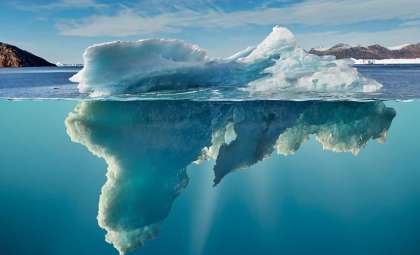
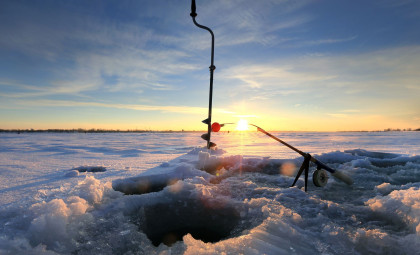
In 2009, scientists exploring the Ross Ice Shelf in Antarctica made a startling discovery when they found a shrimp-like crustacean living below 183 meters (600 feet) of ice. This discovery demonstrated that complex life forms thrive in one of Earth's most secluded environments, overturning previous beliefs about the limits of survival underneath Antarctica’s extensive ice shelves.
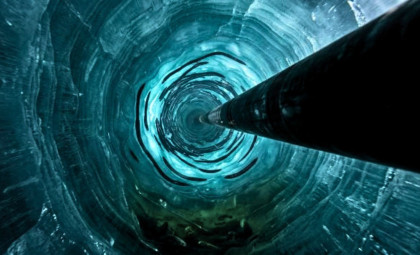
Antarctic drilling initiatives have long been instrumental in studying the frozen continent and the ocean hidden beneath its thick ice. The 2009 expedition was groundbreaking as it was the first time a Jet Propulsion Laboratory (JPL) camera was deployed beneath the Ross Ice Shelf to capture direct imagery of the submerged ice surface.
The team initially expected to encounter microbial organisms in the dark waters beneath the ice rather than visible marine animals. Instead, their camera recorded an active crustacean interacting with the drilling gear. IFLScience noted that this unexpected footage amazed both glaciologists and marine scientists involved in the project.

An Unexpected Encounter in Total Darkness
According to a NASA report, after perforating approximately 183 meters (600 feet) of ice, the researchers lowered a camera into the seawater beneath the ice shelf. The device captured images of a lysianassid amphipod, a tiny shrimp-like crustacean, swimming around the cable and investigating the apparatus closely.
Robert Bindschadler, an ice scientist at NASA, later recalled the excitement around the monitor. Speaking to the Associated Press, he stated that the team had only expected to find microbial life, especially since their drill site was situated around 20 miles (32 kilometers) from the nearest open ocean.
“We were all huddled around the monitor just fascinated with what we were seeing at the bottom of our hole,” Bindschadler said. He added that: “When I showed this to a marine biologist she was quite surprised because we are a long way from the open ocean, about 20 miles [32 kilometers], and this is a higher life form.”

The shrimplike animal exhibited notable curiosity. Instead of retreating, it circulated the cable multiple times, seemingly scrutinizing the foreign object from various perspectives before eventually swimming away.
A Scavenger Sheds Light on a Cryptic Ecosystem
The species of crustacean found during the investigation belongs to the lysianassid amphipods, scavengers that feed on dead fish, seals, and penguins. IFLScience refers to these creatures as the ocean’s “clean-up crew” given their role in breaking down organic material on the ocean floor.
For the research team, discovering an organism higher in the food web indicated the presence of a larger, hidden ecosystem beneath the ice. Bindschadler pointed out that the amphipod's existence suggested other life forms were sustaining it in this extreme environment.

Further clues soon emerged. As the equipment was pulled up, researchers observed jellyfish attached to the cable, signaling a more complex biological community than anticipated. Bindschadler described the underside of the Ross Ice Shelf as “a new frontier waiting to be explored.”
Subsequent Explorations Reveal Thriving Life
More than ten years later, scientists revisited the hidden aquatic worlds beneath Antarctica. In 2022, an exploration vehicle descended about 500 meters (1,640 feet) beneath the ice near the Ross Ice Shelf, entering a subglacial river flowing under the frozen surface.
This expedition encountered not just solitary amphipods but entire schools, indicating that these crustaceans can form large communities beneath Antarctica’s ice. As noted by the source, these findings highlight the existence of unique aquatic ecosystems unlike any in nearby regions. Professor Craig Stevens, a physical oceanographer at NIWA, emphasized one remaining question:
“What is interesting is where their food is coming from and why their presence was so variable over the 10 days we observed.”
- Categories:
- Science

0 comments
Sign in to Comment