

Dubai thrives partly because of its advanced infrastructure, which currently exposes it to one of the globe’s most precarious shipping passages.
The city’s premier commercial hub, Jebel Ali Port, is situated in the Persian Gulf. Vessels traveling to or from this port must navigate through the Strait of Hormuz, a slender channel separating Iran and Oman, to access global shipping lanes.
Historically, Dubai managed its dependency on this maritime corridor. However, repeated attacks on vessels and a sharp decline in Strait of Hormuz traffic have elevated concerns, placing Dubai’s shipping reliance under threat.

To address this, the UAE government is establishing a new logistics framework, incorporating additional ports along the country's eastern shoreline, better road links connecting Dubai with other regions, and expanded oil pipelines across the nation.
Jebel Ali: The Heartbeat of Dubai’s Economy
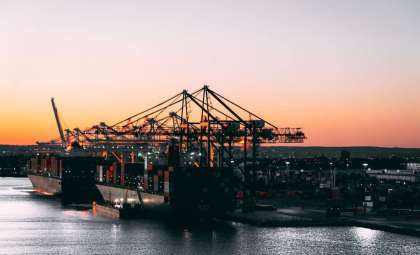
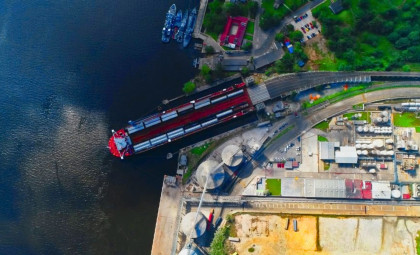
Jebel Ali is much more than a simple shipping terminal. Along with the adjacent Jafza free zone, it creates an extensive hub of ports, storage, manufacturing, logistics, and international businesses.

DP World reports that this port handles a yearly volume of 19.4 million TEUs across four terminals, equipped with over 100 berths and roughly 25 kilometers (16 miles) of quay space. It connects through more than 80 weekly shipping routes to about 150 global ports.
The adjoining free zone supports over 11,000 firms spanning 157 nations.
According to Jafza, this entire Jebel Ali ecosystem provides approximately 36% of Dubai’s GDP. While this has bolstered Dubai’s position as a global trade leader, it also exposes a large portion of its economy should port access be interrupted.
Strategic Vulnerability at a Key Maritime Bottleneck
Within the Persian Gulf, Jebel Ali has only one maritime exit route to major international markets in Asia, Europe, Africa, and the Americas. Vessels must pass through the Strait of Hormuz to reach the Gulf of Oman and onward to the Indian Ocean.
At its narrowest, the strait is around 33 kilometers (21 miles) wide, with shipping lanes even tighter, funneling maritime traffic into a highly vulnerable corridor.
Prior to recent conflicts, nearly 20 million barrels of oil and petroleum products traversed the strait daily, accounting for roughly 20% of the world’s petroleum-liquid consumption.

Additionally, about one-fifth of the global liquefied natural gas trade passed through the strait, predominantly from Qatar, per the U.S. Energy Information Administration. Thus, the strait's disruption impacts not only Dubai but also Gulf exporters, Asian consumers, and regional supply chains.
Impact of Conflict on Maritime Traffic
The conflict erupting in February 2026 led to tightened restrictions around the strait, causing a sharp drop in the number of vessels navigating through it.
According to the EIA, crude oil and petroleum liquid volumes moved via Hormuz declined from roughly 21.6 million barrels per day in late 2025 to 4.9 million barrels per day by mid-2026. Although Jebel Ali continued operations, ship arrivals decreased.
DP World reported in March a decline in vessel arrivals. The UAE’s other primary ports, Fujairah and Khor Fakkan, lacked sufficient capacity to absorb all redirected cargo, according to Reuters.
The possibility of disruption remains real.
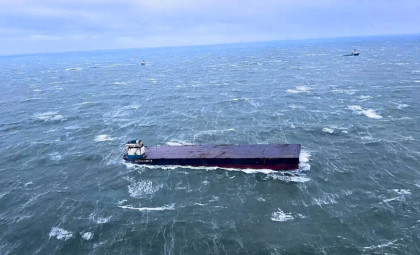
For instance, on September 1, two supertankers loaded with Saudi crude suffered attacks from unidentified projectiles while exiting the strait, as reported by Reuters. Fortunately, crews were unharmed. These events underscore the ongoing hazards to commercial maritime traffic.
Launching Two New Terminals Along the Eastern Shore
Dubai is countering these challenges by introducing a second maritime access point on the UAE’s eastern coastline.
On July 22, 2026, DP World revealed a 50-year preliminary agreement with the Fujairah Ports Authority to develop two new facilities: the Al Rugaylat container and multipurpose terminal, and the Dibba General Cargo terminal.
Both set on the Gulf of Oman, these ports allow vessels from the Indian Ocean to dock without traversing the Strait of Hormuz.
Al Rugaylat is designed for annual handling of up to 2.5 million TEUs, alongside 1.7 million tonnes of general cargo and around 190,000 vehicles. Dibba will add approximately 3.6 million tonnes of general cargo capacity. The deep-water ports will accommodate the latest ultra-large container ships.
With these additions, DP World’s container capacity within the UAE will rise from 19.4 million to near 22 million TEUs annually.
Overland Routes to Connect New Terminals
The goal isn’t to replace Jebel Ali but to establish an alternative maritime entry seamlessly integrated into Dubai’s logistics network.
Goods arriving in Fujairah can be transported by land to Jebel Ali, Jafza, and across other Emirati markets. DP World intends to link these ports with its inland facilities to facilitate container transit between ports, warehouses, manufacturing zones, and ultimate destinations.
This strategy restructures the supply chain geography. Instead of navigating through the hazardous Hormuz passage, cargo can offload on the UAE’s eastern coast and then be transported overland by road or rail.
Despite this, the new terminals are considerably smaller than Jebel Ali.
Al Rugaylat’s proposed 2.5 million TEU capacity is just a fraction compared to Jebel Ali’s 19.4 million TEU annual throughput.
Dedicated Oil Transit Route Underway
Parallel to commercial developments, a separate energy export pathway is also in progress.
The UAE currently runs a pipeline that moves up to 1.8 million barrels per day from inland oil fields to Fujairah’s export terminal, enabling crude loading directly into the Gulf of Oman without crossing Hormuz.
ADNOC is building a second pipeline expanding this capacity twofold.
In May 2026, the energy giant confirmed construction progress and projected the pipeline’s operation start in 2027. This pipeline will not link Jebel Ali with the new ports but will independently channel crude from western production sites to the eastern coastline.
Both DP World's commercial roadmap and ADNOC’s oil pipeline align strategically, pushing more Emirati trade and energy shipments toward ports accessible without transiting the Strait of Hormuz.
Although the agreement for Al Rugaylat and Dibba remains at the preliminary stage, DP World anticipates phased development with construction spanning roughly 24 to 30 months once commenced.
A start date for building activities has yet to be released.
- Categories:
- News








0 comments
Sign in to Comment