

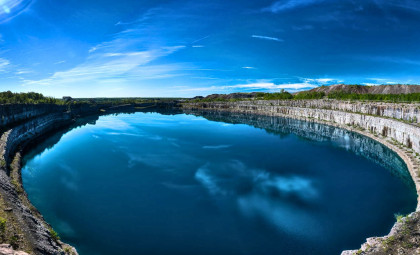
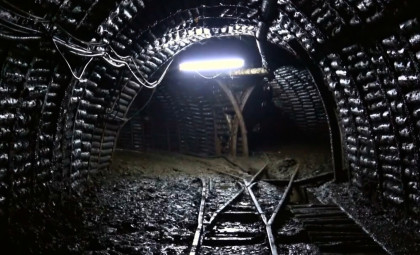
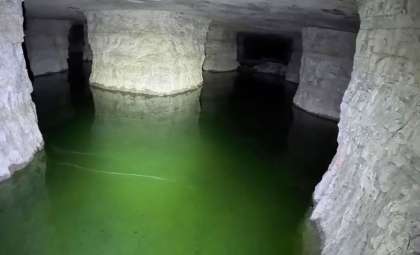
An old open-pit iron mine in Eastern Ontario, now submerged underwater, is being transformed into a vast energy storage system designed to balance electricity supply and demand.
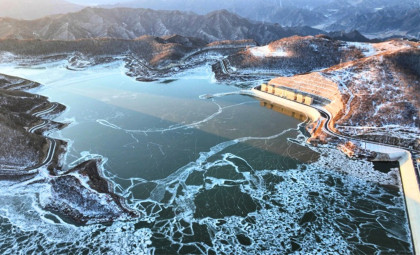
Named the Marmora Clean Energy Hub, a collaboration between Northland Power and Ontario Power Generation aims to repurpose the former Marmoraton pit in the Township of Marmora and Lake as the lower basin of a pumped-hydro storage facility. According to the federal government's Project Registry, the project could expand to provide up to 500 megawatts of power and operate for a century.

The cornerstone of this concept is pumped hydroelectric storage, which utilizes surplus electricity to move water uphill into an upper reservoir. When energy demand rises, this water flows downward through turbines, generating electricity as it returns to the flooded mine pit.

Thus, Marmora functions like a colossal rechargeable battery, storing energy during periods of low demand and supplying it when consumption surges, enhancing grid flexibility.
From Derelict Mine to Energy Reservoir
The Marmoraton Mine ceased operations in 1978 after extracting nearly 1.9 million tonnes of ore. As detailed by The Narwhal, the pit measures roughly 850 meters long, 450 meters wide, and plunges 213 meters deep.
Earlier projections from Northland Power suggested a capacity of 400 megawatts sustained over five hours, enough to power approximately 400,000 homes. More recently, federal documentation describes the Marmora project as part of a broader clean energy initiative that includes a 30-megawatt solar array expected to operate for at least 25 years. The combined output could reach 500 megawatts, extending beyond the initial pumped hydro plan.

This closed-loop approach recycles the same water between reservoirs, avoiding reliance on natural river systems and thus minimizing environmental disruption.
Unlike traditional hydro projects that impact free-flowing rivers, this initiative reuses land already altered by mining, providing a more environmentally considerate option.
Adapting to a Shifting Energy Landscape
The timing of Marmora’s development aligns with Ontario’s growing emphasis on long-duration energy storage technologies that stabilize electricity availability over multiple hours.
Since wind and solar power generation does not always coincide with energy demand, storing excess power during low-use periods allows it to be dispatched during peak times, smoothing supply fluctuations.

During peak afternoon and evening hours, surplus electricity will pump water uphill to the upper reservoir; once demand abates, water will flow back down through turbines generating power as it returns to the mine pit.
Long-duration storage is pivotal for integrating intermittent renewables and supporting future nuclear energy generation. A recent 2024 provincial report referenced findings by the Independent Electricity System Operator (IESO), which forecast Ontario’s power system must nearly double by 2050 to meet a “net zero” emissions goal.
Ontario’s energy policies continue to evolve. On May 15, 2026, the IESO launched a Long Lead Time Request for Proposal (RFI) that includes acquiring up to 800 MW of long-duration storage. Pumped hydro is one of the leading technologies eligible for selection.

Proposals were due by November 26th, 2026. While the IESO has not confirmed Marmora as a funded project, the initiative underscores the increasing role of large-scale energy storage within Ontario’s electricity planning.
Marmora’s location near a key transmission link connecting Toronto and Ottawa adds strategic value. Located about 7 km from this major corridor, it offers a practical site to bolster grid infrastructure east of Toronto, according to IESO assessments.
The Financial Hurdle Ahead
Although pumped hydro storage delivers technical benefits, the project’s viability depends heavily on cost considerations.
Northland Power’s submissions during Canada’s Impact Assessment process estimate the Marmora facility to exceed $2 billion USD in total expenses. Large-scale civil engineering, including construction of reservoirs, tunnels, turbines, generators, and grid connections, contribute significantly to the price tag.
Cost concerns have shaped provincial perspectives. In a January 2024 letter, Ontario’s Minister of Energy expressed that current cost analyses positioned Marmora and similar projects less favorably compared to alternatives like battery storage and other clean technologies.

While the letter did not dismiss pumped hydro outright, it noted IESO’s recognition of its potential to diversify baseload power sources and requested further economic and social impact evaluations. Northland Power and OPG were encouraged to provide updated data supporting a revised feasibility assessment.
Consequently, despite notable benefits, current evidence suggests the economic advantages of pumped hydro storage may not yet outweigh higher initial costs compared to battery systems and other alternatives aimed at supply balancing.
- Categories:
- News





0 comments
Sign in to Comment