

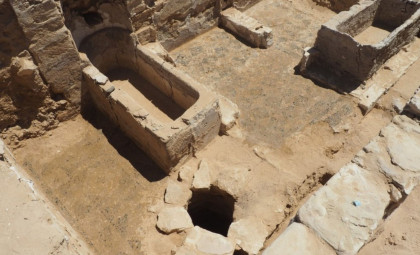
Archaeologists have revealed the discovery of two sealed tombs dating back approximately 5,000 years at the Jabal al-Tayr site in Egypt’s Minya Governorate.
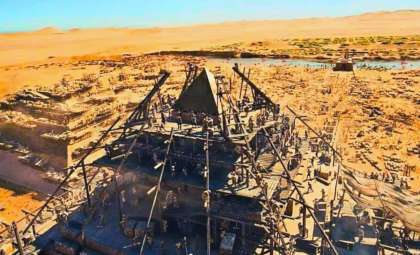
While the Giza pyramids stand as iconic monuments worldwide, Egyptian monumental construction began long before. Prior to the erection of Khufu’s Great Pyramid, early Egyptian builders were already developing more intricate burial architectures.
The new findings from Jabal al-Tayr contribute essential data about these early developments. Egypt’s Supreme Council of Antiquities announced the excavation of two untouched Early Dynastic Period tombs, offering fresh insights into the progression of ancient Egyptian funerary designs during the civilization’s nascent dynasties.

A Necropolis Spanning Millennia
Although not as renowned as the Valley of the Kings, Jabal al-Tayr has served as a burial site for thousands of years. Excavations at the location have uncovered graves ranging from the Predynastic era through to the Late Period, approximately between 664 and 332 B.C.

Research details that the earliest Egyptian tombs, emerging around 3100 B.C.E., consisted of simple pits lined with bricks and covered in plaster. Over time, these graves evolved, becoming more expansive and intricate. During the First Dynasty, royal burials were primarily located in Abydos, while elite officials were interred at Saqqara.
These sites featured underground burial chambers and aboveground mastabas that housed funerary goods and signified the deceased's social rank. The recently uncovered tombs belong to this pivotal phase in the evolution of ancient Egyptian burial architecture.
Possible Royal Connections of the Tombs
An intriguing aspect of the discovery is the similarity between the tombs and the burial site of King Hor-Den at Abydos, dating back to approximately 2950 B.C.E.
According to researchers, Hor-Den’s tomb was the largest known from the First Dynasty, featuring a ritual annex, two substantial storage chambers, and 133 subsidiary chambers encircling the main burial chamber.

One tomb exhibited walls that thicken at the base and taper toward the top, suggesting the architects understood how to effectively distribute structural weight.
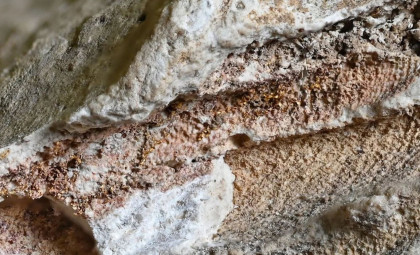
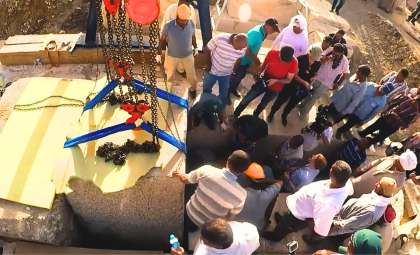
The tombs were constructed from stone blocks, with the first tomb retaining oxidation marks indicative of stone cutting and dressing techniques. Wooden reinforcements were integrated within the walls, some supporting specific sections, others extending along full wall lengths. The second tomb remains largely intact with most stone blocks preserved.
Additional Finds at Jabal al-Tayr
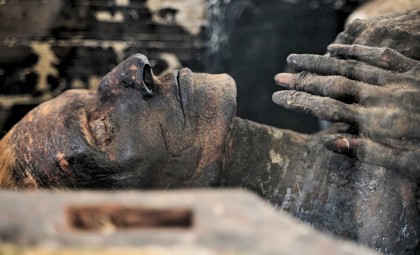
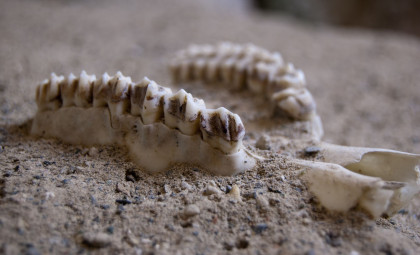
Excavations also uncovered several Predynastic interments, featuring crouched, mostly skeletonized human remains wrapped in plant mats, accompanied by ceramic vessels.
In a Facebook release, Egypt’s Ministry of Tourism and Antiquities noted that the pottery’s black-rimmed designs correspond to the Naqada II and Naqada III periods predating the First Dynasty. Late Period burials contained remnants of wooden coffins, illustrating the site's long-term use as a cemetery.

The official statement emphasizes that ongoing digs aim “to unlock further secrets,” with archaeologists continuing to unearth vital information from this enduring Egyptian burial site.
- Categories:
- Science





0 comments
Sign in to Comment