

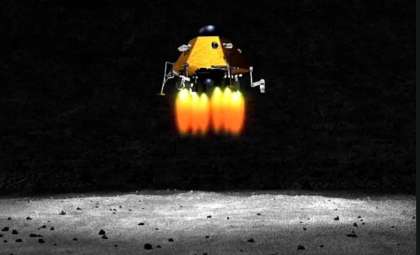
The MAGPIE lunar rover, spearheaded by Luxembourg, is poised to become Europe’s pioneering rover on the Moon, focusing on the largely uncharted south polar area to locate frozen water. The European Space Agency (ESA) has granted a €65 million contract to ispace-EUROPE to oversee the rover’s design, testing, deployment, and operations slated for 2029.
This project marks a milestone in Europe's lunar exploration ambitions by creating a mobile scientific platform designed to examine regions where ancient ice deposits could be trapped within the Moon’s permanently shadowed zones.
MAGPIE’s mission goes beyond environmental study; it aims to unravel crucial mysteries about lunar ice distribution, quantity, and potential for sustaining future human activities on the Moon.

Exploring the Moon’s South Polar Terrain
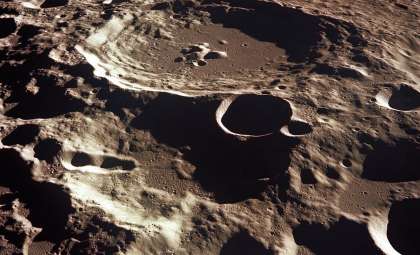
Standing for Mission for Advanced Geophysics and Polar Ice Exploration, the MAGPIE rover is engineered to navigate the Moon’s rugged south pole landscape, an area characterized by deep craters cloaked in continuous darkness.
These shadowed craters maintain temperatures low enough to preserve ice deposits, shielding them from sublimation under conditions found elsewhere on the Moon.
Scientific evidence confirming water ice near lunar poles comes from NASA’s LCROSS mission, which in 2009 detected ice within ejecta from a shadowed crater, and from India’s Chandrayaan-1, which identified surface ice in polar regions.
Despite these observations, little is known about the spread, depth, and variety of ice deposits across various locations, knowledge essential for understanding the Moon’s resources.
MAGPIE’s strategy involves traversing several sites rather than focusing on a singular position, enabling a comprehensive survey of the Moon’s polar regolith.
Equipped with a drill, volatile analyser, ground-penetrating radar, and a neutron detector, the rover will analyze both surface and subsurface layers to better characterize the icy environment.
Luxembourg’s Expanding Role in Space
As highlighted by RTL Today, Luxembourg plays a central part in this European lunar initiative. Through ispace-EUROPE, it leads the rover's development, integration of scientific instruments, lunar mission management, and delivery of data to the ESA.
Yesterday @esa and @ispace_EUROPE celebrated a key milestone for MAGPIE, set to become Europe's first rover on the Moon 🌕
— Human Spaceflight (@esaspaceflight) September 2, 2026
Launching in 2029, the rover will investigate lunar resources which could support a sustained human presence on the Moon 💧👨🚀.https://t.co/qmKEEArn7s
This collaborative effort unites scientific contributions from Germany, the United Kingdom, Norway, and the Czech Republic. Launch logistics involve coordination between the ESA and Japan’s JAXA.
Luxembourg’s space ambitions have grown extensively since it initiated satellite operations with SES in 1985. Following its accession to the ESA in 2005, the nation launched the SpaceResources.lu program in 2016, aiming to develop expertise in extraterrestrial resource utilization.
Further establishing itself in the domain, Luxembourg contributed to founding the European Space Resources Innovation Centre (ESRIC) in 2020, enhancing research into off-world material use.
The country’s space sector has seen impressive growth, with the Luxembourg Space Agency reporting an increase from 16 companies employing around 600 workers in 2012 to approximately 80 companies with 1,650 employees by 2024.
MAGPIE exemplifies this strategic progression by embarking on a mission to an extraterrestrial frontier.
Prioritizing Science Over Resource Extraction
While lunar ice is often viewed as a future supply for astronauts, the focus of MAGPIE remains purely scientific, not commercial mining.
Water ice could one day fuel life support systems, such as drinking water, oxygen production, and hydrogen-based fuels, but its presence does not guarantee straightforward extraction.
The rover’s primary goal is to deepen understanding of the lunar polar environment. Comprehensive data on ice composition, location, and accessibility are vital before considering resource exploitation.
MAGPIE’s drilling equipment will collect subsurface samples, whose volatile emissions will be analyzed to reveal how water and other compounds have endured through geological epochs.
The mission’s operational span is expected to last roughly ten Earth days after touchdown, yet the insights gained could steer lunar exploration pathways for years ahead.
Success will also provide Europe with essential expertise in managing a mobile robotic platform on an extraterrestrial body, a field currently led by only a few international agencies.
- Categories:
- News


0 comments
Sign in to Comment