

Far from any shoreline, discarded plastic debris supports surprising communities of marine life. Creatures such as sea anemones, crustaceans, and hydroids—typically found near coasts—are thriving on plastic within the Great Pacific Garbage Patch, with some even breeding on these artificial habitats.
Researchers analyzed 105 floating plastic samples gathered from the eastern North Pacific between November 2018 and January 2019, uncovering 46 types of invertebrates spanning six phyla. Of these, about 80% were coastal species, while the remainder were pelagic organisms adapted to oceanic conditions. Their results were published in Nature Ecology & Evolution in April 2023.
Nearly all plastic pieces served as habitats, with invertebrate biofouling coating 98% of debris, pelagic species on 94.3%, and coastal species found on 70.5% of the items. Two-thirds of the debris supported organisms from both communities.

Although plastic pollution remains harmful, the study reveals that some debris also forms long-lasting habitats in ocean regions once thought inhospitable to coastal organisms.
Plastic as Long-Lived Floating Habitat
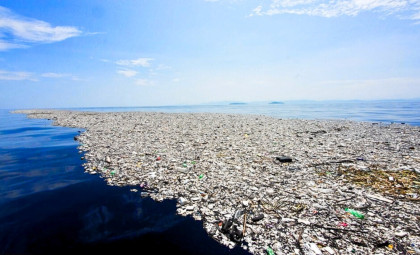
The North Pacific Subtropical Gyre is a vast circular ocean current where floating waste accumulates rather than dispersing quickly. Within this area lies the Great Pacific Garbage Patch, a vast but diffuse spread of plastic rather than a dense island of trash.
For marine animals, the key characteristic of plastic debris is its buoyancy lasting years afloat.

Unlike natural rafts such as vegetation that degrade, become waterlogged, sink, or are consumed, manufactured items like buoys, bottles, and nets stay afloat much longer. The study characterizes floating plastics as “ideal platforms for extensive and long-term dispersal.”
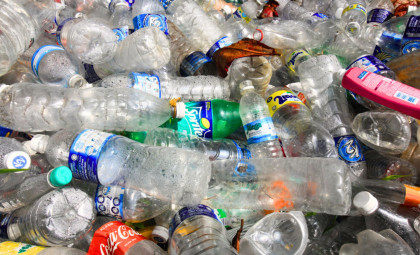
This prolonged buoyancy allows plastic to host marine life over extended periods. The 2018–2019 samples contained various items including bottles, crates, ropes, and fishing nets, many visibly worn and weathered from years in the ocean.
Rope samples harbored the highest total species richness with 24 taxa, while fishing nets exhibited the richest average coastal taxa per item, at 4.8. Across different debris types, coastal species comprised between 50% and 75% of recorded invertebrate diversity.
Many organisms were observed at multiple life stages on the same debris, indicating established populations rather than transient individuals.
Coastal Species Reproduce on the Open Ocean's Rafts
Signs of breeding activity were found among both coastal and pelagic species.
Researchers detected brooding females of coastal crustaceans such as amphipods and isopods. Reproductive structures were present on coastal hydroids, and both sea anemones and crustaceans appeared in various sizes on the same plastic pieces, including tiny juveniles indicative of recent reproduction.
Some amphipods measured under 0.5 millimeters, and new sea anemone recruits smaller than 2 millimeters were found among at least three taxa. These findings led to the conclusion that coastal species can “persist and reproduce in the open ocean.”

This indicates these species can do more than just hitch a ride—they may sustain viable populations on their plastic platforms as they drift across the ocean.
Scientists refer to this unique blend of nearshore and open-ocean organisms as a neopelagic community. On two-thirds of sampled debris, coastal and pelagic taxa coexisted, while only 3.8% featured coastal species alone.
Coastal species outnumbered pelagic ones across all phyla, and the species-accumulation curve suggests many coastal taxa remain undiscovered within the region.
Insights from the 2011 Japanese Tsunami
Prior clues about the resilience of coastal organisms in open ocean environments came from the aftermath of the 2011 Tōhoku earthquake and tsunami, which swept vast amounts of debris into the North Pacific.
Starting in 2012, living Japanese coastal species began arriving along the shores of North America and Hawaii aboard floating debris. The Nature study referenced data showing over 380 living species survived at sea for up to six years.

Many types of organisms found on tsunami debris also appeared among the garbage-patch samples years later. Approximately 70.3% of coastal taxa in the eastern gyre matched those recorded on tsunami debris, mostly species native to the Northwest Pacific, including the Japanese coast.
However, community compositions differed. For example, molluscs were less diverse on gyre plastics compared to tsunami arrivals, while bryozoans and cnidarians were among the most common groups in the garbage patch.
This demonstrates how long-distance ocean rafting functions: plastic debris can depart coastal regions laden with local organisms, persist afloat for years, and eventually enter ocean currents where coastal and pelagic species coexist.
Marine Ecosystems on Plastic Debris Present Conservation Challenges
The study highlights the complex relationship between marine plastic pollution and ocean ecology. While these plastic zones remain significant pollution hotspots targeted for cleanup, they also support established biological communities.
The Ocean Cleanup estimates the Great Pacific Garbage Patch holds over 100 million kilograms of floating plastic and is actively developing technology to remove plastic wastes from both ocean gyres and rivers before they reach the sea.
While these artificial floating habitats are not natural ecosystems, the research shows that persistent human-made debris creates lasting refuges where coastal and oceanic species can interact, grow, and sometimes reproduce.
- Categories:
- Science






0 comments
Sign in to Comment