

Marking a first for Western Europe, a rocket launched from this region has successfully entered orbit. On September 5, 2026, Isar Aerospace’s Spectrum took off from northern Norway, turning its second mission into a landmark moment for Europe’s budding commercial space sector.
Spectrum Completes Orbital Insertion on Second Launch from Norway
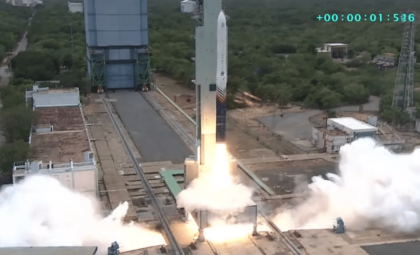
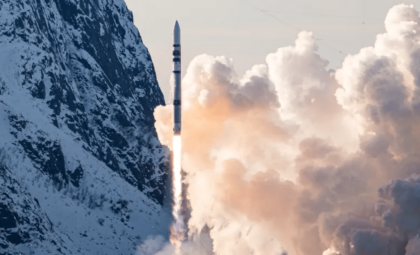
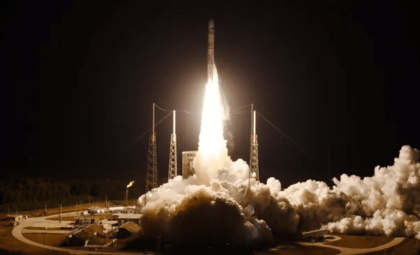
The Spectrum rocket lifted off from Andøya Space Center late evening local time, at 10:12 p.m. on September 5, which corresponds to 4:12 p.m. EDT (20:12 GMT), as noted by Space.com. Within just over seven minutes, the vehicle had achieved an elliptical Earth orbit, converting the mission from a return-to-flight effort into a critical milestone for commercial launches in Europe.
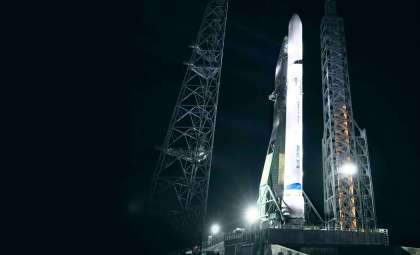
Spectrum, a two-stage launcher measuring approximately 95 feet (28 meters) in height, is crafted by German company Isar Aerospace to serve the small- and medium-sized satellite market. The orbit initially achieved was measured to have a perigee near 112 miles (180 kilometers) and an apogee close to 311 miles (500 kilometers). Following this, the upper stage was set to perform a circularization maneuver before releasing the onboard satellites.

This milestone is key because while reaching orbit represents a significant technical feat, deploying the payload remains a further task. The flight was also the first to carry actual payloads: five CubeSats and one scientific instrument that remains onboard. Progressing from a failed maiden flight to orbital success on only its second mission signals a major leap in capability for the vehicle.
“This launch is historic — historic for Spectrum, for Isar, and for Europe as a whole,” remarked Nikolaos Perakis, Spectrum’s chief engineer at Isar Aerospace, during the launch broadcast, produced in collaboration with NASASpaceflight. “I’m extremely proud of what we have accomplished.”
We made history. On just our second flight, we became the first commercial space company from Europe to deliver satellites into orbit. Mission 'Onward and Upward' successfully lifted off and deployed payloads into orbit. A new chapter for European spaceflight. More:… pic.twitter.com/AWvqG2l8Mn
— Isar Aerospace (@isaraerospace) September 5, 2026
Initial Failure in 2025 Set the Stage for Success
The orbital success achieved by Spectrum came fewer than 18 months after its debut flight abruptly ended less than a minute after launch. The first mission, titled Going Full Spectrum, took off from Andøya in March 2025 but encountered an anomaly that resulted in the rocket falling back to Earth. This early failure made the subsequent flight especially critical, as Isar had to pinpoint the failure's cause, implement hardware and software corrections, and prove the fixes could withstand actual flight conditions. Fortunately, the investigation progressed swiftly.
“A comprehensive investigation was completed within two months of the launch,” Isar wrote in a September 2025 update. “The findings identified an unintended opening of the vent valve and a loss of attitude control at the start of the roll maneuver as the initiating events that led to the in-flight failure.”
Identifying a clear chain of events allowed engineers to concentrate on specific fixes rather than facing an unexplained malfunction.
For a new space venture, this cycle of flying, detecting malfunctions, adjusting design and software, and then flying again is one of the toughest phases in the development of a launch vehicle.
The September 2026 success offered the first confirmation from orbit that Isar’s improvements were effective. It also underscores why initial rocket programs aren’t solely judged on the success of their first attempt. The speed and thoroughness with which a team analyzes failures often dictates if their launcher becomes a reliable system or remains experimental.
Repeated Delays and Technical Obstacles Ahead of Launch
The second Spectrum mission, called Onward and Upward, experienced numerous setbacks before hitting the launchpad. Originally planned for January 2026, a pressurization valve fault postponed the attempt to March. Weather disruptions and an unauthorized boat entering the restricted zone further delayed several planned launch windows. On April 9, an additional postponement was necessary due to a leak in a composite overwrapped pressure vessel.
Subsequent plans for June 15 were also withdrawn after the team detected anomalies in the rocket’s fluid systems. Although these delays extended the wait, they prevented launching with unresolved issues, ensuring better preparedness.
This background makes the successful orbit insertion more meaningful: the vehicle had been extensively reworked and debugged since the prior failure.
“We had some delays, obviously,” Perakis shared during the webcast. “We had some setbacks, but we came back stronger from them. And it validates this tremendous amount of engineering across all the teams, and that’s what brings us into orbit.”
The mission tested more than the rocket’s propulsion and control systems; it also proved Isar Aerospace's ability to swiftly identify and fix issues and sustain a launch campaign amid multiple interruptions — skills vital for routine commercial deployment.
Importance Beyond Just This Single Launch
Spectrum’s milestone is notable because Europe has traditionally depended on few launch sites and providers, while emerging private rockets seek to diversify orbital access. It’s important to be precise: Spectrum is recognized as the first vehicle to reach orbit after launching from Western European territory, rather than the first ever from all parts of Europe.
For nearly 60 years, Russia’s Plesetsk Cosmodrome—situated in European Russia—has launched spacecraft into orbit. September 5 marked a new orbital path from a location farther west, under a Western European commercial framework aspiring to enhance independent launch capabilities.
Andøya, located in northern Norway, offers prime geography for launches targeting high-inclination and polar orbits, commonly used by Earth-observing satellites and other low-Earth orbit payloads. Spectrum’s accomplishment thus carries practical significance by proving that a European private company can successfully launch from a Western European site into orbit. However, this achievement alone doesn’t guarantee regular launch operations.
Commercial launch providers must demonstrate dependable performance across multiple missions, maintain reliable schedules, and operate economically. Still, orbital insertion is one of the toughest technical hurdles on the road from experimental to operational launcher status.
Isar Aerospace Aims to Scale Spectrum for Regular Missions
Looking forward, the question is whether Spectrum can convert its initial orbital success into a steady flow of commercial launches. Isar targets a payload capacity of about 2,200 pounds (1,000 kilograms) to low Earth orbit, within the range suited for dedicated missions of small to medium satellites.
Dedicated launch vehicles like Spectrum provide customers with greater control over orbital parameters and timing compared to piggyback rides on larger rockets, though they face pricing competition from those bigger vehicles with lower per-kilogram costs. Reflecting Isar's growth ambitions, production facilities near Munich are planned to manufacture over 30 Spectrum rockets annually.
Such an industrial scale would be a major advance beyond Spectrum’s initial flight rate, hinging on factors like market demand, vehicle reliability, supply chain robustness, and launch site throughput. Nonetheless, the successful second flight gives Isar a foundation it lacked after the March 2025 debut: an orbital mission to showcase its potential.
“Flight 2 is a big, big milestone, big success,” Perakis said. “But this is just the beginning. So I’m really looking forward to the next steps.” This outlook may prove more pivotal than the record itself. A single successful orbital insertion proves the concept; multiple launches will reveal if Spectrum can become the dependable European launcher Isar envisions.
- Categories:
- Space







0 comments
Sign in to Comment