

For nearly half a century, one of the globe’s most extensive private coin assemblies remained out of sight. Neither exhibited in museums nor traded among collectors, much of this treasure was concealed beneath the earth.
Curated by an unidentified European numismatist before the outbreak of World War II, the Traveller Collection encompasses about 15,000 coins from over 100 different regions and historical periods. Having stayed mostly off the market for multiple generations, this extraordinary collection is now being offered through a series of auctions conducted by Numismatica Ars Classica, the Zurich-based auction house renowned as NAC.
A report by CNN predicted the collection’s value to exceed $100 million prior to its first auction. Several coins had not been publicly seen in over eight decades.

Collected Amid Economic Turmoil
The collector intensified acquisitions during the 1930s, following the 1929 market crash that undermined trust in financial institutions and reshaped the demand for gold and collectible currency.
Initially concentrating on contemporary gold coins prized for their bullion worth, his scope soon expanded. Enabled by extensive travel, he and his spouse toured dealers and auctions across Europe and the Americas, refining their focus toward coins notable for scarcity, provenance, and preservation rather than pure metal value.

His detailed purchase logs became nearly as treasured as the coins themselves, documenting sellers, purchase histories, and connections to previous collections—key insights utilized by experts to trace individual items back through older private holdings.
By the late 1930s, the collection had reached significant proportions. However, the onset of war altered the collector’s plans drastically.
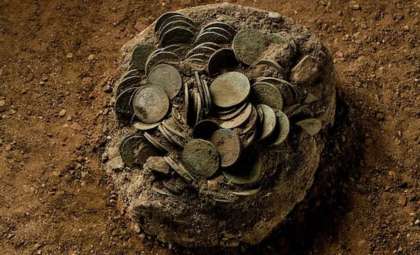
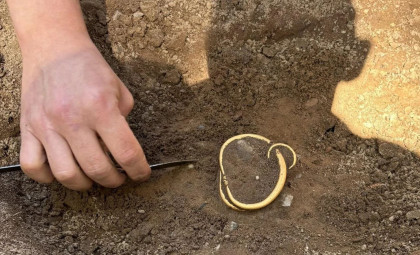
As Nazi troops approached his country, relocating thousands of valuable coins across borders became dangerously complex. Opting to remain, the collector concealed much of his cache. Coins were packed in cigar boxes, paper sleeves, and other containers, sealed in metal boxes, and buried on his property.
He never managed to retrieve them.
The arrival of Nazi forces coincided with the collector suffering a stroke, from which he shortly passed. His wife and daughter left the hidden treasures undisturbed, leaving the coins underground for more than 50 years.
The Secret Containers Resurface
In time, the collector’s widow disclosed the burial site to family members, concerned that the secret might be lost forever. The descendants exhumed the metal boxes and moved the coins into protected safekeeping.
Not all parts were buried; other segments were stashed across three continents, resulting in a widely dispersed archive whose full extent was challenging to comprehend.
Experts initially doubted the collection’s reputed scale.
Arturo and Giuliano Russo, sons of NAC’s founder, revealed their father had long believed this might be among the most outstanding numismatic collections ever assembled.
“When he told us, we were rather sceptical,” they noted in the official Traveller Collection catalogue.
Soon enough, their skepticism faded.

When NAC accessed the majority of the collection in 2022, they anticipated the valuation process to last a week, but it extended over 15 months as specialists revisited boxes with uncatalogued contents multiple times.
The amount of material was formidable.
Using the surviving purchase documents, scholars connected coins to prominent dealers and prior private collections. Some coins vanished from the market for decades before WWII, and others represented types rarely auctioned.
David Guest, tasked with cataloguing British pieces, described the experience of handling coins unseen publicly for generations.
“I had to keep pinching myself to make sure I wasn’t dreaming,” Guest told CNN.
Gold Coins Achieve Million-Dollar Bids
The collection’s significance became clearer as individual items were auctioned.
A highlight was a 100 ducat gold coin minted in Prague in 1629 for Ferdinand III, who later became Holy Roman Emperor. This notably large coin contains about 348.5 grams of pure gold.
At NAC’s Auction 162 on November 6, 2025, the coin fetched 1.95 million Swiss francs prior to buyer fees.

Its value surpasses gold content, deriving from its pristine condition, historical significance, provenance, and rarity—all factors elevating numismatic worth far above intrinsic metal value.
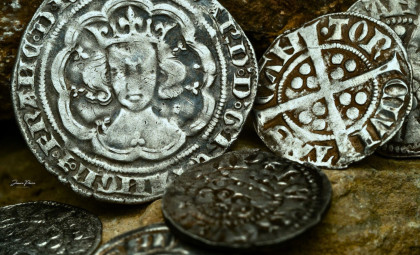
The Traveller Collection also includes rare Persian Tomans associated with the Qajar dynasty, British royal coins, and European specimens acquired from leading interwar dealers. In many cases, the collector’s archives preserve ownership trails extending into the 19th century.
These detailed records allow coins to be traced through chains of collectors, dealers, and auctions instead of emerging suddenly without context.
An Exclusive Trove Now Open to Collectors
Starting May 20, 2025, in Zurich, Auction 155 launched the formal sale, spotlighting the initial British coin selection. Subsequent auctions covered material from Central, Eastern, and Northern Europe, organized by region and type.
This phased approach enables NAC to photograph, study, and document coins before they enter new hands, creating lasting historical and collector resources beyond the sales themselves.
Removed from circulation just as Europe headed toward war, this collection’s survival is remarkable. Today, these coins reemerge, unveiling history one catalogue listing at a time.
- Categories:
- News


0 comments
Sign in to Comment