

A novel wearable radiation shielding system trialed during NASA’s Artemis I mission has demonstrated potential for safeguarding astronauts within spacecraft by providing focused defense against solar radiation, according to research published in Science Advances. This technology, called AstroRad, underwent testing on the uncrewed Orion mission orbiting the Moon, achieving radiation mitigation results that surpassed initial expectations. These insights may pave the way for improved astronaut safety in future missions venturing beyond Earth’s magnetosphere.
Evaluating Personal Radiation Protection Beyond Earth's Magnetic Field
The Artemis I mission was the first chance to test a wearable radiation shield in deep space. Unlike conventional spacecraft designs that shield the whole vehicle, AstroRad is a mobile garment intended to protect astronauts’ most vulnerable body parts during periods of heightened radiation exposure, without limiting their movement inside the spacecraft.
Developed by StemRad with input from experts studying human spaceflight beyond Earth orbit, the vest focuses protection on critical organs while maintaining wearers’ freedom to perform mission tasks.

On the Orion mission, two anthropomorphic dummies named Helga and Zohar gathered radiation data. Zohar was outfitted with the AstroRad vest, while Helga was not, allowing scientists to directly assess the vest’s effectiveness under identical deep-space conditions.
Measurements reflected expected shifts in radiation exposure as Orion traversed diverse space regions, with higher radiation detected when crossing the Van Allen belts, and lower levels when the Moon shielded the craft during flybys.

Artemis I Demonstrates Radiation Shielding Beyond Projections
The radiation reduction effects observed from the vest exceeded researchers’ early estimates, as reported in Science Advances. These results highlight the potential for incorporating wearable shields alongside traditional methods in future human space expeditions.
“The most notable aspect of the data was its consistency with predictions,” Houri explained in an Earth.com interview about Helga’s and Zohar’s readings. Radiation levels peaked during belt crossings and dipped when lunar blocks reduced radiation exposure.
Previously, researchers anticipated a roughly 45% improvement in protection. “Upon seeing the stronger results, we first suspected an error,” Houri remarked.
Final data confirmed the vest’s strong performance, supporting the concept that targeted wearable shielding could complement existing spacecraft defenses to enhance astronaut health safeguards.

Portable Radiation Shielding Suited for Extended Lunar Trips
AstroRad offers the advantage of maintaining astronaut protection while enabling freedom of movement within spacecraft. Although fixed storm shelters provide safe zones during intense solar radiation events, a wearable shield offers astronauts increased flexibility during routine mission activities.
“AstroRad can work independently or alongside a dedicated shelter, allowing an astronaut to stay protected while moving about the cabin and conducting critical tasks instead of remaining confined for the event’s duration,” Houri noted.
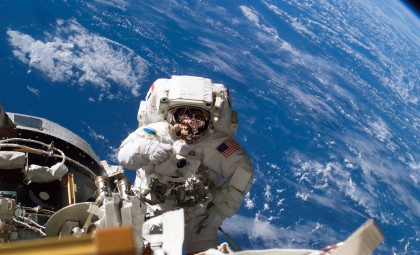
This capability will be especially critical as missions grow longer and more complex. Astronauts traveling to the Moon, Mars, or beyond will face prolonged exposure beyond Earth’s magnetic shield, emphasizing the need for practical, mobile radiation protection.
While this technology doesn’t fully eliminate radiation risk, it strategically shields vital regions on the body while preserving mobility and operational capacity.

Adaptive Shielding May Drive Safer Deep-Space Ventures
Addressing radiation exposure remains a top priority for human exploration beyond Earth orbit. Astronauts face significant health hazards due to solar particle events and chronic cosmic radiation exposure during extended missions.
“Radiation is an inherent challenge for deep-space travel,” said Oren Milstein, CEO and co-founder of StemRad. “The aim isn’t just to add more shielding, but to employ it intelligently.”
The Artemis I test marks an early step in refining this technology, with more development and trials needed before it can become standard astronaut gear.
As space agencies advance missions like Artemis, integrating protection that combines mobility and efficiency will be crucial. Data from Orion’s lunar voyage helps engineers design strategies that protect crew members while enabling operations during humanity’s forthcoming explorations.
- Categories:
- News







0 comments
Sign in to Comment