

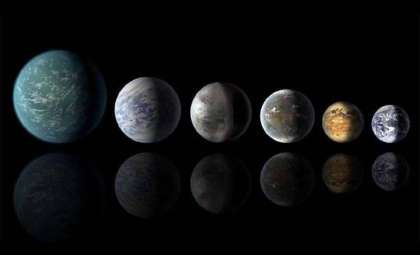
Scientists at NASA are pioneering a novel technique to detect Earth-like exoplanets orbiting distant suns.
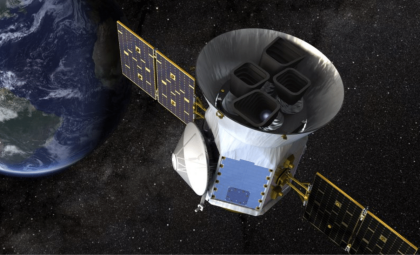
This method employs a large-scale starshade spacecraft designed to block out overwhelming starlight.
By casting a precise shadow, it enables telescopes to observe faint planets otherwise lost in stellar glare.
This advancement promises enhanced analysis of planetary atmospheres and the quest for habitability markers.
It marks a significant step forward in the pursuit of finding worlds similar to Earth beyond our solar neighborhood.
A Massive Shadow Creation to Spot Concealed Worlds
Locating rocky planets comparable to Earth around other stars is notoriously challenging due to the immense brightness of stars, which outshine their planets by billions of times. While indirect detection methods have uncovered many exoplanets, directly imaging small rocky bodies requires technology capable of drastically diminishing stellar light interference.
The Habitable Worlds Observatory Exoplanet Explorer (HOEE) initiative proposes a solution involving the collaboration of telescopes either in space or on Earth with a dedicated starshade spacecraft. Positioned thousands of kilometers ahead of the telescope, the starshade aligns between the observatory and the target star.

This setup blocks harsh starlight, permitting only the faint reflected light from surrounding planets to reach the telescope, thereby enhancing clarity for studying planetary atmospheres and surfaces.
Scientists anticipate this technique will allow future telescopes to detect atmospheric chemicals that hint at life-supporting conditions. The starshade is envisioned as a complementary technology for broad missions aiming to explore potentially habitable exoplanets.
The Universe Today reports that HOEE strives to make advanced exoplanet imaging more feasible by integrating established telescope systems with specialized starlight suppression.

NASA Investigates a More Practical Approach for Exoplanet Imaging
The HOEE research team suggests that this hybrid strategy may accelerate the direct observation of distant worlds compared to relying solely on future oversized space telescopes. The concept utilizes current optical telescope technology enhanced with a specialized device to reduce stellar light interference.
“We need to go for something that is more efficient and available now: a hybrid observatory that can observe the exoplanetary system in optical light,” Vladimir Airapetian, a senior astrophysicist at NASA Goddard Space Flight Center and a HOEE project team member, told me in Paris.
Airapetian highlighted that the starshade method prevents much of the star’s bright light from reaching the telescope prior to observations. “Our team proves that by deploying a starshade to cast a ‘perfect shadow’ over Earth’s largest telescopes, HOEE can suppress stellar glare before it ever enters the atmosphere,” he stated.
The effort hinges on extreme precision, as the starshade must remain perfectly aligned with both telescope and star over vast distances. Even minute deviations could impair shadowing and complicate data collection.
Investigations continue into how spacecraft can maintain coordinated positioning with observatories across long ranges. Progress in autonomous guidance, propulsion systems, and telescope technology enhances the feasibility of these complex operations.
Probing Atmospheric Signatures on Distant Earth-Like Planets
Directly capturing images of exoplanets offers insights that indirect methods cannot, revealing information beyond orbital details and size. Light filtered through or reflected from a planet’s atmosphere can unveil its chemical composition and conditions.
The HOEE project is focused on detecting atmospheric features indicative of Earth-like environments. Observations will target specific wavelengths linked to vital molecules and atmospheric activity.
“We’re going for the spectral lines from red and green auroras that would signal that the atmospheres of these planets can support nitrogen and oxygen,” Airapetian explains.
While detecting oxygen and nitrogen alone doesn't guarantee life, these findings could highlight planets with atmospheres conducive to biological processes.
Upcoming studies may examine nearby star systems harboring rocky planets within habitable zones where liquid water might be present, marking prime candidates for future missions.
Implementing a starshade system would add a powerful resource for astronomers to explore planetary diversity and gauge the prevalence of Earth-like worlds across our galaxy.
- Categories:
- Nasa


0 comments
Sign in to Comment