

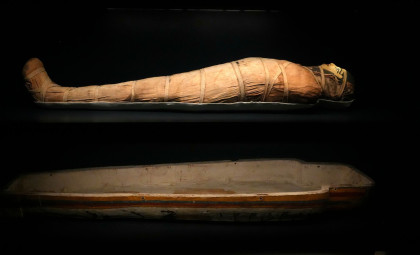
Inside a single room of Theban Tomb 209, archaeologists uncovered sixteen wrapped mummies, fragments from at least four additional individuals, and intriguingly, a mummified dog lying atop two human bodies. Though it might seem like a chaotic mix of remains, careful study reveals a pattern of intentional and evolving burial methods spanning centuries rather than mere disorder.
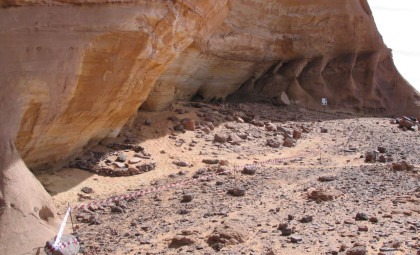
Located in Egypt's Theban Necropolis just across the Nile from Luxor, this area contains over four hundred tombs from numerous periods of ancient Egyptian civilization. Chamber three within TT 209 is a relatively small part of this extensive burial site but offers insights covering a remarkable time frame, providing evidence of changing funerary rituals in practice rather than only as recorded in religious texts.
The research, conducted by the University of La Laguna in Spain and published in Frontiers in Environmental Archaeology, involved meticulously documenting each body’s placement, alignment, and its spatial relationship with others. From this data, the team reconstructed a timeline of burial episodes spanning almost 700 years, from the Twenty-fifth Dynasty to the Ptolemaic era.

From Expansive Coffins to a Packed Burial Space
Theban Tomb 209 was constructed during Egypt’s Twenty-fifth Dynasty, roughly between 754 and 656 BCE, with burials continuing into the Ptolemaic period, around 305 to 30 BCE. The excavation revealed nine distinct burial events, varying from single interments to clusters with accompanying grave goods.
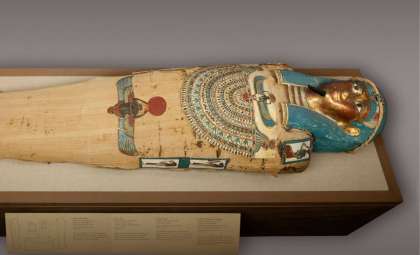
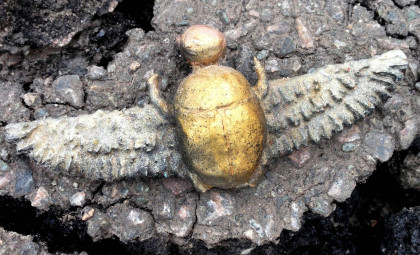
The earliest occupants were individuals of apparent high status, placed in coffins separated from one another, accompanied by funerary nets, protective amulets, and imported items such as Phoenician amphorae located beside their remains. As Dr. Miguel Ángel Molinero Polo from the University of La Laguna explained, these burials reflect a privileged social class, evident through the luxurious goods included for the afterlife.

However, this level of spaciousness and opulence gradually declined. By the end of the Twenty-fifth Dynasty and throughout the Persian period, around 680 to 404 BCE, burial space grew tight, with new bodies inserted wherever gaps remained. Postures of the deceased evolved too, with some arms folded inward rather than fully extended as seen in earlier burials.
Mummies Arranged in Layers
The most pronounced transformation was the adoption of vertical stacking. Beginning in the Persian period, two-thirds of the burials involved placing corpses directly atop each other instead of side by side.
“The bodies buried in vertical superposition did not have coffins but were carefully mummified. They also can be associated with upright jars that point to a specific ritual not found in the earlier phases of the tomb’s use,” noted Molinero Polo.

The journal article explains that this arrangement was not a breakdown of traditions but rather a spatial strategy. Each new mummy was placed with consideration of existing burials, reflecting an ordered approach to interment.
A Canine Among the Human Remains
One particularly fascinating find is positioned in the tomb’s southeast corner from the Ptolemaic era: four mummies stacked vertically with a mummified dog resting atop them. The animal lay directly over a man and a woman’s remains, a detail Dr. Jared Carballo-Pérez found significant, suggesting a unique symbolic or personal relationship.
“This could indicate a close relationship between these human individuals and the animal, an idea that I think is quite easy to empathize with,” he explained. “It could also reflect a further change in ritual practice, with an animal taking on the role of a psychopomp, a symbolic helper in the journey to the afterlife.”

The tomb endured many challenges over time, including multiple floods, fire damage, and repeated disturbances that complicated efforts to determine the precise sequence and intentions behind some burials.
- Categories:
- Science



0 comments
Sign in to Comment