

An unbroken clay vessel dating back approximately 400 years has been uncovered in Florida, presenting archaeologists with intriguing mysteries rather than clear answers. Located at a historic Potano-Timucua village site in Gainesville, the pot remains undamaged, puzzling researchers about the reasons behind its burial and highlighting the rich interplay of Native culture, Spanish colonization, and trade influences.
This remarkable find emerged during a University of Florida archaeological field course at Mission San Francisco de Potano, a settlement originating from the late 1500s. For nearly 20 years, students have been meticulously excavating the site where a Spanish mission was established alongside an Indigenous community, with this pristine pot quickly capturing the spotlight among thousands of artifacts retrieved.
What stands out most to experts is not merely the pot’s age but its exceptional condition. Fully intact pottery buried underground for centuries is a rarity due to natural disturbances such as soil movement, agriculture, and construction. Museum curators consider its survival an extraordinary aspect of the discovery.

A Rare Find That Defies Expectations
Gifford Waters, historical archaeology collections manager at the Florida Museum of Natural History, has extensive experience uncovering artifacts in the region, including shipwrecks where complete items are more commonly found. However, land-based excavations rarely reveal fully preserved objects.
“It’s very unique. Typically, we find things that were broken and discarded,” Waters said, adding that this marked the first time in his career his team had excavated an entirely unbroken pottery vessel from a terrestrial site.
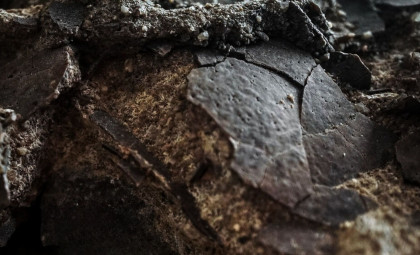
The small pot is modest in appearance, with a simple rim, a muted gray surface, and no decorative elements. Its precise function and how many people may have handled it prior to burial remain unknown. Waters finds the intentional burial particularly puzzling.
“It’s very unique. Typically, we find things that were broken and discarded,” he said. “You don’t leave things behind that you can still use, so why was this purposefully put into a pit?”

Archaeological Site Reflects Deep Historical Layers
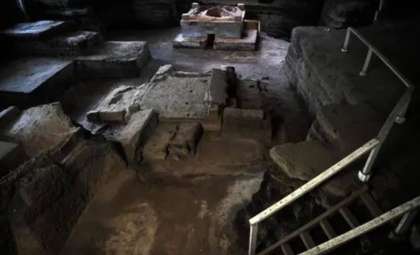
The pot emerged from inside a Spanish-era building with an unclear original use, though nearby finds including a gun’s rear sight and musket side plate imply it may have served as quarters for a small military garrison responding to British attacks in the early 1700s. Established in 1606, the mission was created by Spain among the Potano, a Timucua subgroup who resettled the area around 1585 after displacement by Spanish forces.

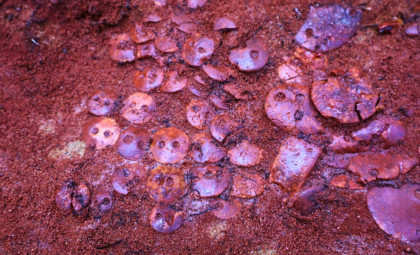
At its height, the Potano village housed several hundred residents, contrasting with a single European missionary. This demographic disparity is reflected in the composition of the more than 7,000 recovered artifacts, which primarily consist of Native pottery shards along with glass beads, stone implements, metal nails, and animal bones from meals featuring turtle, fish, and turkey.
“What tells us the most is not just the artifacts but the evidence of activities. Knowing that we have a bunch of pieces of bone at the site is great, but the fact we know that nearly all of them came from one spot tells us it was a cooking area and trash pit,” Waters said. “It’s not just artifacts themselves but where they were on the site, how they were distributed and what they were associated with that tells the story.”
Insights into Ancient Trade and Cultural Exchange
The undamaged pot shows no trace of burned residues typically associated with cooking, indicating it likely wasn’t used directly over open flames. However, faint scorch marks might stem either from its manufacture firing process or from warming food nearby. Soon after the pot’s discovery, the team also uncovered shards of a second, much larger vessel that exhibits an unfamiliar style divergent from local pottery traditions.

Scholars suggest this item may have been introduced through trade connections with St. Augustine or modern Jacksonville, or brought by newcomers introducing fresh customs to the settlement. As noted in a press release from The Florida Museum of Natural History, these findings represent broader stories about the village:
“During the later years of this mission, folks from different parts of Florida and Native Americans from different areas moved into and around the site. It’s really neat to see these differences and connections in the artifacts. It shows both the persistence and change of traditions over time.”
- Categories:
- Science




0 comments
Sign in to Comment