

NASA is gearing up the International Space Station for an active period filled with spacewalks, biomedical investigations, and the upcoming SpaceX Crew-13 mission arrival.
Preparations Intensify as Space Station Awaits Crew Handover
ISS operations are ramping up, with astronauts involved in scientific experiments, system checks, and gearing up for future orbital tasks. The current team on Expedition 75 manages a blend of routine duties while readying for a scheduled spacewalk and welcoming new crew members.
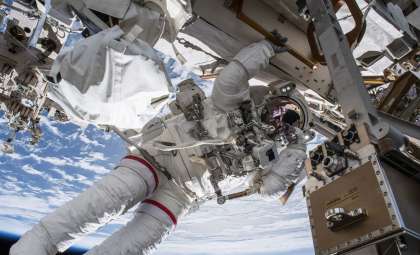
Per NASA, those aboard the orbiting lab are embarking on extensive preparations to maintain readiness for complex extravehicular operations. Preparing for a spacewalk involves meticulous planning, thorough equipment checks, and rigorous rehearsals since astronauts must execute tasks within pressurized suits in a vacuum.

This upcoming spacewalk will focus on tasks associated with upgrading the station’s electrical systems. The crew is readying tools and reviewing step-by-step plans to install components for a future rollout solar array.
The EVA is set to begin at 8:35 a.m. EDT on Thursday, with NASA offering live broadcasts via NASA+ and other official outlets. Audiences will be able to observe the astronauts as they exit the station and perform exterior maintenance.
Part of the rehearsal also entails emergency drills. Crew members practiced using the Simplified Aid For EVA Rescue (SAFER) device, a compact thruster system attached to spacesuits designed to help astronauts navigate back to the station if they drift away unexpectedly.
These rigorous preparations underscore the complexity of maintaining a space habitat that has supported nearly continuous human presence for over twenty years.
Ongoing Human Health Research in Microgravity
NASA’s ISS serves as a critical platform for investigating how extended spaceflight impacts human physiology, guiding strategies for future explorations to the Moon and beyond, including Mars.
ESA astronaut Sophie Adenot recently trialed the EasyMotion-2 workout suit, a device that uses electrical stimulation to enhance muscle activity during exercise. She tested the system while working out on the COLBERT treadmill inside the station’s Tranquility module.
Exercise is crucial for astronauts because microgravity lessens the stress on bones and muscles experienced on Earth, making it vital to counteract physical decline during long missions.
NASA astronaut Jack Hathaway evaluated another exercise system within the station’s Columbus module, using the European Enhanced Exploration Exercise Device (E4D) to explore methods for preserving strength on deep-space journeys.
Meanwhile, Russian cosmonauts Pyotr Dubrov and Anna Kikina continued their health assessments by monitoring blood pressure changes with specialized sensors fitted on their arms and fingers, tracking weightlessness effects.
The crew also conducted hearing tests inside the Quest airlock to assess how spaceflight environments impact auditory functions over time.
These experiments collectively deepen understanding of human adaptation in orbit and aid in preparing astronauts for future missions beyond Earth’s immediate vicinity.

Testing Innovations for the Next Era of Space Exploration
The ISS continues to serve as a platform for trials of advanced technologies that will be essential for astronauts venturing farther into space, where immediate support from Earth is limited.
Recently, Jack Hathaway operated equipment inside the Kibo laboratory module related to demonstrations of cutting-edge space technologies.
Operating in orbit challenges systems to function reliably despite microgravity, radiation, and limited options for repairs.
Artificial intelligence is another area under investigation aboard the station, with AI tools designed to assist crew members in handling complex tasks autonomously, compensating for communication delays that are inevitable on long-duration missions.
Roscosmos flight engineer Andrey Fedyaev tested several AI applications while also performing routine maintenance, contributing to the broader effort to integrate automation into deep-space crew operations.
As missions to Mars and other distant destinations could last months or years, these technologies might enable astronauts to efficiently manage resources, make critical decisions, and operate independently.
Research on new technologies runs concurrently with scientific experiments, bridging current orbital endeavors with the ambitions of future interplanetary exploration.
- Categories:
- Space





0 comments
Sign in to Comment