

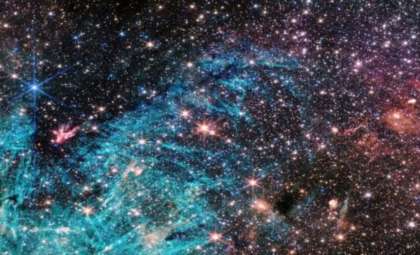
NASA’s latest images from the James Webb Space Telescope unveil stunning details of the Lion Nebula, a dynamic zone filled with gas, dust, and nascent stars weaving a complex cosmic tapestry. These fresh observations expose hidden features of this stellar nursery, sharpening scientists’ understanding of star birth processes.
Illuminating a Hidden Stellar Landscape
The Lion Nebula, also referred to as Sharpless 132, is a prominent emission nebula situated within the Milky Way. Such regions glow as energetic radiation from newly formed massive stars excites clouds of gas. Equipped with Webb’s sophisticated instruments, astronomers now capture unprecedented details of these fascinating stellar environments.
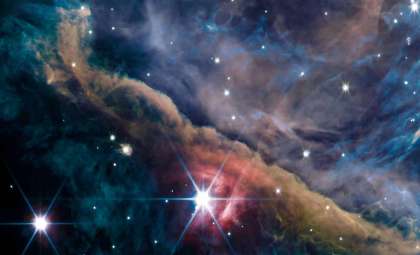
The latest footage showcases delicate structures sculpted by the intense radiation and stellar winds permeating the nebula. Dense gas regions mingle with luminous filaments, crafting a dynamic milieu where matter flows and transforms over vast timescales.

Thanks to Webb’s infrared vision, scientists can penetrate dusty layers that obscure visible light, revealing star-forming pockets nestled deep inside dense clouds. Its sensors detect wavelengths unveiling the nebula’s concealed framework, offering a fuller picture of its ongoing activity.
This image further exemplifies Webb’s revolutionary impact on studying star formation. By dissecting nebulae such as the Lion Nebula, researchers glean insights into different phases of stellar evolution and the conditions that spark star birth.

Webb’s Infrared Power Explored by NASA
NASA introduced the latest Lion Nebula image as part of ongoing science campaigns led by the James Webb Space Telescope. Using Webb’s infrared capabilities, the agency probes galaxies, exoplanets, and star-forming regions across the cosmos.
Designed to explore the early universe and unseen celestial objects, this telescope’s sensitivity to infrared light enables detailed studies of cold dust and distant features that were previously inaccessible.
NASA notes that investigations like these illuminate how young stars influence their surroundings. Massive stars emit intense radiation and particle streams that remodel nearby gaseous clouds, shaping the environment for future stellar creation.
The Lion Nebula serves as an ideal laboratory to investigate such interactions, with its glowing gases, thick dust zones, and energetic stars offering clues to cosmic evolution across millions of years.
Decoding the Chemistry and Dynamics Within the Nebula
Beyond breathtaking visuals, Webb’s data enables astronomers to probe the nebula’s chemical makeup and behavior. Infrared analysis detects molecular and dust components central to the formation of stars and planetary systems.
The nebular clouds hold essential building blocks for emerging stars. Gravity gradually pulls matter into dense clumps that can collapse to form new stars, while the environment’s influence directs the movement and evolution of these regions.
By comparing nebulae throughout our galaxy, scientists expand understanding of conditions that surrounded the birth of the Sun and the planetary system billions of years ago. Each Webb observation adds pivotal details to the cosmic story of star and planet formation.
Webb’s intricate imaging of the Lion Nebula reiterates that even well-studied celestial objects harbor intricate structures awaiting discovery, continually enriching our comprehension of the universe.

Advancing the Frontier of Space Exploration
The observation of the Lion Nebula epitomizes how cutting-edge telescopes like Webb are revolutionizing astronomical science. Rather than perceiving nebulae as simple glowing clouds, researchers now dissect their internal composition, chemistry, and motion.
Future Webb missions will build on these findings, surveying star-forming nurseries in more detail, and integrating data from other observatories to construct a comprehensive timeline of how stars emerge.
This new infrared imagery underscores the importance of looking beyond visible wavelengths, revealing dusty regions that once concealed vital clues to star birth.
As scientists continue to analyze Webb’s extensive repository, the Lion Nebula remains a key object for uncovering the intricacies of stellar creation and the evolving nature of cosmic environments. This latest glimpse enriches our understanding of the forces molding the universe around us.
- Categories:
- News





0 comments
Sign in to Comment