

The wreckage of the Pan Am Clipper Endeavor has been uncovered approximately 600 meters deep in the Atlantic Ocean, more than seven decades after it went down near Puerto Rico.
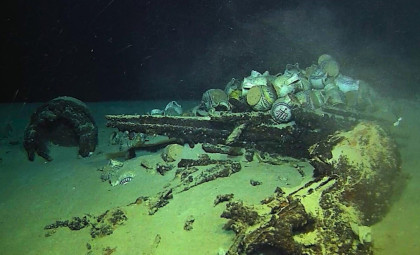
Using high-resolution sonar technology, the remains were detected on June 2, 2026, as part of a search orchestrated by the Air/Sea Heritage Foundation in collaboration with Discovery Channel and Deep Sea Vision. Subsequent explorations captured detailed images showing the aircraft resting on the ocean floor, with identifying marks still visible on its aluminum body.
The Douglas DC-4 was operating as Pan Am Flight 526A on April 11, 1952, traveling from San Juan to New York. Although all 69 people aboard initially survived the emergency water landing, 52 passengers tragically died as the plane sank amid turbulent seas. This accident prompted significant changes to in-flight safety briefings.

Sonar Technology Pinpoints Clipper Endeavor Near Puerto Rico
Russ Matthews, historian and co-founder of the Air/Sea Heritage Foundation, began investigating the missing plane in 2019, analyzing crash details and limiting the likely crash zone.
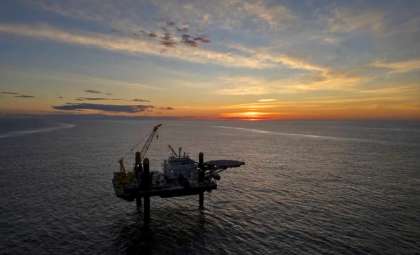
The effort made headway when the research vessel Fugro Brasilis traveled through the area en route from Trinidad to the Gulf of Mexico. Near San Juan, the team deployed an autonomous underwater vehicle (AUV) — a robotic submersible equipped with sensors, following a pre-set underwater path — to scan the seafloor.

Data from the AUV’s wide-area scans enabled a follow-up expedition, leading to the discovery of the aircraft at about 2,000 feet (600 meters) deep, as reported by IFLScience.
The images revealed aircraft features including the Pan Am logo and fuselage markings. Explorer Josh Gates, involved in the Discovery Channel project, recalls the shock when the photos arrived: “we all gasped.”
Emergency Sea Landing After Engine Malfunctions
The Douglas DC-4 departed from San Juan’s Aeropuerto de Isla Grande just after noon on April 11, 1952, headed for New York’s Idlewild Airport, now known as John F. Kennedy International Airport.
The flight carried 64 passengers and five crew members. Shortly after takeoff, several engines failed, forcing the pilot to perform an emergency water landing approximately nine minutes into the flight amid rough seas.
While everyone survived the initial ditching, the aircraft’s cabin began flooding as passengers attempted to evacuate. At the time, the plane lacked the organized evacuation protocols standard in today’s commercial aviation.
The U.S. Coast Guard and Air Force responded promptly, rescuing all five crew and 12 passengers. Sadly, 52 passengers perished before they could be reached. This tragedy became known locally as the Good Friday Disaster.
Impact on Safety Procedures Before Flights
Investigators examined not only the mechanical cause but also evacuation challenges. Many passengers remained trapped inside the sinking plane amid rough waters because a clear evacuation plan was absent.
Passenger safety briefings were not standardized then, meaning many travelers boarded flights without detailed information on emergency exits, flotation devices, or evacuation steps.
Following this calamity, the Civil Aeronautics Board, the forerunner of today’s FAA, mandated more comprehensive safety briefings and emergency instructions on commercial flights.
“When you board a plane today, your safety owes much to the Clipper Endeavor,” said Gates during the Warner Brothers Discovery Channel announcement.
These briefings now routinely cover exit locations, seat belt usage, and flotation devices for flights crossing water bodies.
Efforts Underway to Preserve the Site
The discovery team is collaborating with Puerto Rican authorities to ensure the site receives official protection, and they are advocating for a memorial to honor the victims of the tragedy.
The aircraft has rested undisturbed on the ocean floor since 1952, beyond typical dive depths. Advanced sonar and robotic camera systems enabled its documentation without requiring divers to descend to such depths.
The site holds significant historical value, representing both the tragedy and a pivotal moment in aviation safety development. Knowing its exact location aids in safeguarding and studying this important wreck.
- Categories:
- News





0 comments
Sign in to Comment