

Analysis of rocks retrieved from the Moon's far side reveals that the early Solar System experienced a gradual reduction in asteroid impacts over billions of years, challenging the idea of a sudden spike in collisions. These samples, dating from around 4.33 billion to 1.13 billion years ago, offer fresh insights into the Moon's impact history.
Researchers have debated the scale and timing of the asteroid bombardment that shaped the Solar System’s formative phase. One argument suggests a brief, intense period of impacts approximately four billion years ago, known as the late heavy bombardment. However, the newly examined lunar samples indicate a more extended decline in impact rates as leftover debris from planet formation was slowly cleared away.
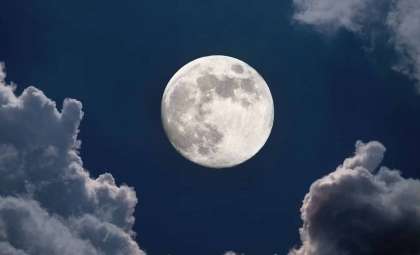
This debate also extends to Earth, which shares a linked history with the Moon, but lacks an intact geological record of these early collisions. Earth's surface has been extensively reshaped by erosion, volcanic activity, and plate tectonics, erasing much of the evidence. By contrast, the Moon’s surface remains relatively unchanged, preserving signatures of early bombardment events.

Unexplored Lunar Territory Offers New Evidence
Until recently, most lunar samples studied in laboratories originated from the side facing Earth. Access to far-side material enables scientists to compare and contrast geological histories from two distinct lunar hemispheres.
“The Moon is like a time capsule—it has preserved a record of events that have been erased from Earth by erosion, plate tectonics, and other geological processes,” said Dr. Fred Jourdan, a study co-author from Curtin University’s School of Earth and Planetary Sciences and the John de Laeter Centre.

According to Jourdan, materials gathered from the Moon’s far side are particularly valuable because this area was less disrupted by later geological activity, thus offering a purer record of the Moon’s earliest impact events.
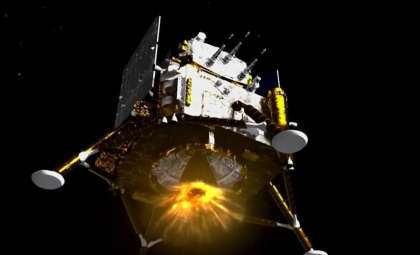
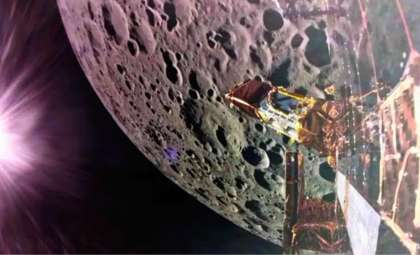
The rocks were collected during China’s Chang’e-6 mission, the first to return samples from the lunar far side, granting researchers access to previously untapped lunar terrain.
Evidence Points to Gradual Impact Reduction
Examining minuscule fragments from collisions dated between 4.33 billion and 1.13 billion years ago, the team covered more than three billion years of lunar impact evidence. These findings argue against a sudden bombardment spike, instead illustrating a steady decline in asteroid impacts as the Solar System's early debris gradually disappeared.
This observation challenges the late heavy bombardment scenario, which suggests a brief surge in inner Solar System collisions around four billion years ago. Data from the lunar far side supports an extended tapering of impact events.
“These samples are helping us rewrite parts of the Moon’s history and suggest the early Solar System experienced a long decline in asteroid impacts rather than a single catastrophic bombardment,” Jourdan said.
As detailed in Science Advances, these ancient rocks allow researchers to identify when major asteroid collisions took place and improve understanding of the Solar System’s early development. The far side material provides a new perspective previously missing from lunar sample analyses.
Insights into Earth's Lost Impact History
The timeline of impacts found on the Moon offers clues about early Earth as well. Since Earth and the Moon formed concurrently, both bodies faced similar asteroid populations. However, Earth's impact evidence has mostly vanished due to weathering, volcanic resurfacing, and the relentless reshaping of the crust by plate tectonics.
“The Moon and Earth share a common history, but the evidence of early impacts has largely disappeared from our planet,” Jourdan noted.

He also emphasized that examining lunar rocks lets scientists explore ancient occurrences that influenced both Earth and Moon's evolution, shedding light on how asteroid impacts may have affected planetary development and possibly played a role in the origins of life on Earth.
- Categories:
- Space




0 comments
Sign in to Comment