

Within a rock-cut chamber on the Luxor West Bank, archaeologists uncovered a pottery jar containing eight papyrus scrolls, some still sealed with clay stamps. Surrounding the vessel were intricately painted coffins, mummified remains, and funerary artifacts tightly packed inside a burial space in Qurna.
This remarkable find was made during digs at the Tomb of Seneb by an Egyptian mission that unearthed 22 decorated wooden coffins holding mummies. These objects have been dated to the Third Intermediate Period, spanning Dynasties 21 to 25, as stated by Egyptian Ministry of Tourism and Antiquities.
The excavation team is a collaboration between Egypt’s Supreme Council of Antiquities and the Zahi Hawass Foundation for Archaeology and Heritage. Dr. Zahi Hawass, leading the mission and former antiquities minister, described the find as "exceptional."

Occupational Titles Prevail While Names Are Scarce
A curious detail is that most coffins lack the names of their occupants.
Rather than personal names, many bear religious or professional titles, with “Singer of Amun”—or “Chantress of Amun” for women—being the most frequently inscribed designation. Hisham El-Leithy, secretary-general of the Supreme Council, indicated that efforts are underway to determine the identities of those interred.

The recurrence of this title narrows the scope of the burial group to those associated specifically with Amun’s cult, rather than a random collection of unidentified individuals. Although inscriptions related to these roles are visible, few personal names have been deciphered from the released materials.
The mummies within these coffins provide another avenue for study. The bodies, still wrapped and preserved inside the painted wooden cases, offer biological data that researchers can analyze in tandem with inscriptions and archaeological context. Official reports have not yet detailed findings about the individuals’ ages, identities, or health.
Coffins Arranged in a Space-Saving Manner
The burial chamber itself illuminates why so many coffins fit into a confined area.
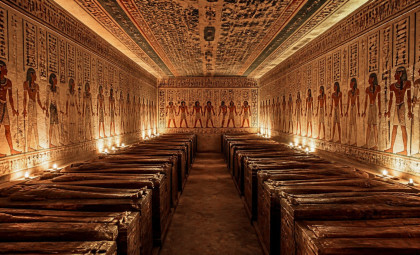
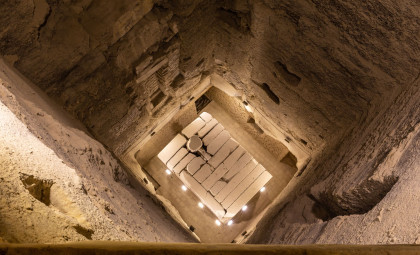
Archaeologists uncovered a rectangular subterranean chamber designed for funerary storage. Instead of placing each coffin intact, the lids were removed from their bases and carefully stacked in multiple layers.
The coffins were arrayed in 10 organized horizontal rows, maximizing the use of limited space. Both the ministry and Egyptian authorities describe this as a deliberate method to accommodate a large number of burials.

This chamber may not represent the original burial site. According to Afifi Rahim, excavation supervisor, the team continues searching for the initial tombs from which the coffins may have been relocated. The reasons and timing of this transfer remain unknown.
This uncertainty requires archaeologists to interpret not just the burials themselves, but also possible post-burial disturbances and reorganization.
Ceramic Artifacts Possibly Linked to Mummification
Besides coffins, several ceramic objects were found within the chamber.
These pots are theorized to have contained residues or substances used during the mummification process, though no chemical analyses confirming these contents have been shared in official statements.
A particularly fragile find was made inside a large earthenware jar: eight rare papyri scrolls of varying dimensions, with some still secured by their original clay seals.

No translations or detailed descriptions of these texts have been released yet, as the scrolls require further restoration and interpretation. Until then, no definitive information exists about their authorship, ownership, or content.
Fragile Coffins Underwent Immediate Preservation Efforts
The condition of the wooden coffins posed an urgent challenge.
The wood was severely degraded, and parts of the painted plaster were fragile and at risk of crumbling.
Specialists commenced prompt conservation work, reinforcing weakened wood fibers and securing delicate painted areas. Meticulous mechanical cleaning was carried out to remove buildup without harming original pigments.
Prior to relocating the artifacts to storage, each item received thorough photographic and architectural documentation. This careful recording preserves data on their original placement and features, vital as dismantling the densely packed cache complicates reconstructing the original arrangement.
Egyptian Minister of Tourism and Antiquities Sherif Fathy confirmed that scientific examination and preservation efforts will continue, with the ultimate aim of displaying the items after stabilization.
The most intriguing element of this Luxor find remains the undeciphered papyri. While the coffins have been counted and their layout studied, the sealed texts hold secrets that archaeologists have yet to unlock.
- Categories:
- Science




0 comments
Sign in to Comment