

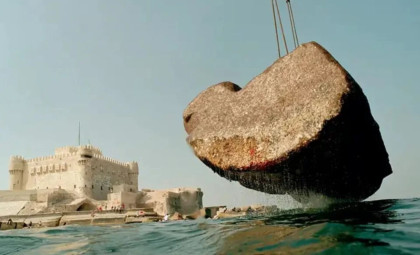
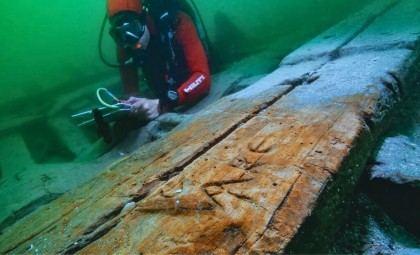
For centuries, colossal stone blocks rested underwater in the Mediterranean near Alexandria. Recently, 22 massive slabs weighing between 70 and 80 tons each were carefully extracted in a daring effort to digitally restore the Lighthouse of Alexandria, one of the renowned seven wonders of the ancient world.
The excavation was directed by Isabelle Hairy, an archaeologist and architect affiliated with France’s Centre national de la recherche scientifique (CNRS) through its Egypt-based unit, the Centre d’Études Alexandrines (CEAlex). Egypt’s Ministry of Tourism and Antiquities supervised the project, which has received continuous support from the Dassault Systèmes Foundation over the last three years.
Significant Architectural Components Uncovered
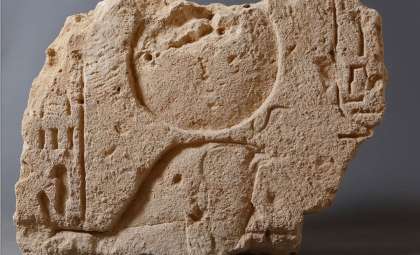
The recovered artifacts include grand door lintels, doorjambs, thresholds, foundational slabs, and a structure previously unknown to the team: a pylon featuring an Egyptian-style door from the Hellenistic era. Scholars believe these fragments comprised the lighthouse's main entrance, where Egyptian and Greek architectural styles converged.

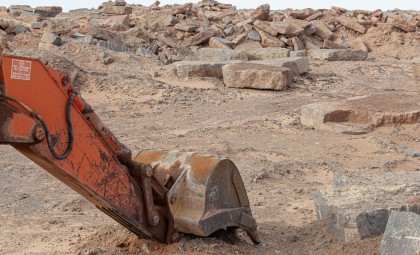
Extracting these enormous blocks necessitated a barge and crane provided by French production firm GEDEON Programmes, which sponsored this phase of the project.
The Dassault Systèmes Foundation indicated the stones will undergo detailed study and scanning, augmenting a database of more than 100 blocks already digitized underwater during the past decade. They employ precise photogrammetry, a method that generates exact 3D models from multiple overlapping photographs, allowing engineers to virtually handle the components.
Three Decades of Underwater Research
The site was initially identified in 1968 when submerged ruins were discovered. Yet comprehensive research only began later.
Starting in 1995, archaeologist Jean-Yves Empereur from CEAlex spearheaded efforts to systematically catalog the remnants below the sea. In 1994, an earlier mission documented over 3,300 artifacts—including sphinxes, obelisks, columns, and granite blocks—all associated with the lighthouse complex. This recent retrieval represents some of the largest pieces lifted in nearly thirty years of investigation.
The excavation is part of the PHAROS program, a project headed by Hairy and financed by the Dassault Systèmes Foundation. Distinct from an EU marine biodiversity initiative with the same name, this PHAROS initiative unites experts from history, archaeology, numismatics, and architecture to gather ancient illustrations and texts about the lighthouse from its inception in the late 4th century BCE to its destruction in the early 15th century CE. These sources complement the fragmented physical ruins.
Crafting a Virtual Reconstruction
Once processed with photogrammetry, the digitized blocks are sent to volunteer engineers collaborating with the Dassault Systèmes Foundation. They treat the challenge as a massive 3D puzzle, analyzing and virtually assembling each piece. Through scientific simulation and interactive environments, they explore various construction and collapse scenarios of the lighthouse.
The ultimate ambition is to create a detailed digital replica that allows users to virtually navigate the island of Pharos as its ancient visitors might have.

Relying solely on surviving physical ruins is insufficient. The Dassault Systèmes Foundation emphasizes that no complete ancient lighthouses exist today, making the Alexandria lighthouse the sole key reference to understand this iconic structure’s original design and engineering principles.
Constructed in the 3rd Century BCE, Gradually Lost to Time
The lighthouse’s construction began early in the third century BCE under the patronage of Ptolemy I Soter, with design credit to Sostratus of Cnidus. Situated on the island of Pharos just offshore from Alexandria, it soared beyond 100 meters in height, ranking as one of the tallest human-made structures of its era. The Dassault Systèmes Foundation describes it as humanity’s inaugural skyscraper, whose guiding light served Mediterranean mariners for over a thousand years.
Seismic activity gradually damaged the monument. A devastating 1303 earthquake left it irreparable. Over the following 150 years, its remaining stones were repurposed as construction materials. By 1477, many remnants had been incorporated into the nearby Qaitbay Citadel built on the island’s site.
The blocks submerged underwater escaped medieval quarrying, preserving details that later builders never altered.
Documentary Filming Captures the Recovery
Since 1995, GEDEON Programmes has been connected to this endeavor, having co-funded Empereur’s initial mission and produced the documentary “The Seventh Wonder of the World,” which aired on France 2 and internationally on the BBC, PBS, ZDF, RAI, and NHK.
Three decades later, the company returned to support the latest phase by funding the barge and crane. Under the leadership of director Laurence Thiriat, their crew filmed the entire extraction process for an upcoming 90-minute documentary set to air during prime time on France Télévisions.
- Categories:
- Science

0 comments
Sign in to Comment