

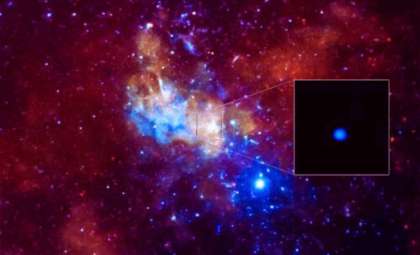
A massive gas cloud close to the Milky Way’s core has astonished scientists by revealing an extraordinary level of chemical diversity. Within G+0.633-0.0604, astronomers identified over 120 distinct molecular types. This finding indicates that the exceptional molecular diversity previously observed in another well-known cloud could be more widespread, hinting that complex molecules may form well before stars and planets emerge.
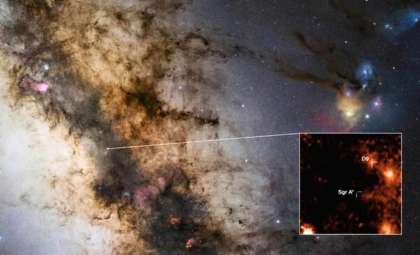
Situated near the bustling center of our galaxy, G+0.633 is part of the Sgr B2 complex, renowned for its intense chemical activity. The research, led by David San Andrés of Spain’s Center for Astrobiology, was released on the arXiv preprint repository on August 14, 2026. The team reported that this cloud harbors more than 120 molecular species, including several also found in the chemically rich cloud G+0.693-0.027.
For years, G+0.693 has been a key location for astrochemical research due to its vast assortment of molecules. It contains about 40% of all molecules detected in space so far, making it an ideal site for studying complex interstellar chemistry.

Discovery of Another Molecular Hotspot Near the Galactic Core
Detecting molecules in space has become increasingly common, with astronomers now cataloging nearly 350 molecular species throughout interstellar environments. However, regions with such chemical variety remain rare. G+0.693 gained special interest because it hosts complex molecules despite a lack of current star formation.
Scientists suggest that this cloud’s unique chemistry arises from an exceptional set of conditions: it is warm enough to sustain active chemical processes, while the molecules emit signals that are more detectable by telescopes. Additionally, slow-moving shock waves likely caused by colliding gas clouds may free molecules from icy dust grain coatings, enabling their presence in the gas phase and their detection.
G+0.633 shows many parallels to these conditions. Located approximately 32 light-years from G+0.693, it displays signs of a "shock-influenced environment," and shares similar temperature characteristics.
The detailed survey revealed molecules containing the six fundamental elements crucial for life: carbon, hydrogen, oxygen, nitrogen, phosphorus, and sulfur.

Molecules Linked to Life’s Building Blocks Identified
Among the numerous molecules discovered, some bear significance for biological chemistry. Ethanolamine, an essential component of cell membrane structure, was detected for only the second time in space. The team also found sp-glycolamide, related structurally to glycine, the simplest amino acid used by living organisms to form proteins. This discovery enhances understanding of how complex organic chemistry emerges in interstellar regions.

The team also identified cyanomethanimine in all three of its isomeric forms, molecules thought to be precursors to adenine, a key genetic base found in RNA and DNA.
“This survey has revealed over 120 molecular species containing all six essential biogenic elements (C, H, O, N, P and S), including the aromatic cycle benzonitrile, immediately placing G+0.633 among the richest molecular reservoirs in the galaxy,” the researchers wrote.
Two Chemically Linked Molecular Clouds in the Milky Way
Previously, astronomers questioned whether G+0.693’s rich chemistry was unique. The discovery of G+0.633 with a nearly identical chemical profile implies that such environments may be more common throughout the galaxy. Given their comparable molecular contents, G+0.633 is recognized as the first confirmed "astrochemical twin" of G+0.693.
“These detections, together with the remarkable similarity of the overall molecular inventory, establish G+0.633 as the first confirmed astrochemical twin of G+0.693,” the researchers concluded.

While this cloud doesn’t provide direct evidence of life, it illustrates that many molecules important to biology naturally form in space.
- Categories:
- Astronomy



0 comments
Sign in to Comment