

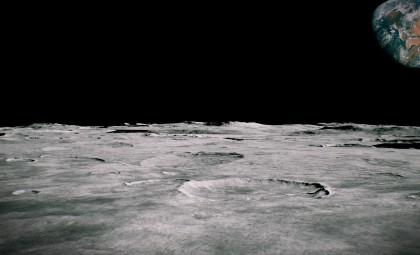
Instead of direct drilling, researchers might soon identify water on the Moon by simply tuning in to the Moon’s own tremors. A recent study in Science Advances reveals that seismic waves from moonquakes can detect hidden water ice beneath the Moon’s permanently shadowed southern polar craters. This breakthrough comes as NASA advances its Artemis missions, where locating accessible water deposits could lower mission expenses and bolster sustained human activity beyond our planet.
Using Lunar Tremors to Detect Subsurface Ice
Scientists have long suspected that ice remains preserved within the Moon’s shadowed polar craters due to perpetually low temperatures. Although orbiters have spotted surface indicators of ice, they can’t gauge the depth or quantity hidden underground. Collaborative teams from the University of Maryland, Lawrence Berkeley National Laboratory, and the University of Hawaii propose seismic probing as the key to uncovering these subterranean ice deposits.
This Science Advances article illustrates how seismic waves move differently through frozen lunar soil compared to dry lunar dust. Ice increases soil stiffness, causing vibrations to travel two to three times faster and producing unique echoes detectable by seismometers. Equipping future missions with seismic instruments could allow scientists to map ice distributions underground rather than rely solely on orbital data, providing exploration teams with detailed resource maps before excavation begins.


The Crucial Role of Lunar Water for Space Exploration
Water is essential for prolonged missions beyond Earth as it supports hydration, oxygen production, and rocket fuel generation. Access to lunar water would dramatically reduce the need to haul supplies from Earth, enabling longer expeditions. Nicholas Schmerr, associate professor at the University of Maryland’s Department of Geological, Environmental, and Planetary Sciences and study co-author, stressed the importance of cataloging lunar resources prior to establishing a permanent human presence.
“It’s crucial to identify any materials on the moon that an astronaut can make use of while they’re up there,” Schmerr said. “Since they will be limited by the few resources they brought from Earth, anything they find on the moon will help them basically live off the land, especially for longer-term missions or outposts.”
The research also suggests seismic data can estimate the volume of subsurface ice. Schmerr explained, “Seismic waves allow us to not only confirm ice is present but also approximate its abundance.” This technique could become indispensable for crafting effective mission plans.

Integrating Experiments, Thermal Models, and Seismic Analyses
To validate their hypothesis, scientists took multiple approaches. Harrison Lisabeth from Lawrence Berkeley National Laboratory simulated lunar soil by freezing crushed volcanic rock under lab conditions and used X-ray imaging to observe ice formation among mineral grains. Concurrently, University of Hawaii researcher Matthew Siegler created thermal models to pinpoint craters capable of maintaining ice over billions of years. Schmerr then modeled how moonquake vibrations traverse ice-bearing layers. These combined methodologies consistently confirmed that ice deposits show distinct seismic signatures, boosting confidence in using seismic methods to distinguish frozen from dry zones on the Moon.

Frozen Lunar Ice May Hold Clues to Solar System Origins
Beyond sustaining astronauts, these ancient ice deposits, trapped in perpetually shadowed regions, offer a time capsule of solar system history. Since lunar rocks date back around four billion years, studying this frozen material could uncover how water and other volatiles were delivered by comets and asteroids to Earth and inner planets.
Schmerr highlighted the scientific significance, saying,
“The moon witnessed some of the most critical parts of the early solar system, including how water was delivered.” He added, “Studying the ice deposited there could reveal how water spread and ultimately how Earth’s oceans formed.”
If mission teams retrieve samples from these ice reserves, they may unlock new insights into the origins of Earth’s water and early planetary formation processes.
Upcoming Moon Missions to Put Theories to the Test
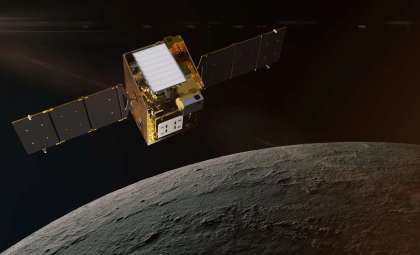
Verification of seismic ice detection could arrive soon. China’s Chang’e-7, planned to touch down near Shackleton Crater in late 2026, will carry a seismometer to monitor moon vibrations in a prime ice-bearing region. NASA’s Artemis program will follow with the Lunar Environmental Monitoring Station, a seismic device co-developed by Schmerr.
These missions may confirm seismic methods as a powerful new technique for locating lunar resources. Schmerr remarked, “Our research lays the foundation for observations expected soon. No one has yet physically measured lunar ice, but now we know what to look for. This represents a critical first step.” Validated, moonquakes could become a key tool in humanity’s journey beyond Earth.
- Categories:
- Astronomy






0 comments
Sign in to Comment