

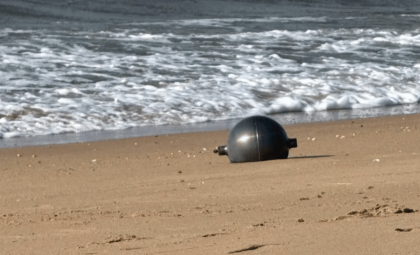
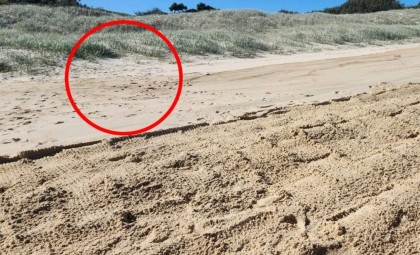
On a secluded portion of Forrest Beach near Ingham in northern Queensland, a crab fisherman stumbled upon an unusual black orb near the shoreline. Its smooth, dark exterior stood out starkly against the sand and surrounding driftwood.
Authorities instructed the fishermen to abandon their crab traps and evacuate the vicinity. Firefighters donned hazardous-material suits, established a secure perimeter, and multiple emergency agencies joined the response. Local resident Trevor Kyle, who assisted police in accessing the site, explained that the situation escalated quickly as officials updated higher command. “You could see that it was getting bigger and bigger,” he shared with ABC News.
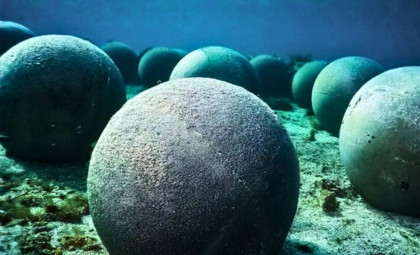
Soon, additional spheres emerged from the sea. Kyle witnessed three more wash ashore unexpectedly. By July 6, authorities had retrieved six such objects from the coastal area.


The Australian Space Agency determined these to be probable pressure vessels from a rocket launch vehicle. Their design and location corresponded with debris from a recently de-orbited foreign rocket, although investigations involving global space authorities were underway to verify the origin and launch nation.
From Six Strange Objects to a Full-Scale Investigation
Residents of Forrest Beach are used to seeing various items wash up with the tides. Local business owner Lisa Scobie noted to ABC News that overturned boats, buoys, coolers, and bottles have frequently appeared by the shore. A yacht even drifted there after weeks at sea.
The black spheres, however, were unlike anything previously found. They did not show signs of prolonged ocean exposure, and the community was unsure how to respond. Rumors spread on social media as emergency teams secured the site and checked for dangerous substances like fuel or other hazards.
“I never imagined objects like this could fall from space,” Scobie said. Though the recovered items were eventually deemed harmless, the agency cautioned that more potentially dangerous debris might still be discovered along the coastline.
The agency’s report classified the discovery as rocket debris. “The recovered items appear to be pressure vessels from a space launch vehicle,” an agency spokesman confirmed. Their attributes matched a rocket body that had re-entered Earth’s atmosphere.
Why Rocket Components Survive Reentry
A pressure vessel is a reinforced container designed to hold gases or liquids under high pressure. These tanks are critical parts of rocket engines and spacecraft propulsion systems, ensuring fuel and pressurized gases stay contained during flight.
Their robust construction also enables them to endure the harsh conditions of atmospheric re-entry. As rockets descend, they encounter dense air layers at extreme velocity, generating intense heat and disruptive forces that often destroy lighter elements. However, pressure vessels, built from strong materials, tend to survive after other parts burn up or disintegrate.
Alice Gorman, a space archaeologist at Flinders University, described the Queensland spheres as typical space debris examples. “This is a classic example of what is known as ‘space balls,’” she told ABC News. Spherical pressure vessels frequently survive re-entry due to their engineering.
“These fuel system components endure because their melting points exceed the temperatures encountered during atmospheric passage,” Gorman explained. This accounts for why multiple vessels could reach the ocean while other rocket parts vanished during descent.
Floating Pressure Tanks and Coastal Discoveries
While the spheres washed ashore at Forrest Beach, their exact entry point into the ocean remains unknown. Once emptied, these tanks can float, carried by currents, wind, and waves, drifting far from where the rocket broke apart.
“Empty pressure vessels can float, which increases their chances of reaching beaches,” Gorman said. Extended exposure at sea can also alter surface markings, making it challenging to trace their origins.
Australia has a history of space debris encounters. The Australian Space Agency’s debris records include Skylab fragments found in Western Australia in 1979, a SpaceX Dragon component recovered in New South Wales in 2022, and a similar pressure vessel discovered near Perth in 2023.
In October 2025, Western Australia officials identified carbon-fiber parts from a Chinese Jielong-3 rocket. Space archaeologist Alice Gorman detailed the physics of re-entry and rocket debris in The Conversation.
Protocols for Handling Suspected Space Debris in Australia
When unknown objects fall on land or wash ashore, authorities prioritize safety. Rocket parts might contain chemical residues, hazardous composite materials, or sharp edges even if they seem empty.
The Australian Space Agency advises the public not to touch, move, or retrieve any suspected spaceflight debris. Instead, witnesses should keep a safe distance and notify emergency responders who have the expertise to evaluate the items and secure the scene.
The national response follows the Australian Government Space Re-entry Debris Plan (AUSSPREDPLAN). The space agency supports state and territory agencies by providing technical expertise, aiding identification, and coordinating with international partners when foreign spacecraft are involved.
Most re-entering space objects either target planned descent zones or disintegrate in the atmosphere. Some unplanned re-entries leave debris that must be located and traced afterward. The six spheres collected at Forrest Beach were confirmed as space-related through this established procedure.
- Categories:
- News



0 comments
Sign in to Comment