

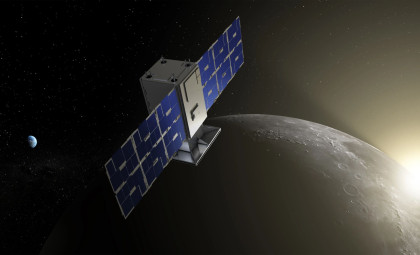
NASA has introduced a small, advanced navigation device aimed at enhancing spacecraft operations in lunar orbit, signaling a significant leap forward in lunar communications and guidance technology. The agency reported that the NavCube3-mini unit was handed over to Intuitive Machines on July 13 for installation on Altus-1, the company's inaugural lunar relay satellite.
This innovation is engineered to expand navigation capabilities beyond Earth's vicinity by leveraging signals from both GPS and the Galileo Global Navigation Satellite Systems (GNSS) during missions in the Moon’s proximity. This advancement is expected to bolster future crewed missions, robotic rovers, and spacecraft as NASA gears up for a permanent human foothold on the lunar surface.
Compact Navigation Technology Tailored for Deep Space Missions
The NavCube3-mini heralds a new frontier in space navigation technology, pushing beyond conventional Earth-orbit operations. Roughly half the size of a shoebox and weighing only 3.5 pounds, this efficient payload can pinpoint spacecraft locations around the Moon while operating on less than 20 watts of power.

Developed at NASA’s Goddard Space Flight Center in Maryland, the device builds on efforts to extend the utility of satellite navigation beyond Earth’s immediate environment. The engineering team is focused on enabling vehicles further from Earth to still utilize navigation signals originally designed for terrestrial applications.
Accurate lunar positioning could significantly reduce the dependency on Earth-based tracking, enabling spacecraft operating in lunar orbit or on the surface to gain greater autonomy, enhancing mission planning flexibility and operational independence.
This demonstration aboard Altus-1 will collect performance data on GNSS navigation in lunar conditions, shaping the development of future navigation solutions for orbiters, landers, rovers, and crewed spacecraft.

NASA Lays Groundwork for a Commercial Lunar Relay Network
As NASA explains, the transfer of the NavCube3-mini supports building a commercial lunar relay system designed to provide communication and navigation services for forthcoming Moon expeditions.
This system will be aboard Intuitive Machines’ Altus-1 lunar relay satellite, the initial component of a larger network being developed under the company’s Near Space Network Services contract with NASA.
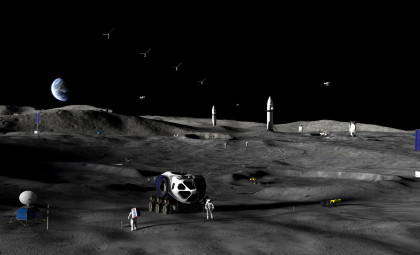
Relay satellites are crucial for maintaining communications in lunar regions where direct Earth connections are challenging, offering vital support around the lunar South Pole, the targeted landing zone for Artemis astronauts in 2028.
The difficult terrain and lighting of the Moon’s South Pole create operational hurdles and limit communication avenues. A reliable relay network could facilitate consistent data exchange and provide navigation support for vehicles exploring this complex area.
NASA’s collaboration with commercial companies seeks to build a versatile lunar communication framework capable of supporting multiple missions rather than isolated spacecraft communication setups.
Rigorous Validation Ensures NavCube3-mini’s Spaceflight Readiness
Prior to delivery, the navigation system underwent comprehensive environmental testing at NASA Goddard to confirm its suitability for the harsh conditions of space.
Tests simulated launch stresses through vibration trials and exposed the device to extreme temperatures and vacuum conditions replicating those found in space during thermal vacuum tests.
Electromagnetic compatibility assessments ensured the unit would operate harmoniously alongside other spacecraft systems without interference, guaranteeing reliable performance.
Throughout testing, the device’s capability was evaluated with high-fidelity GPS and Galileo signal simulations consistent with expected lunar operating environments, both before and after each environmental challenge.
This thorough qualification process validated the navigation payload’s resilience and reliability under mission-like conditions.

Establishing the Backbone for Lunar Operations
The introduction of NavCube3-mini is part of a larger initiative to develop the essential technology infrastructure required for sustained lunar exploration. Successful missions will depend heavily on dependable communications and navigation systems distributed across the lunar environment.
NASA’s blueprint includes strategic partnerships with commercial enterprises to create entertainment networks that will serve both governmental and private lunar endeavors. A shared navigation and relay setup will enable various spacecraft to coordinate effectively as lunar activities increase.
This commercial lunar infrastructure is emerging alongside a surge in international and private sector Moon missions, making dependable positioning technology a cornerstone of the expanding lunar ecosystem.
As missions extend further from Earth and grow more complex, systems like NavCube3-mini will be critical in providing safer, more autonomous navigation and communication capabilities.
The transfer of NASA’s navigation payload to Altus-1 signifies a pivotal step forward in laying the groundwork for continuous lunar exploration. The fusion of commercial relay satellites with cutting-edge navigation tech is setting the stage for future moon missions to thrive.
- Categories:
- Nasa








0 comments
Sign in to Comment