

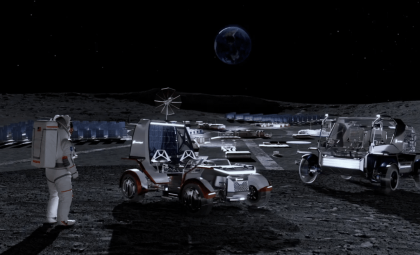
NASA is inviting innovators and research teams to develop cutting-edge technologies essential for establishing a permanent human outpost near the Moon’s south pole. This initiative addresses key hurdles faced by extended lunar missions. Announced on Sept. 8, the call is part of NASA’s NextSTEP-3 Broad Agency Announcement under the Lunar Enabling Infrastructure Accelerator program, which aims to advance vital technologies toward practical demonstrations supporting lunar exploration.
Sustained lunar habitation extends beyond just landing astronauts; future missions will require dependable power sources, access to indigenous resources, and equipment enabling reduced reliance on Earth-supplied materials.
The program welcomes participation from private enterprises, academic institutions, nonprofits, and global collaborators operating through U.S.-led consortia. NASA seeks to unite diverse expertise to develop sustainable systems for Moon missions.

Essential Technologies for Lunar Sustainability
The program prioritizes several crucial technologies for long-duration missions. Foremost is the development of vertical solar array systems, which promise consistent energy generation alongside robust energy storage and management solutions.
Another critical focus is the advancement of oxygen extraction from lunar soil—techniques that extract breathable oxygen trapped within the regolith layer of lunar dust and fragmented rock.

NASA is also soliciting concepts involving radioisotope Stirling engine generators, which leverage heat from radioactive materials to generate electricity, particularly useful in the Moon’s shadowed, remote, and dusty regions.
The initiative includes research into advanced manufacturing techniques and nanomaterials fabrication. NASA aims to cultivate ways to produce materials on-site during lunar expeditions and enhance access to nanomaterials that can support mission-critical technologies.
The Lunar South Pole: A Crucial Exploration Target
Establishing a permanent Moon base demands technological innovations suited to harsh conditions. Energy systems must be resilient, and the ability to extract and utilize in-situ resources will greatly lower dependence on Earth deliveries. Oxygen production from lunar soil is a strategic priority, unlocking the Moon’s potential as a sustainable outpost.
“NASA is accelerating the development of key technologies and closing critical gaps needed for long-term human exploration at the Moon,” said Greg Stover, director of NASA’s Advanced Research and Technology Division.

Stover noted that collaborating with industry partners will fortify the U.S. manufacturing sector as NASA builds the essential infrastructure and capabilities for ongoing lunar exploration.
Producing Materials Directly on the Moon
NASA is exploring methods for in-space manufacturing to supply future Moon missions with necessary resources, thereby reducing the need for constant Earth shipments and offering astronauts greater flexibility. The agency is also fostering advances in nanomaterial synthesis to enhance the availability and performance of materials tailored for space environments.
Data and outcomes from the funded initiatives are expected to inform NASA’s future mission designs and acquisition approaches.

Through the Lunar Enabling Infrastructure Accelerator, NASA is integrating diverse technology efforts—ranging from energy solutions and oxygen extraction to manufacturing—to support Moon exploration goals.
- Categories:
- Space







0 comments
Sign in to Comment